
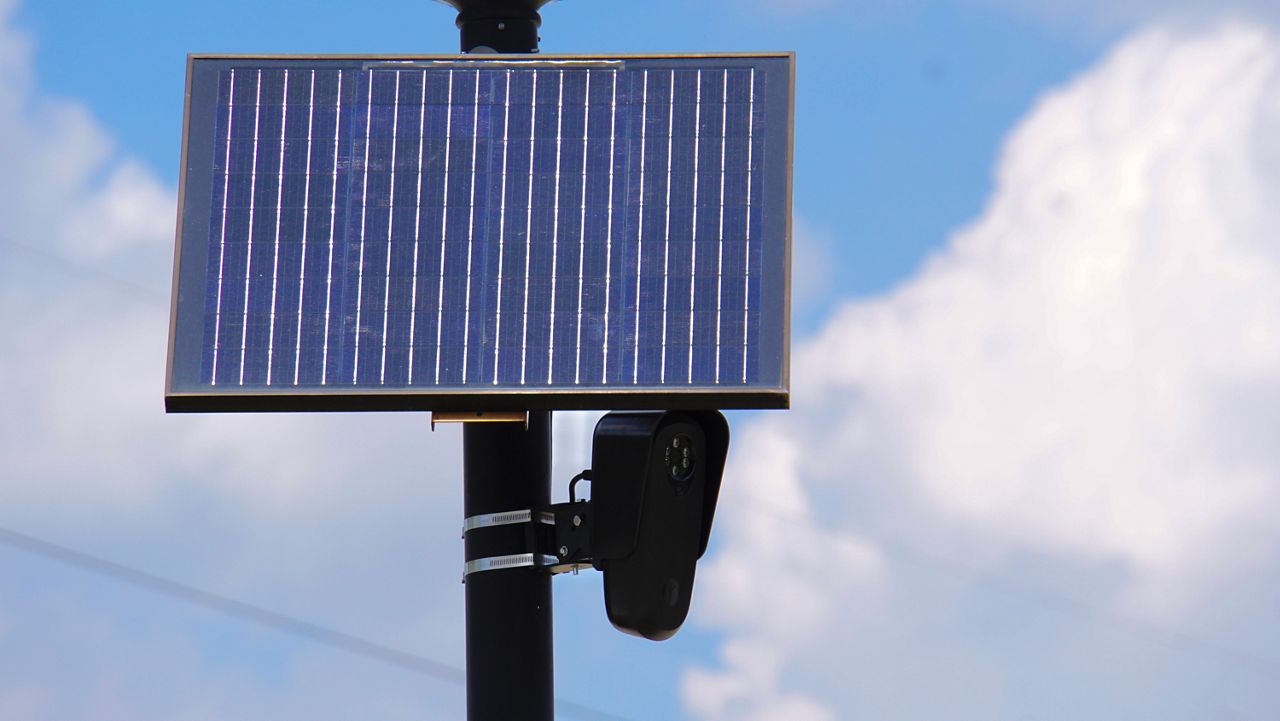
DALLAS — Last month, the Dallas Police Department told Spectrum News how the over 650 Flock cameras within the city have helped fight crime.
“Currently, we have 684. But with the state funding removed, that will go down to about 360 cameras,” said Sgt. Adam Reinhart during a Dallas City Council Public Safety Committee meeting.
On Sept. 9, Dallas police officials gave city leaders a status update on Flock cameras.
Reinhart confirmed that 321 cameras will be deactivated by Sept. 15. This comes after Gov. Greg Abbott paused state funding for the automated license plate reader system, citing privacy concerns, which has been highly criticized.
“The misuse has got to be our focus right now, right? We have got to be able to assure the public and reinstate trust that this tool can be used,” said Dallas City Council member Kathy Stewart.
Another concern is law enforcement misuse, like in Harris County where three deputies were caught misusing the Flock camera system for personal use. Many are also concerned about the invasion of privacy.
“It raises a lot of Fourth Amendment questions,” said Phil Mynona, the co-founder of the Texas Privacy Coalition.
Mynona said Dallas PD deactivating half the cameras isn’t enough. He wants transparency about who has access to the data.
“A lot of these police departments aren’t even being transparent of who they’re sharing their data with. And we’ve seen inter-agency sharing from Houston to Ohio. There’s no reason why somebody in Ohio should be accessing cameras in Houston,” said Mynona.
In August, Dallas police told Spectrum News that sharing data helps investigators solve crimes.
According to Dallas Police Chief Daniel C. Comeaux, 13 murders have been solved this year so far thanks to Flock cameras.
“Here in Dallas, where we have located critical missing people from out of state. So that’s how it becomes a very positive investigative tool is finding those missing people,” Reinhart told Spectrum News in August.
At the public safety committee meeting, Dallas police also confirmed outside law enforcement agency access was significantly reduced, from over 1,500 law enforcement agencies to 202 statewide agencies, including no more federal agency access.