
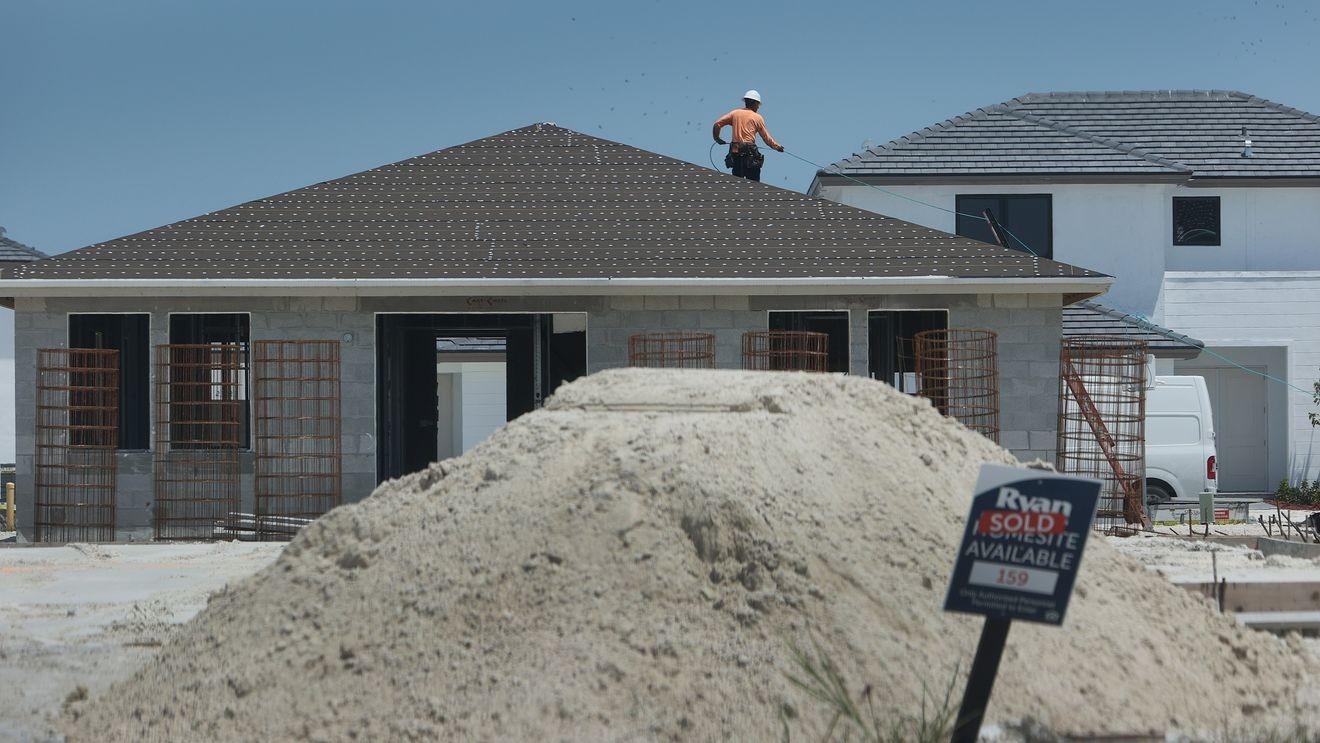
(TNND) — New home construction is “running out of steam,” according to a new report from Zillow.
The analysis published Monday found residential building permits fell 1.7% from last year and are now running a record 19.4% below the pre-pandemic trend line.
Detached single-family home completions declined for the third consecutive year in 2025, reaching their lowest level since 2020.
Meanwhile, Zillow said builders are shrinking home sizes to keep prices within reach for buyers struggling to afford a home.
The Census Bureau reports that the median sales price for a new home was $393,800 as of July, down 0.9% from the previous July. An updated report on new home sales is slated for next week.
The latest report from the National Association of Realtors showed the median existing-home sales price rose to $429,100, the 38th consecutive month of a year-over-year price increase.
But despite generally rising prices, Zillow’s new report found that new home construction is slowing.
And Zillow said that’s a concern, given the already significant housing shortage.
Affordability challenges and a lack of inventory in some markets have throttled housing market activity.
“Builders are responding to a softer market by pulling back, especially in the places they’d been building the most,” Kara Ng, senior economist at Zillow, said in a news release. “That’s an understandable reaction to today’s conditions, but the housing shortage that drove the building boom is still very much intact. The concern is that when conditions improve and buyers return, the thinner pipeline could mean a tighter market that drives up prices.”
Zillow said the home building pullback is concentrated in markets that led the pandemic-era boom, largely in the Sun Belt. The biggest annual drop among major markets was Austin, down 25.3%, followed closely by San Antonio with a decline of 24.1%.
Bankrate housing market expert Jeff Ostrowski said Sun Belt markets such as Austin or Waco in Texas or Sarasota or Fort Myers in Florida attracted a lot of home construction in recent years because of available land, job growth and population gains.
“The places where the builders had been most active is now where they have the most incentive to pull back and stop building for a while and let the market absorb what’s just sitting there,” Ostrowski said.
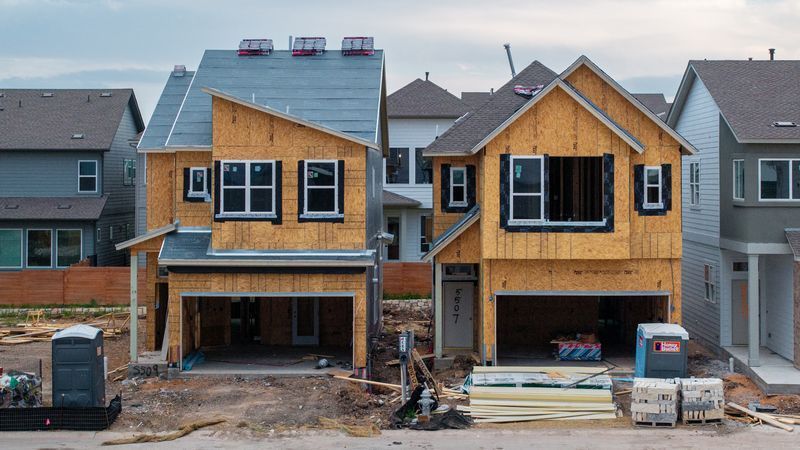
FILE – An aerial view of houses undergoing construction in a neighborhood on April 17, 2025, in Austin, Texas. (Photo by Brandon Bell/Getty Images)
Meanwhile, Ostrowski said there’s a lack of new homes in parts of the Midwest and Northeast.
Some places haven’t seen as much construction due to high costs or a lack of developable land. Others haven’t seen as much building due to insufficient population and job growth.
National home builders follow the demographics, Ostrowski said.
“So, places like Cleveland, Buffalo, Rochester, New York, they just don’t have the kind of numbers that are going to bring D.R. Horton and Pulte (Homes) and KB Home and Lennar in to build a bunch of houses,” he said. “And so, then those places are underbuilt.”
Zillow said what permitting gains are happening are now taking place mostly on the coasts and in the Midwest, where construction had been more subdued.
Zillow also said builders are shrinking home and lot sizes to keep prices within reach for buyers. And they’re speeding up construction, as the pandemic-era backlog clears.
The median newly completed detached home was 2,300 square feet last year, down from 2,400 in 2019. The typical lot shrunk to 8,700 square feet, compared to 9,000 square feet in 2019.
Zillow also said the typical detached home took six months to build last year, a month faster than it took at the height of the supply-chain crunch of recent years.
But Zillow said there’s still a national housing deficit of 4.7 million units.
“The long-term story hasn’t changed,” Ostrowski said. “There still just isn’t enough housing for a growing nation of 340 million people. But getting that housing to where it needs to be is a tricky thing.”
Buyers in much of the Midwest and Northeast face a persistent lack of new-home options and must largely compete for existing homes, Ostrowski said.
But he said buyers in oversupplied Sun Belt markets might have a window of opportunity to take advantage of price cuts or mortgage-rate buydowns.