
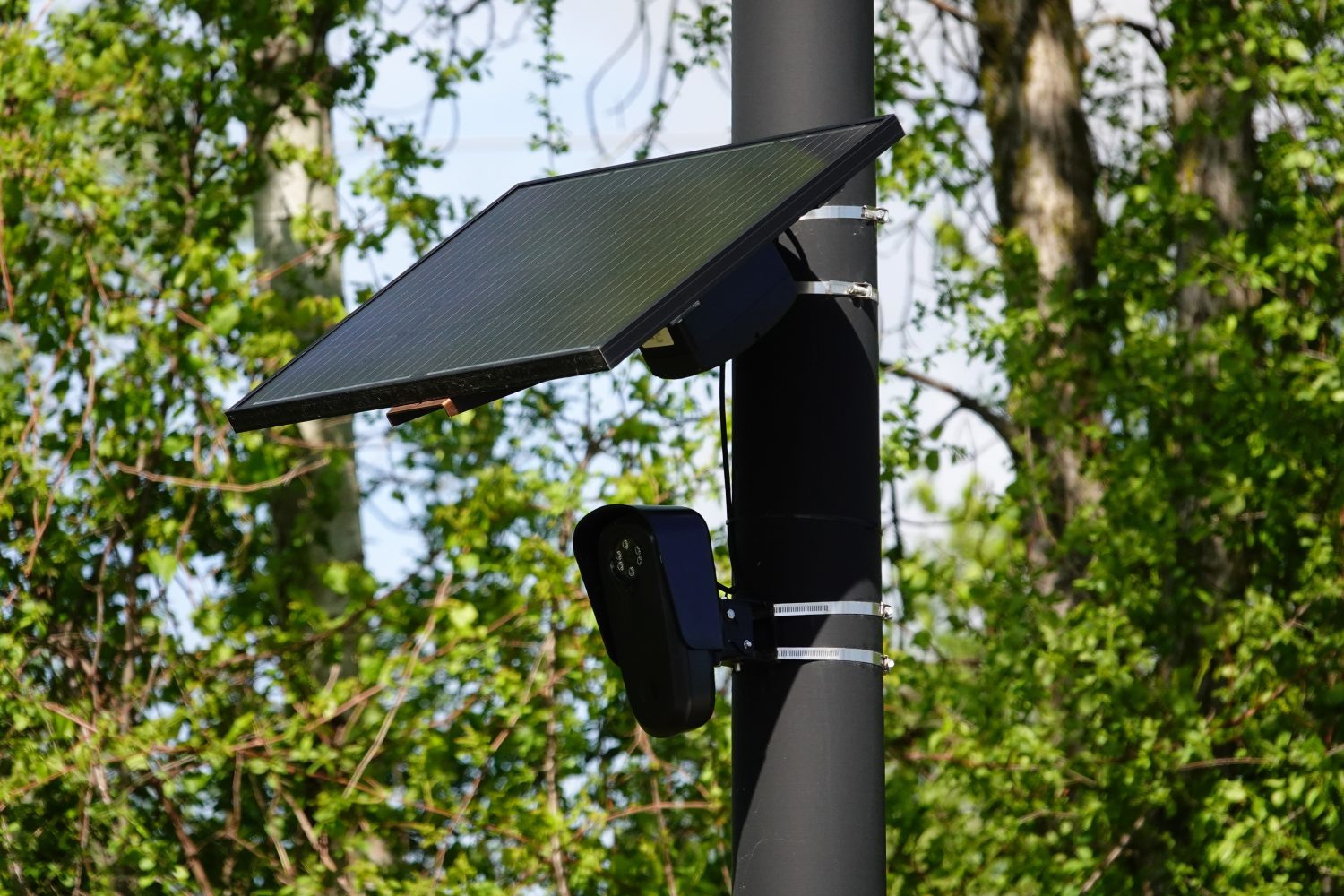
The Carrollton City Council chose not to become a ”donut hole” and re-approved the city’s agreement with Flock Safety Tuesday night.
At a meeting, council members voted to renew and consolidate four contracts for 82 Flock cameras across the suburb. Six voted in favor, with one voting against. The vote came after more than two hours of discussion and public comment from residents, most of whom opposed the measure.
Flock cameras, which mainly operate as automated license plate readers (ALPRs), have increasingly become targets of scrutiny and even vandalism across much of the country. Activists are calling for the removal of the technology, which they say violates their privacy rights and is prone to abuse because it shares data in the cloud. Recently, Texas Gov. Greg Abbott ordered state agencies to pause funding for the technology amid growing controversy. In a radio interview after announcing the order, Abbot pointed to well-publicized cases of officers abusing the technology in Texas to stalk people outside of police work as a reason for the shift.
Plano City Manager Mark Israelson told council members Monday that the city had ended its Flock contract and would begin shutting down its cameras after state funding was pulled. The Observer has reached out to Plano PD for a total number of Flock cameras in its network and will update this story with a response. San Marcos, Austin and, most recently, Wylie have pulled their Flock contracts in the last two years. The Dallas Council, meanwhile, overwhelmingly backed Flock funding earlier this month, as council member Lorie Blair told police representatives she wanted “every camera I can get.”
Sign up for the This Week’s Top Stories newsletter to get the latest stories delivered to your inbox
THANK YOU!
You’re all set.
CLOSE
‘What’s it matter?’
For months, Carrollton residents have come to city council meetings asking the council to eliminate its Flock program, first funded in 2024 by a contract approved on the consent agenda without a public hearing. Tuesday’s item was also originally placed on the consent agenda, meaning it is considered routine and generally receives no discussion unless a council member pulls it, which happened before the meeting began.
Despite reassurances from police officials and testimonials on Flock’s investigative use, multiple residents spoke at the meeting and reiterated those concerns.
“The police department has done a great job over years and years,” Lori Foster said. “Nobody’s accusing them of using any data, but this data collected in our community will be aggregated and potentially abused by other communities, which is the concern.”
Flock’s cloud network allows police departments to access data from more than 5,000 law enforcement agencies that also deploy the technology in their jurisdictions, provided they first gain authorization. Police representatives told the council that only in-state agencies have access to the database, and that use for immigration enforcement is strictly prohibited. However, some residents questioned whether partner agencies would have the same restrictions when accessing the database.
The cameras are commonly positioned facing traffic on roadways and take still images of passing cars. Flock’s AI-powered system can then identify vehicles by plate number, make, model, color and other identifying marks such as dents or scratches. Police representatives told the council that this information, which is easily searchable in the database, significantly cuts the time needed to assess LPR data and called Flock “the best tool we have.”
Some residents said that even if it’s only used to target criminals, it could still be used to target actions that are legal now but could be considered unlawful in the future. In 2025, Texas law enforcement agencies used over 83,000 cameras across multiple states to track a woman seeking an abortion.
“If you’re not a criminal, what’s it matter?” Kirk Booth told the council. “Doesn’t today, but somebody may decide that the certain association of people with other people, or in opposition to Flock cameras, might be people to be looked at, and now my vehicular pattern becomes known.”
While some in opposition called for an immediate end to the program, others called for the city to take a “pause” to evaluate the system and share information with residents.
However, a few residents voiced support for the technology, saying it has had a marked effect on public safety.
“What if the Flock system helped in the capture and rescue of a child who was kidnapped off our streets?” former Mayor Pro Tem Rusty Pendleton told the council. “The system works. I recommend that you vote yes for this.”
‘Donut hole’
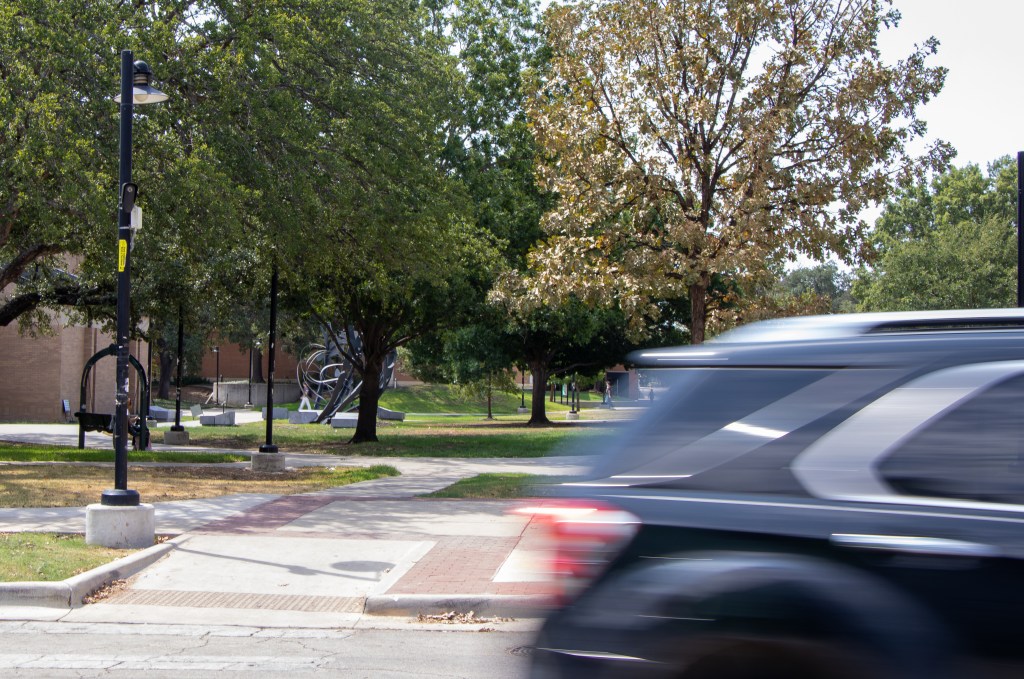 A Flock security camera scans license plates near W. Mulberry Street on the UNT campus.
Council members sided with those speakers and police representatives, who described the audit procedures and structural safeguards the department put in place to prevent abuse and emphasized the technology’s investigative benefits. In 2026, Flock has assisted in investigating a murder, aggravated assaults and a hit-and-run involving a cyclist in Carrollton, according to the city’s transparency webpage.
The contract is worth nearly $1.2 million over three years. Council members said it was not an extension or an expansion, and that the vote was simply to consolidate the four contracts the council has previously approved. A contract for Carrollton Fire-Rescue remains separate.
Pointing to a map of surrounding Flock networks that still included Plano, Mayor Steve Babick said he did not want Carrollton to become the “hole in the metroplex.”
“That donut hole that, if Carrollton were to opt out of renewing this contract, would absolutely be a void with respect to public safety,” he said. “It would be a void, and given the number of thoroughfares that we have coming through our city, it’s important that we recognize that there are a lot of people who pass through Carrollton.”
Only council member Richard Fleming, who said the debate was “bigger than just cameras,” voted against the contract. As the meeting came to a close, Babick led the council and attendees in a standing ovation for the police representatives who had adamantly defended the contract and its use in police work.
Before the vote, Deflock Carrollton founder Hannah Foust told the Observer that the guardrails put in place are still inadequate. She pointed out that the department’s audit policy only mandates one audit per quarter. The audit consists of inspecting two random searches pulled from a random sample of 10 users to ensure that the query was tied to valid police work. According to the department’s transparency dashboard, 936 searches have been conducted in the last 30 days.
She noted that Tuesday’s meeting was the first public discussion of Flock cameras, despite months of calls for a town hall or public meeting, and told the Observer that a ‘yes’ vote from the council would not stop her growing coalition.
“I think Carrollton is a great place to live,” Foust said. “There’s so much more to love, but we love the community enough to raise hell about this.”