
MUDs are just one type of special purpose districts, which are governmental entities created to provide specific services or finance infrastructure in a defined area. Other types of special purpose districts can include public improvement districts or municipal management districts.
Smiley N. Pool/Staff Photographer
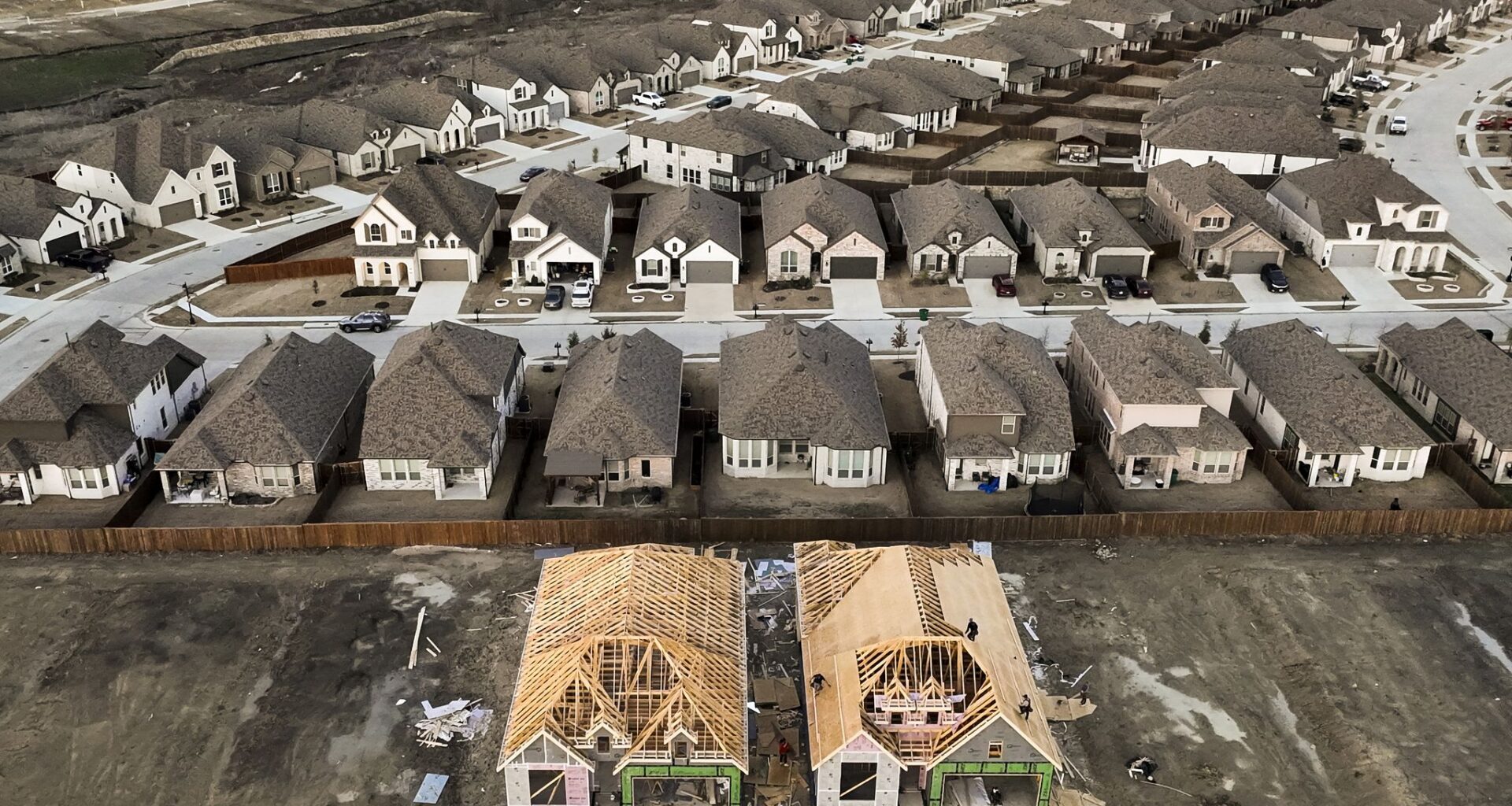
If you’ve driven around the fast-growing areas of Collin and Denton counties, you’ve likely seen several master-planned subdivisions popping up in recent years.

But some of these communities are located outside city limits and are instead part of a municipal utility district, or MUD.
Municipal utility districts have historically been used in Texas, particularly in the Houston area, to finance the infrastructure needed to build new neighborhoods. However, local officials say they’ve become an increasingly common development tool in some areas of North Texas, including Denton and Collin counties.
Article continues below this ad
So what exactly is a MUD? How do they work in North Texas, and why can they tax you?
What is a municipal utility district, or MUD?
A municipal utility district is a local government entity providing utility services to a defined area. MUDs provide services like water, wastewater and drainage, as well as create roads and recreation centers.
MUDs are just one type of special purpose districts, which are governmental entities created to provide specific services or finance infrastructure in a defined area. Other types of special purpose districts can include public improvement districts or municipal management districts.
Article continues below this ad
According to the Texas Municipal League, Texas has more than 1,700 special districts, including over 900 MUDs.
Under the Texas Constitution and Texas Water Code, municipal utility districts also have the ability to levy taxes and issue bonds, similar to cities and counties.
Developers can use these utility districts to help finance infrastructure needed to build new neighborhoods. The district can then collect taxes and fees from property owners to help pay for the infrastructure and its operations.
Related: What is a bond election? Here’s what it means for your property taxes
MUDs can be created two ways: through the Texas Legislature or the Texas Commission on Environmental Quality.
Article continues below this ad
For a municipal utility district to be created through the TCEQ, a proposed district located in a city’s extraterritorial jurisdiction generally must get consent from the city before the MUD is created. The extraterritorial jurisdiction, or ETJ, is the area outside of a city’s limits still subject to some city authority.
How does living in a MUD impact your taxes?
MUDs have taxing authority, which means homeowners will see a tax from the district on their property tax bill that helps pay for the district’s obligations.
Under state law, municipal utility district tax rates are set annually by the district’s board of directors, similar to a city or county.
In 2025, MUDs in Collin County generally had tax rates ranging from $0.80 to $1.20 per $100 of assessed property value. By comparison, city tax rates in the Dallas-Fort Worth area range from around $0.69 in Dallas and Garland to nearly $0.43 in cities like Frisco and Plano.
Article continues below this ad
Related: Dallas weighs tax rate cut as other big Texas cities raise rates to close budget gaps
How does living in a MUD differ from living in a city?
A homeowner in a municipal utility district outside of city limits is generally a resident of unincorporated county land, not a city resident. However, some MUDs can also include land inside a city’s limits.
Unless a specific agreement is in place, MUDs generally provide a smaller set of services than a city, said Stephen Belknap, Denton County’s director of development services.
City residents may receive police, fire and waste collection services from their city. Meanwhile, utility district residents typically do not receive these services, unless the MUD has an agreement in place stating otherwise.
Article continues below this ad
“It looks like a city, right? It looks like it’s a big subdivision,” Belknap said. “It’s not the traditional county subdivision that you think about. You don’t live in the city. You live in unincorporated Denton County.”
Some rural areas of Collin County, for instance, are now served by an emergency services district that was created in 2025 to provide fire protection and emergency services in unincorporated areas of the county.
Had municipal utility districts and other special districts not been used for development in Collin County, Celina Mayor Ryan Tubbs said the emergency services district likely would not exist.
How are MUDs impacting North Texas development?
North Texas has experienced significant residential and commercial growth in recent years, particularly in its suburbs.
Article continues below this ad
Celina was the fastest growing city in the country from 2024 to 2025, according to previous reporting by The Dallas Morning News. Tubbs said some of that growth can be attributed to special purpose districts such as MUDs and municipal management districts, which he added help “bridge that gap for public infrastructure” needed for development.
“One of the reasons we’re so fast growing is because of the ability to be able to provide that infrastructure, and that is because of those districts being created,” Tubbs said.
Related: Collin County is home to 4 of America’s 5 fastest-growing cities. Why are they growing so fast?
Charlie Rosendahl, Denton’s director of development services, said the city of Denton began receiving requests for its consent to create MUDs around 2020. That prompted Denton officials to adopt a policy in 2022 designed to create a framework for coordinating with Denton County and proposed municipal utility districts.
The arrangements can vary by district, but each typically outlines what level of service Denton provides to the district, such as water or waste collection.
“Each one’s a little bit different,” Rosendahl said.
Belknap said Denton County has seen more municipal utility district development on the western side of U.S. Highway 380, primarily between Interstate 35 and the Denton County line.
Historically, MUDs were used as temporary financing entities to jumpstart new development. However, special districts are starting to become “permanent local governmental entities,” primarily due to changes in state legislation, according to a July report from the Texas Municipal League.
State legislation in 2017 and 2019 changed how cities are able to annex property, which made involuntary annexation require the property owner’s consent. Then, in 2023, Senate Bill 2038 created a process allowing property owners to petition to remove their property from a city’s extraterritorial jurisdiction.
These state legislation changes have directly contributed to the rapid growth Celina has experienced, Tubbs said.
“The original intent of MUDs was to help bond that infrastructure for public utilities to get built when communities weren’t ready to be built,” Tubbs said. “It’s kind of just gone above and beyond that with the powers that they contain inside of the state.”
After Senate Bill 2038 went into effect, Tubbs said Celina saw around 50 properties pull out of the city’s extraterritorial jurisdiction and become unincorporated, ranging from a 1-acre homestead to 50-acre tracts.
Tubbs said Celina has worked to partner with developers, and when possible, bring special purpose districts into city limits, so that residents and developments contribute to the cost of the city services they use. One example of this, Tubbs said, is the $4 billion Ramble development in Celina.
Related: $4 billion development in ‘backyard of Celina’ readies first model homes
“It’s not fair for city taxpayers to have to subsidize service to unincorporated residents,” Tubbs said.
What should potential North Texas homebuyers know?
Prospective North Texas homebuyers should always check what special districts their house would be taxed by. Generally, when a resident buys a house in a district, they should be notified of its purpose, the tax rate and the current bond status, according to the Texas Municipal League.
“You’ve got to know what you’re buying, and a lot of people just don’t,” Belknap said.
Belknap encouraged any potential homebuyers to identify whether the property is in city limits or if it’s in unincorporated county land. Depending on the answer, a house’s services would vary.
Some neighborhoods in special districts may also have specific municipal agreements for services, so Belknap recommends checking who provides what to the neighborhood, such as trash pickup or EMS.
“There’s different levels of service. There’s different levels of taxation,” Belknap said. “Understand what you’re getting into, what you’re getting for your money.”
Related: Hillwood plans 2K homes near Pilot Point, forecasts north D-FW’s growth