
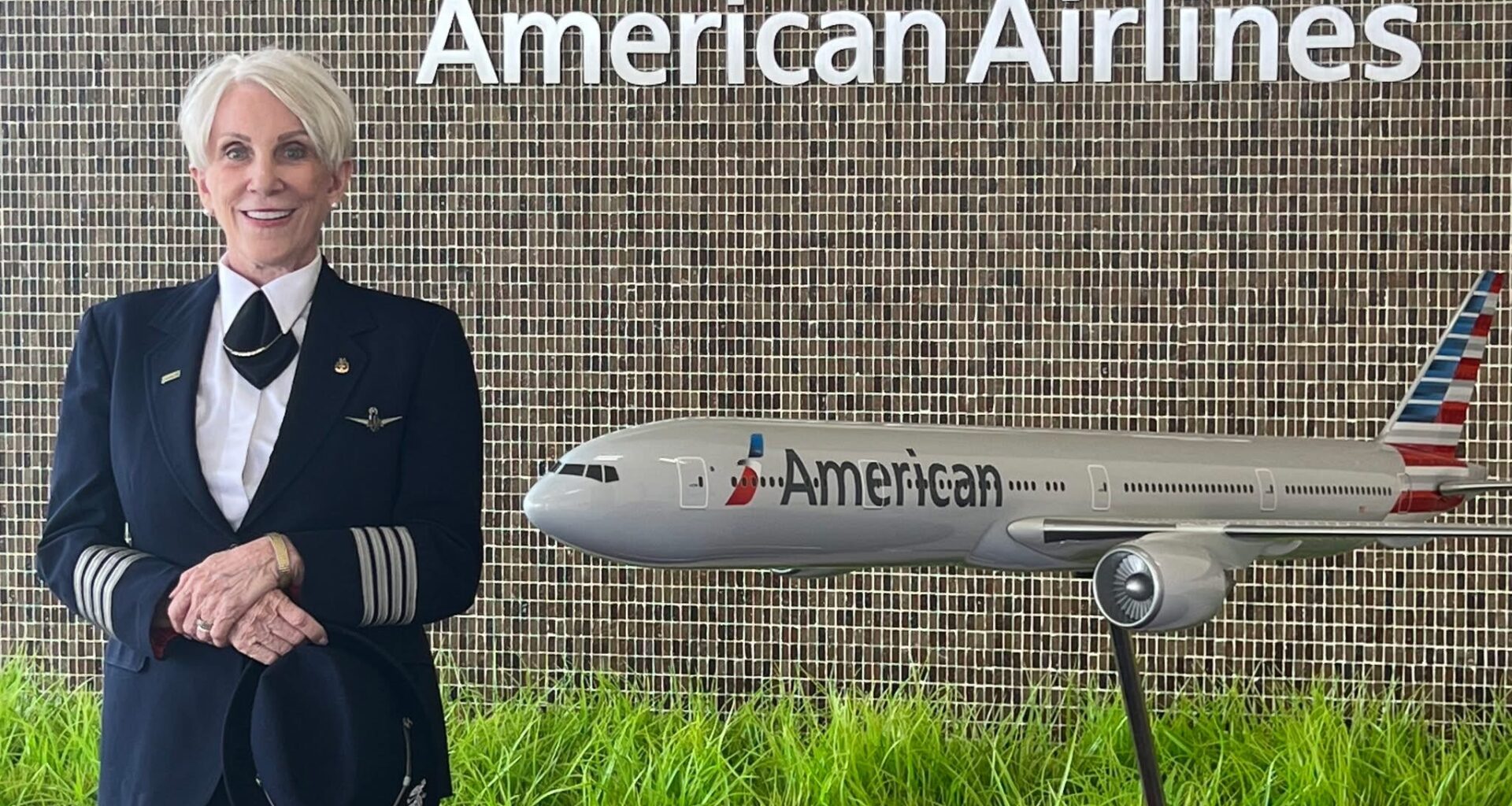
On Sept. 11, 2001, Beverley Bass was at the controls of American Airlines Flight 49, a Boeing 777 bound from Paris to Dallas-Fort Worth, when U.S. airspace was closed, and she was ordered to divert to Gander, Newfoundland, Canada. She and her 156 passengers would be there for five days.
This month, she returned to Gander again. We spoke with Bass by phone from Gander, where she was attending the anniversary reunion.
“Gander always does such a beautiful job commemorating the horrific events of that day and making a beautiful moment out of something terrible,” she told us. “This is actually our seventh trip back here, so it’s kind of like coming home for us.”
Born and raised in Fort Myers, Florida, she came to Texas in 1970 to attend Texas Christian University and never really left, even during the six years she was based in New York early in her piloting career.
Sign up for the Arts & Culture newsletter to get the latest stories delivered to your inbox
THANK YOU!
You’re all set.
CLOSE
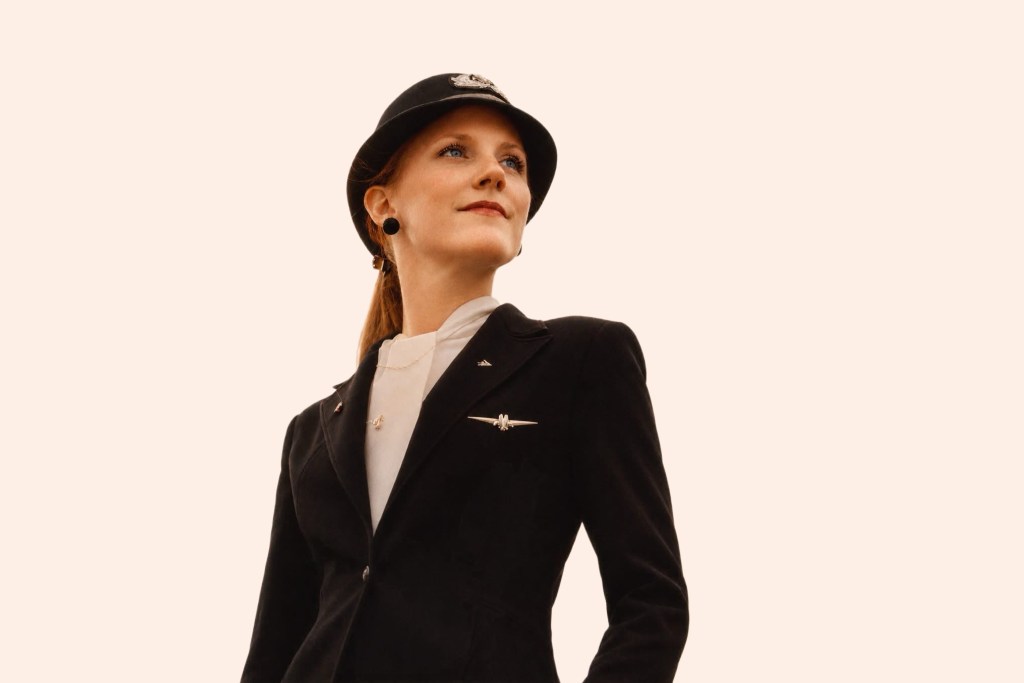 Beverley Bass in the mid-1970s, freshly graduated from Texas Christian University.
“I just love everything about Texas, especially Fort Worth and Texas toast,” she said, laughing. “I guess I’m almost a Texan. I’ve been here so long.”
For someone with a résumé that reshaped American aviation, Bass is refreshingly plainspoken about how she’d like to be remembered. She became the first female captain in American Airlines history, and in 1986 she led the first all-female commercial cockpit crew in the world. Her story helped inspire the Tony-winning musical “Come From Away,” where she is sung to life in the show’s only solo, “Me & the Sky.” None of that is how she introduces herself.
“Gosh, I’m just a regular person,” she said. “I’ve been a pilot since 1971. I flew jets professionally for 40 years, 32 with American. I’m just a down-home person, but I’d like to be thought of as a great aviator.”
25 years later
The instinct to focus on the work rather than the milestone carried her through the hardest moment of her career. When she learned the towers had been hit, she knew she’d have to land somewhere in Canada. What she didn’t have was information. As captain, she had to decide how much to tell a plane full of anxious travelers when even she knew almost nothing.
“What I decided early on is I was going to tell the truth and recognize I didn’t know very much,” she explained. “I didn’t want to create a mechanical problem or make up something I was going to have to undo when I got on the ground, because then I lose credibility. And maybe being a female captain makes you a little more cognizant of that.”
Her announcement was spare and steady, and she still remembers it word for word: “Ladies and gentlemen, this is Captain Bass. There’s been a crisis in the United States. All of the airspace is closed. We’ll be landing our airplane in Gander, Newfoundland. I’ll get back to you with more information once we get on the ground.”
On the ground, each diverted plane was assigned a local liaison. Hers was Pat Woodford, a Gander air traffic controller. When her crew reached the town’s Comfort Inn, Woodford reached into his pocket and handed her the keys to his brand-new pickup truck.
“I said, ‘You don’t even know me, and you’re handing me the keys to your truck. This is so strange,’” she recalled. “And he said, ‘Well, Bev, where are you going to go? You’re on an island.’ I said, ‘Well, good point.’”
Woodford, she notes, is now a lifelong friend. He’s visited her in Texas. The friendships she made in those five days have lasted a quarter of a century.
The return to DFW Airport brought a different kind of shock. Cocooned in Gander, Bass and her passengers had little sense of how profoundly the country had changed. Some passengers, she said, didn’t want to go home at all, unsettled by the fear of a new America none of them had seen yet.
“I did not know, when my family picked me up at the airport, and we drove home, that there was going to be a flag in every single yard that we passed,” she said. “I was speechless. I couldn’t even talk.”
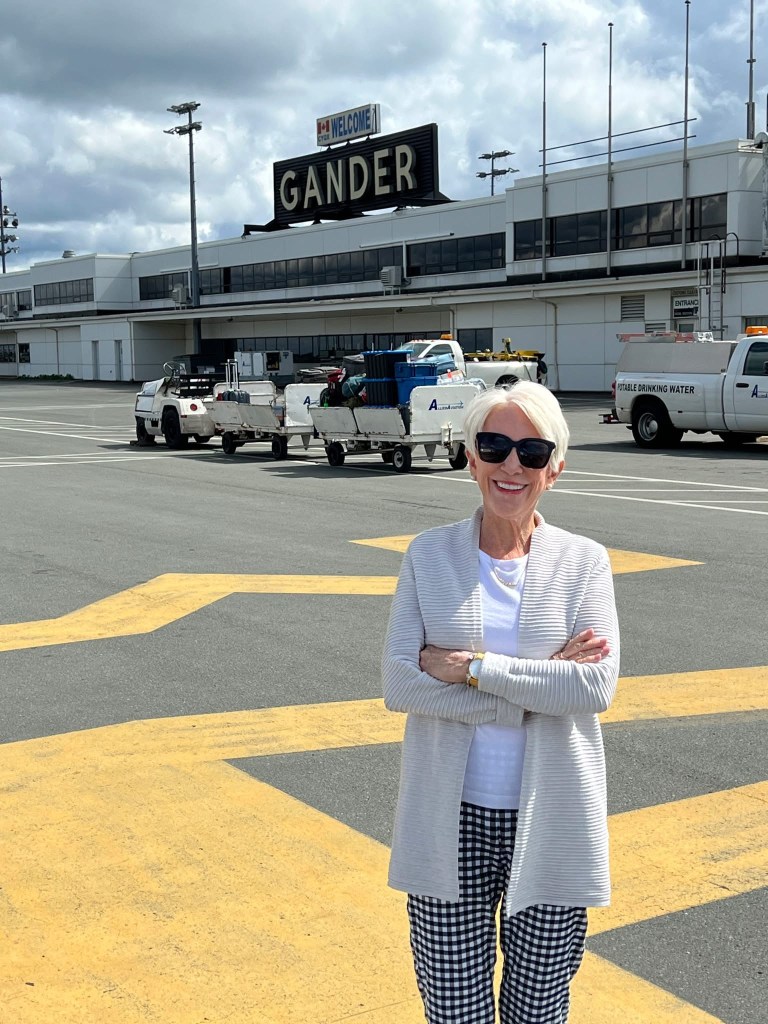 Beverley Bass returns to Gander where her Dallas-bound flight was diverted on 9/11 for a reunion.
Provided by Beverley Bass
She was flying again within days.
“I always say it’s a little bit like getting back on a horse,” she said. “I was never going to let the terrorists ruin what I loved so much.”
Still, she’s thoughtful about what the country lost. There is now, she points out, an entire generation — even young pilots at American — who never knew flying before the TSA, before the checkpoints and the quart-sized bags.
“It’s kind of a shame,” she said. “It was actually quite nice.”
These days, home is Argyle, in Denton County, where she and her husband have lived for 21 years. Before that came Colleyville and Arlington. But Fort Worth, she admits, still holds the deepest claim. Next week, her college roommate is visiting, and they plan to return to the TCU campus and revisit their old haunts.
“The whole DFW area just means the world to me,” she said. “It always has.”