
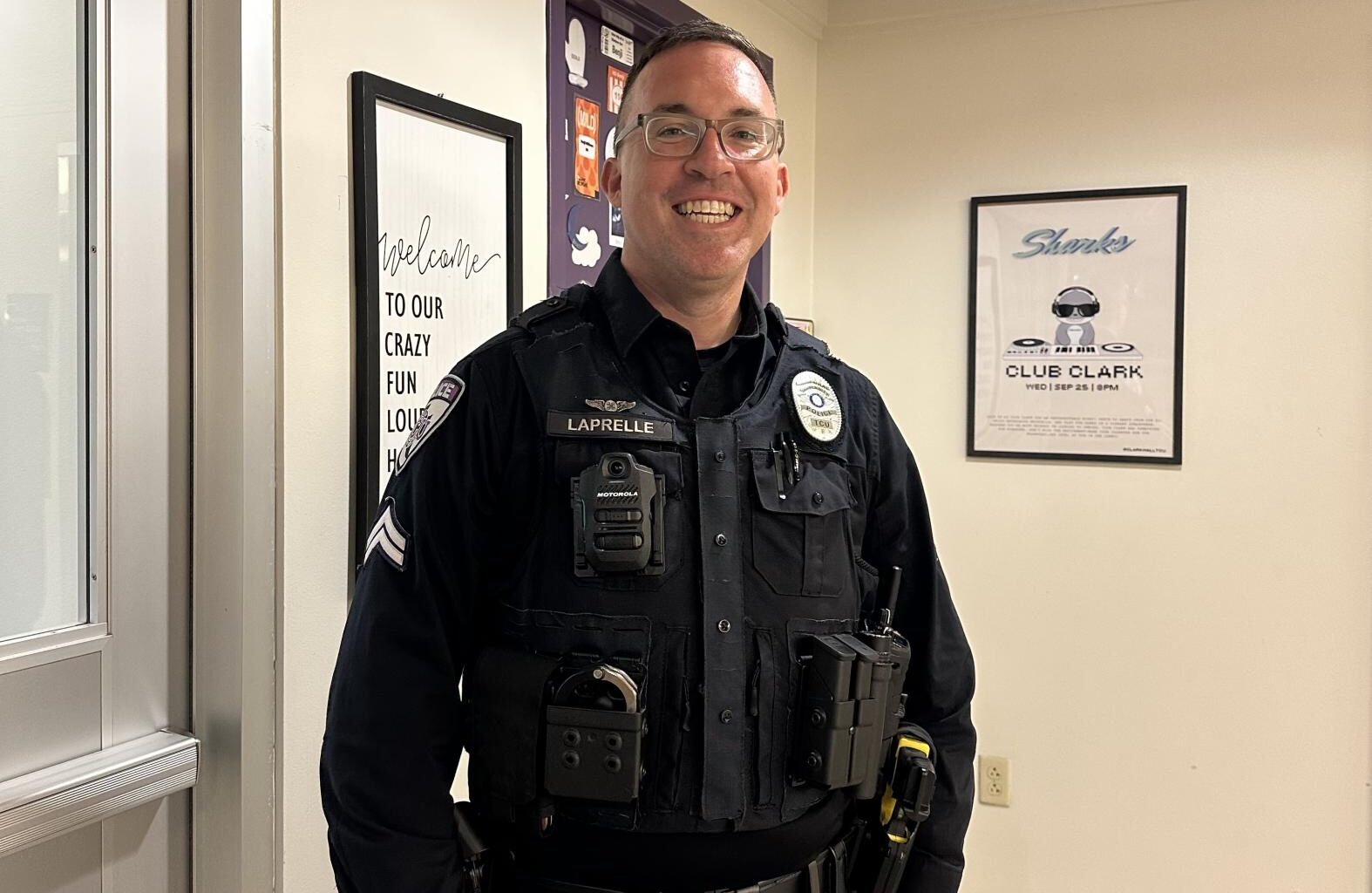
TCU police can now wear body cameras to record interactions with students and others on campus.
“Transparency and accountability are the prime objectives,” TCU Police Commander Steve Enright wrote in an email. “The cameras have numerous benefits, such as preserving digital evidence of an incident, which can aid in the investigation and prosecution of criminal offenders.”
Enright wrote that the cameras can help de-escalate a volatile situation by encouraging both officers and the public to modify their behavior. “Cameras document incidents without prejudice, lessening false or frivolous claims of unprofessional conduct,” he added.
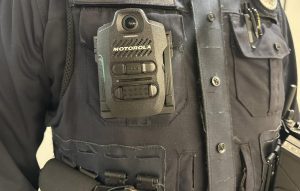 TCU Police now wear Motorola body cameras to record encounters with the public. (TCU360/ Lexi Kilpatrick)
The university already used Motorola Solutions for radio communications and added Motorola’s SVX body-camera system so the cameras could integrate directly with its existing communications software.
Funding for the body cameras came from different funds outside the department’s regular equipment budget.
The body camera system includes a translation feature allowing officers to communicate with people they encounter who do not speak English. Command staff can also view a body camera feed live, giving them real-time information and helping them decide where help is needed during a critical incident. When recording, the front of the body camera will illuminate with a red light.
Manya Sharma, a junior biology major, said she views the cameras as a positive addition to campus safety. “As long as the body cameras are being used for good, I think it’s a great thing,” she said.
TCU became the last university in the Big 12 to begin using body cameras in August as the new semester began. TCU PD communicated with numerous Big 12 university police departments to discuss body-worn camera procedures. Both private university and public-sector policies were studied before developing the regulations governing the use of body-worn cameras on TCU’s campus.
Officers can record inside a residence if they have a legal right to be there, such as with an arrest warrant, search warrant, resident consent, or an emergency.
If an officer is responding to an emergency in a student’s dorm room, the officer’s camera will be activated because the law enforcement action legally overrides an individual’s expectation of privacy. If an officer is walking through a locker room while on patrol, there is an expectation of privacy and no overriding legal reason to record, so the camera would remain off, according to TCU policy.
“In some instances, footage from body cameras could be released in response to a request made under the Texas Public Information Act,” Enright wrote. “This act strictly regulates what may be released to the public.”
Footage of a criminal act that is under investigation or has not been finally adjudicated by the courts will not typically be available, Enright wrote. Videos captured in a private space, such as a residence hall room, would require the affected resident to provide written consent for the video to be released, he added.
Any requested videos must comply with the requirements of the Texas Public Information Act. This often means videos will be redacted, blurred, or distorted to protect personally identifiable information or footage captured in a private space.
For some students, the addition of body cameras is another measure that can provide a greater sense of safety on campus.
“I got more safety alerts and warnings last school year, so I think the body cameras are a great thing,” said Caroline Clark, a junior movement science major.