
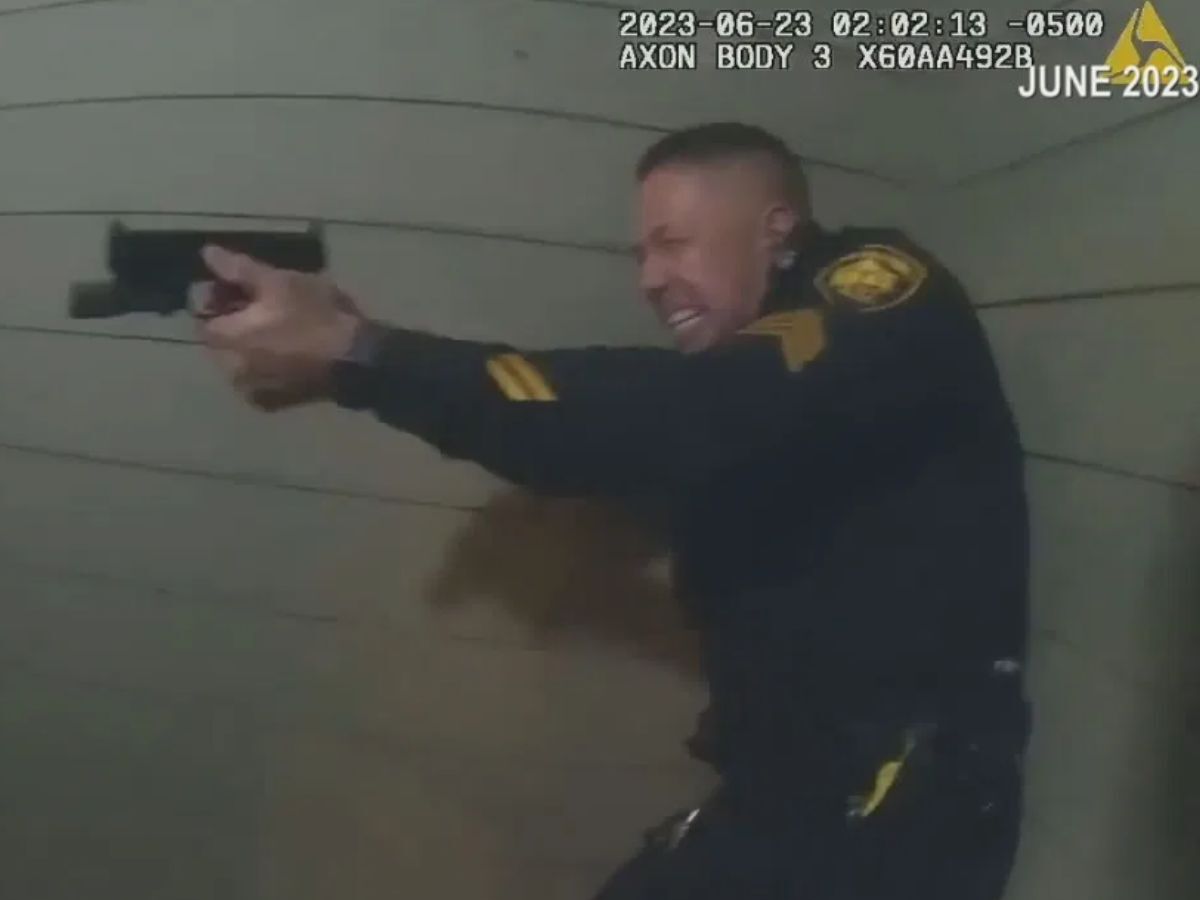
Monday’s verdict in an historic case — San Antonio’s first-ever murder case in a police shooting — followed a month-long trial of the former officers.
Five women and seven men deliberated for less than two hours.
They found Nathanial Villalobos, Alfred Flores, and Eleazar Alejandro not guilty on all counts.
Alejandro’s small frame leaned into his attorney Mario Del Prado as he tried to hold back tears.
A crowded defense bench flanked all three clients. In closing arguments, the half-dozen attorneys all made references to the tragic loss of life. One gave the family a small gift, an inuksuk, an arctic trail marker meant for navigation.
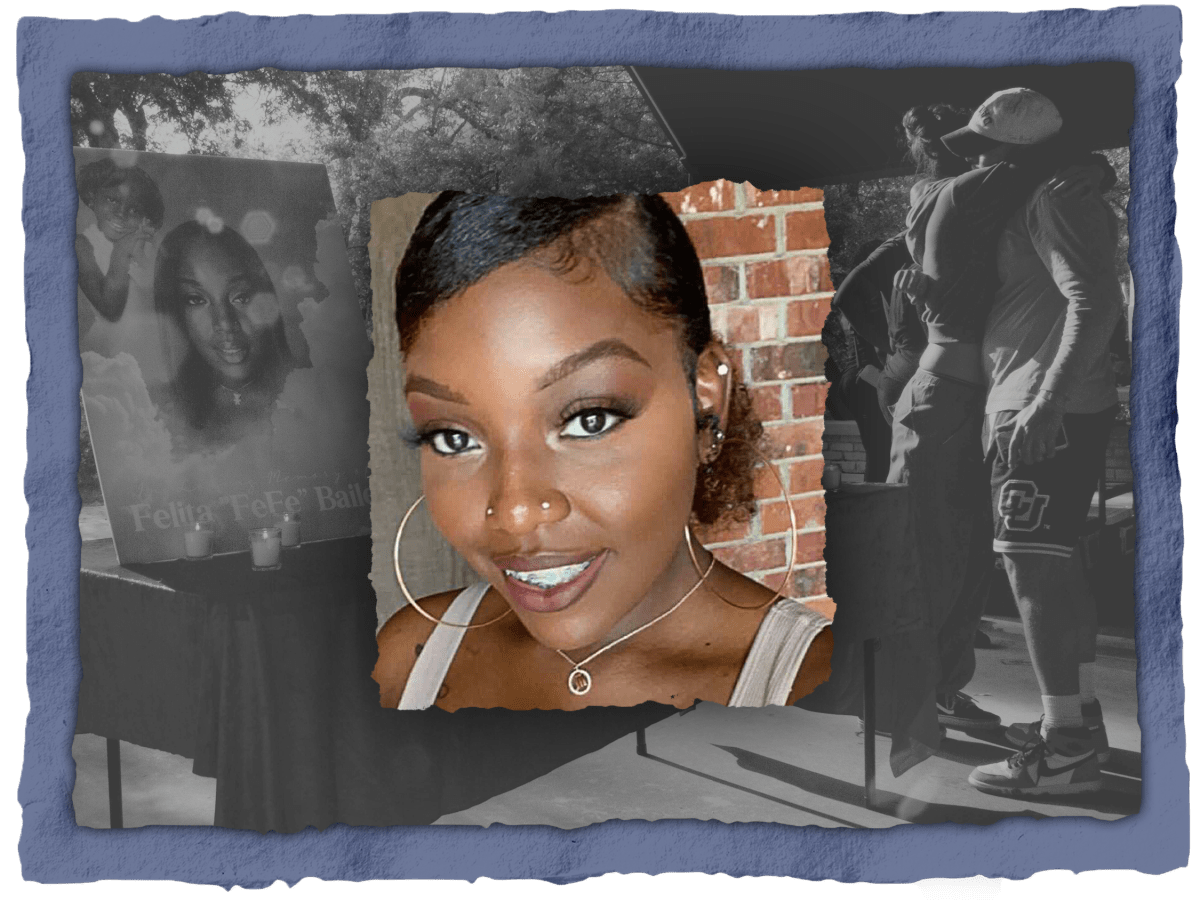
After the verdict was read and the jury released, 379th District Court Judge Ron Rangel turned to the family of slain 46-year-old Melissa Perez, including her four children.
“The jury wanted me to tell the family they were very sorry for your loss,” said Rangel.
Perez was killed in the early hours of June 23, 2023 after three officers shot her through a locked glass door. She was one of 22 people shot by San Antonio Police that year, according to reporting from KSAT.
Perez’s 26-year-old daughter, Alexis Tovar, previously told The Barbed Wire that she simply couldn’t see how her 130-pound mother posed a threat to three physically fit policemen.
Eventually, the family stood and exited the courtroom in silence.
It was a quiet end for a killing that made national headlines and drew intense scrutiny for the San Antonio police force over how it treats the mentally ill. The trial was the first one to see murder charges levied against police officers for using deadly force in the city, the seventh largest in the country. It involved more than a hundred hours of testimony and hours of body camera footage.
Prosecutors continued to argue the police were the architects of the scenario that led to Perez’s death.
“They set up a situation where it was a dangerous game of chicken,” said David Lunan, Chief of the Felony Criminal Trial Division for Bexar County, in his closing argument.
Ultimately, the jury determined that Lunan’s team failed to meet the high threshold to prove the three officers did not fear for their lives as Perez rushed at them with a hammer, despite being behind a locked glass door.
Police are given wide latitude in the use of deadly force in “split-second” decisions. As The Barbed Wire previously reported, police are rarely charged in such shootings and even more rarely convicted.
In the early hours of that night in June 2023, Perez was found cutting the fire alarm wires at her apartment complex, triggering an alarm that evacuated her building; the told fire personnel that she believed the FBI was using the fire alarm equipment to surveil her. Perez was schizophrenic, which she disclosed to officers on the scene. After a brief interaction with fire and police responders, she fled to her ground-level apartment. During those early interactions, as police attempted to get into her apartment to arrest her for criminal mischief, she struck one by throwing a prayer candle through an open window at him. This caused other officers to respond, including Flores, Alejandro, and Villalobos.
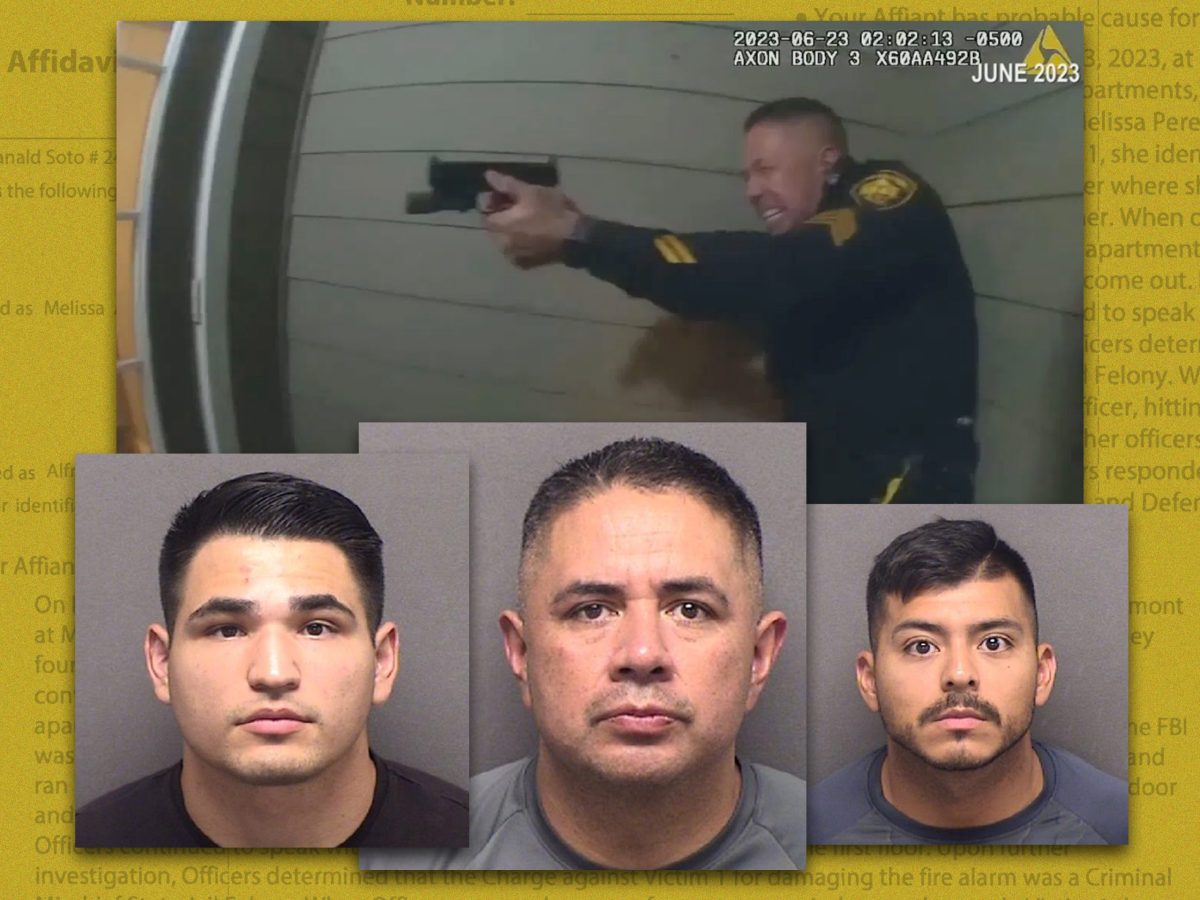
Defense attorneys argued that police had a duty to enter the home as she had committed a felony, then struck an officer.
The three men arrived more than two hours into the police call. During the trial, prosecutors argued that the response up until that point had only made things worse, aggravating a woman suffering from a mental health episode, which they said should have been clear to the three officers. Their attorneys claimed it was never communicated by first responders.
Perez was shot to death by the three officers as she rushed at them with a hammer. The men were trying to enter a back glass patio door that was locked. They fired their weapons into the home. Alejandro and Flores’ bullets struck and killed her. All three men were arrested within 24 hours for murder, a charge that was later dropped against Villalobos, whose bullets missed.
Defense attorneys were able to use the quick arrest and mistaken initial charge to their advantage, claiming the police were railroading the officers over a politically fraught situation.
“Police Chief McManus didn’t like that a mentally ill woman got shot…neither did we,” said Jason Goss, one of Villalobos’s attorneys. The San Antonio mayor and city council also condemned the shooting — publicly — at the time.
He argued that the desire to distance the department from the tragedy led to a botched investigation. They presented multiple experts to expand on their narrative that the shooting was justified and the men’s fear from the woman was reasonable. The prosecutors’ team dismissed the experts as union-backed — and attempting to maintain the status quo, where police decisions are not challenged.
The prosecution did not present an expert witness on the use of deadly force to counter the defense’s perspective, however. Several of their witnesses on SAPD policy were blocked after defense attorneys argued that the policy did not influence whether the men committed a crime.
The family filed a civil wrongful death lawsuit two weeks after the shooting against the three officers, the police department, and the city of San Antonio. It was dismissed in September, but their civil attorney said they filed an appeal on Nov. 5.
“I feel robbed because I didn’t get to say bye,” Perez’s daughter told The Barbed Wire in October. “I didn’t get to hug her. Talk to her one last time.”
Related