
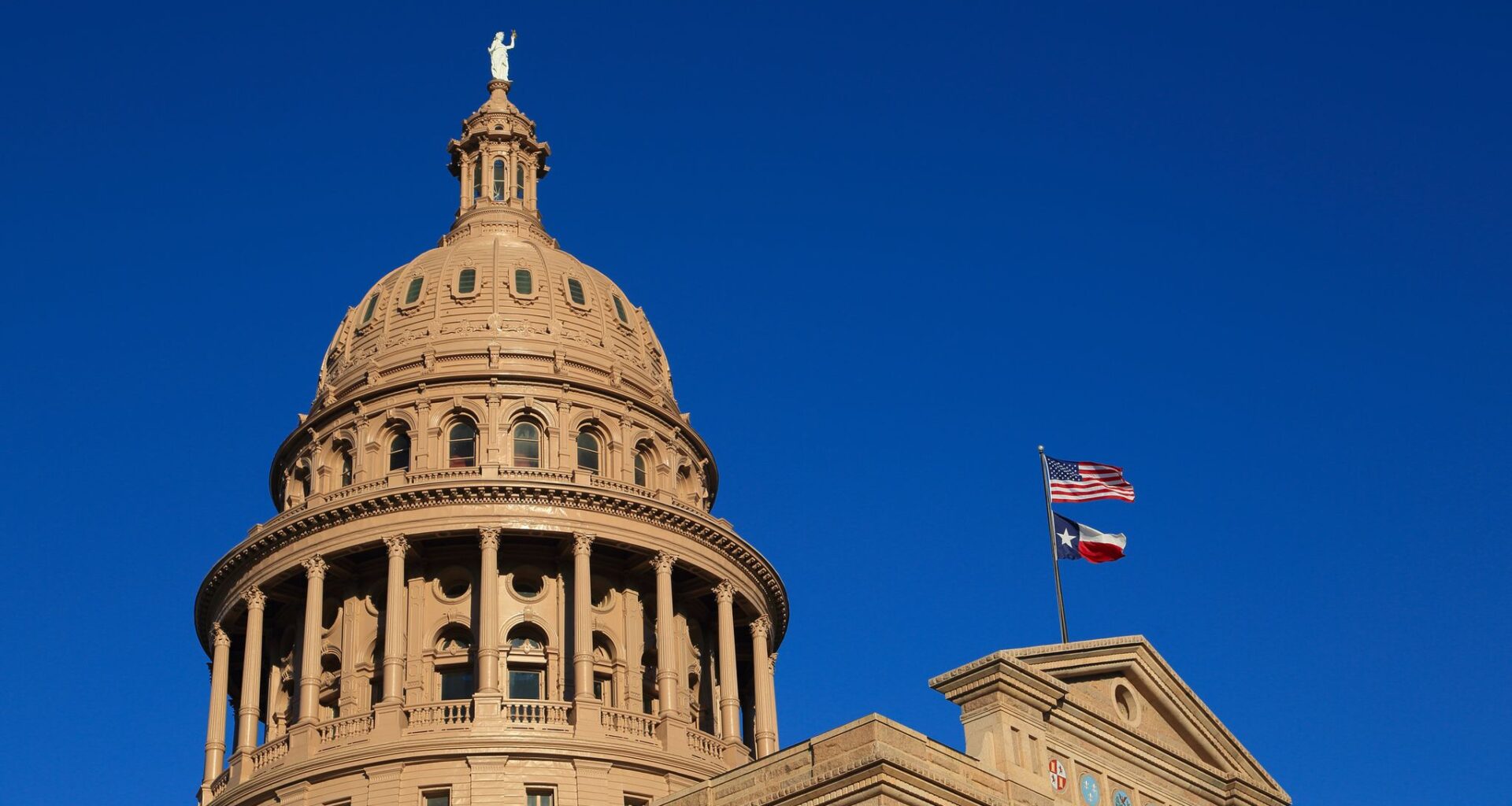
Gov. Greg Abbott and Texas House Speaker Dustin Burrows are demanding answers in the killing of Austin engineer Andrew James Wimsatt. A House committee will meet for a hearing on the case on Sept. 30 at the Texas Capitol.
gangliu10/iStockphoto
The details of Andrew James Wimsatt’s killing in Round Rock are so grisly that a detective’s account of the crime made us recoil.
On Sept. 7, Wimsatt, a 62-year-old engineer from Austin, sat on a park bench near the nursing home where he had just visited his mother. Video obtained by the Williamson County Sheriff’s Office showed that, in broad daylight, a man came up from behind and stabbed Wimsatt in the neck. Wimsatt tried to push him off but couldn’t. He fell to the ground, where the attacker used his knee to pin down Wimsatt and cut his neck. The killer then wiped the blade and ran.
Wimsatt and the suspect, Benedict Ogbodiegwu, didn’t know each other, according to officials, but Ogbodiegwu was no stranger to the Williamson County criminal justice system.
Article continues below this ad
He had been arrested in January on suspicion of stealing Delta 8 cigarettes from a vape shop, a charge of misdemeanor theft. Records show that a court ordered Ogbodiegwu to be committed for psychiatric treatment to restore his ability to participate in his trial. By early April, however, he was out of jail, and it’s unclear whether he ever got treated. A court dismissed his case.
Ogbodiegwu was arrested again in May for allegedly giving a fake name to a police officer after someone called in a theft at a gas station. A court record documenting his bail hearing shows that authorities suspected him of having a mental illness or intellectual disability. He was released from jail 11 days later. That case, too, was dismissed.
The 26-year-old Ogbodiegwu had at least two run-ins with the law this year in which authorities suspected or determined he was mentally unwell. Some people online have made hay out of the suspect’s unusual last name, conjecturing he’s an undocumented immigrant and clamoring for his deportation. Court records indicate he’s a U.S. citizen and that he once attended a Christian private school in Austin.
This isn’t about race or citizenship, as online trolls would have you believe. But it is about an ongoing failure to ensure that people who may be a danger to themselves or others are not just put back out on the streets. Our courts and our society are not doing a good job of managing mental illness, and a crime like this is the most terrible outcome when people fall through the cracks.
Authorities linked Ogbodiegwu to Wimsatt’s murder through video footage and evidence found at his home, including stained sweatpants and a bloody knife, according to an arrest warrant. If Ogbodiegwu is the killer, then is Wimsatt dead today because of a failure to treat Ogbodiegwu for a mental illness? Because of a failure to hold him accountable for petty crimes?
Article continues below this ad
We reached out to Ogbodiegwu’s attorney, but we didn’t hear back.
There is a lot we don’t know. Some documents in Ogbodiegwu’s case file are sealed. We do know that a court has once again ordered his mental competence to be assessed after the murder charge.
Round Rock is not in our backyard, but what’s unfolding in Williamson County matters here, too. We’ve written previously about Dallas’ failure to come to terms with aggressive and mentally unstable people downtown and beyond. Wimsatt’s random and gruesome death has drawn the attention of both Gov. Greg Abbott and Texas House Speaker Dustin Burrows, who are calling for answers and questioning the decisions of local prosecutors.
“Texas will hold rogue prosecutors accountable and deliver justice for victims,” Abbott said in a pointed statement his office issued Friday.
The office of Williamson County Attorney Dee Hobbs, who prosecutes misdemeanor crimes, declined to answer specific questions but said in a statement that “all available referrals were made and all allowable efforts were undertaken by this office to protect our community.”
Article continues below this ad
Hobbs went on: “As for some State leaders being concerned about cases like this, they should be as we all should be, however, I find it sad those leaders are trying to find a speck in local prosecutors’ eyes while they walk around with a plank in their own.”
We don’t know enough to assess the county attorney’s performance in handling Ogbodiegwu’s cases. It doesn’t strike us as a productive posture to issue a vague defense and snipe at state officials. But we should acknowledge that prosecuting mentally ill offenders is complicated, and it doesn’t all fall on prosecutors to address.
For one, Texas’ state hospital system doesn’t have enough beds to meet the demand for psychiatric treatment. Sometimes a court will order an inmate to be committed to a hospital to have their mental health restored. But if the inmate waits in jail longer than whatever the maximum penalty for the crime would have been, then the inmate is released.
The maximum punishment for Ogbodiegwu’s theft charge in January was six months in jail. He was discharged from jail three months after his arrest, records show.
The Texas Tribune reported that as of June, 447 people were waiting for a maximum-security bed, with an average wait time of seven months. Almost 1,200 others were waiting for a lesser security bed, with an average wait time of five months, per the Tribune.
Article continues below this ad
Texas state officials have invested more money into the state psychiatric hospital system in recent years. Dallas landed a new mental health hospital, which opened this year. But we’re still staring up the mountain, and Texas is looking at a court order to shorten inmates’ wait times for a bed to 21 days.
Burrows said a House committee will hear testimony on the release of repeat offenders on Sept. 30. Abbott and Burrows are right to scrutinize what happened in Ogbodiegwu’s case, but they should also look at the state’s actions. As lawmakers review what happened in Williamson County, they should also examine what state resources, if any, were made available to the courts.
What they learn here could help them press federal officials to contribute to the state’s psychiatric hospital net. Texas can’t plug the gaps on its own.
All we know today is that something is broken about the way Ogbodiegwu moved through the courts. It likely cost the life of an innocent man who simply paused his day to sit on a park bench.