
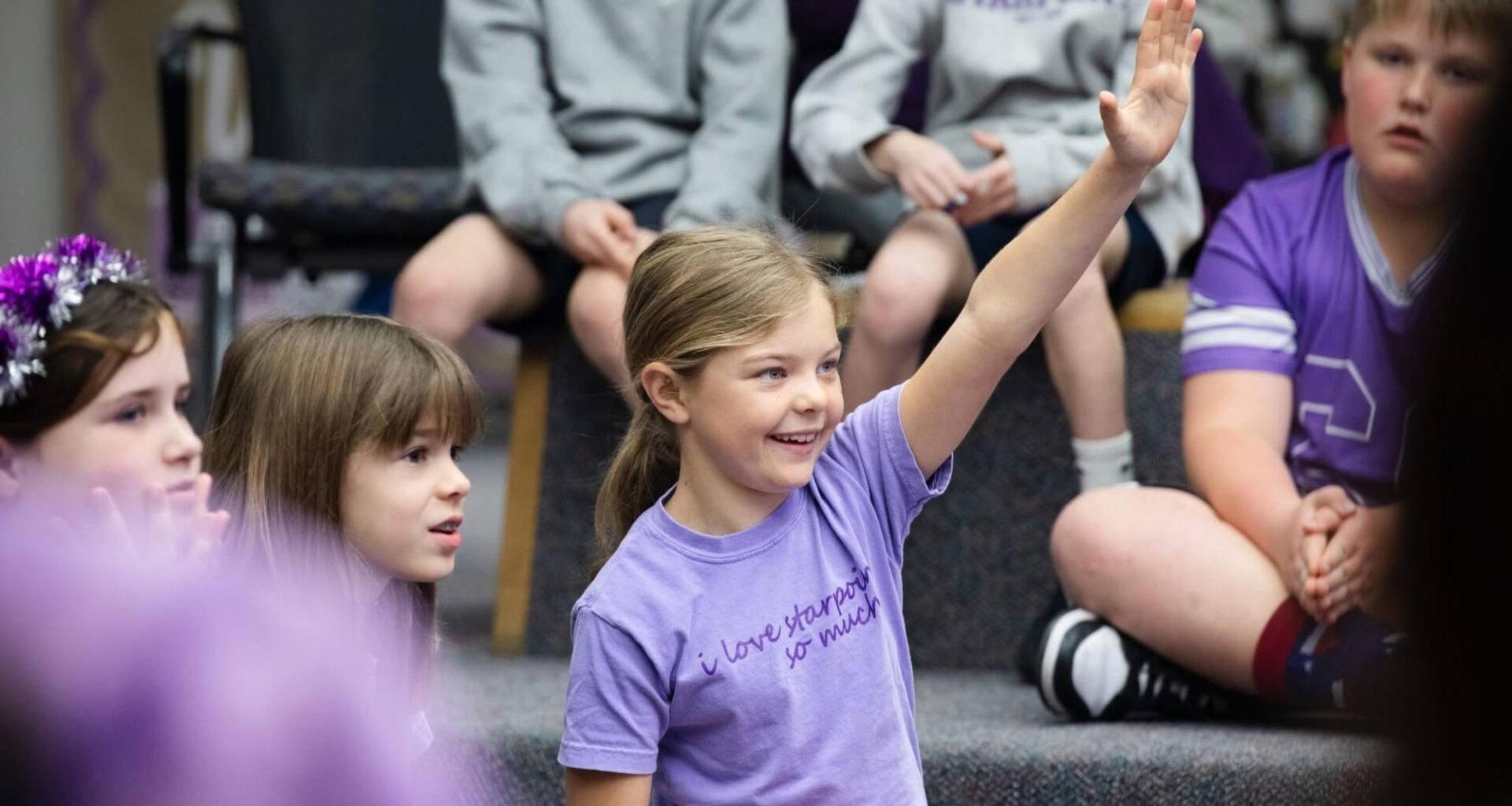
The relocation of the Starpoint and KinderFrogs schools has no start date planned.
Physical space is limiting the number of students the schools can enroll, said Jan Lacina, the interim executive director of TCU laboratory schools.
Last year, KinderFrogs admitted 10 out of 34 applicants. Starpoint admitted 12 out of 24 applicants.
“There are two schools in a building that was built for one school,” Lacina said. “Historically, the building functioned as a more ideal lab school with space for observations and offices.”
TCU’s Starpoint and KinderFrogs schools are highly specialized, small laboratory schools with limited capacity. The schools are part of TCU’s College of Education and both serve students with specialized learning needs.
TCU proposed a relocation and expansion of the programs in the 2024 Campus Master Plan. Currently, the 1.33-acre lot identified for their future relocation is being used to house a construction trailer for the Ed Landreth Hall renovation through summer 2028.
“The 2024 TCU Campus Plan proposes that these properties would facilitate a relocation and ‘rightsizing’ of the Starpoint/KinderFrogs program,” said Jason Soileau, assistant vice chancellor for planning, design and construction. “However, there are no plans for that accommodation in the immediate future.”
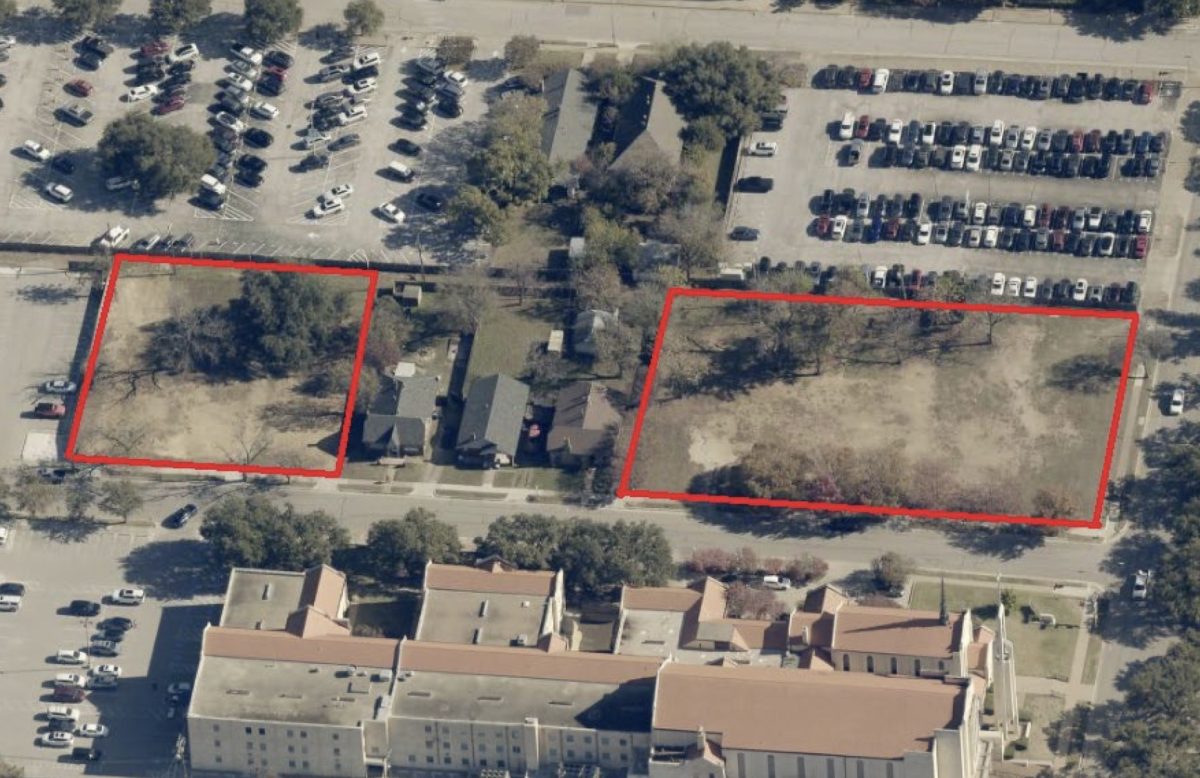 TCU-owned properties along Wabash Avenue sit vacant after seven single-family homes were demolished on the eight lots in 2025. (Courtesy of the City of Fort Worth)
TCU purchased eight properties on Wabash Avenue, the site for the proposed relocation, in March 2024. The single-family homes occupying the land were demolished in 2025, according to the zoning staff report.
Before construction can begin, TCU first needs to raise capital.
“The funds raised will, in part, dictate the size and amenities of a new building,” Lacina said.
The laboratory schools have not received any updates on a specific timeline for the expansion.
KinderFrogs serves children with Down syndrome ages 18 months to 6 years old. Starpoint serves children with learning disabilities ages 6 to 11.
KinderFrogs is the only program of its kind in the Fort Worth area, providing early intervention educational services for children with Down syndrome.
With a 3:1 student-to-teacher ratio, KinderFrogs offers individualized support for children ages 18 months to 6 years. But with only three classrooms, KinderFrogs hopes to take more students without sacrificing the individualized experience.
Because KinderFrogs is the only program of its kind in the area, there are limited alternatives.
Starpoint is also highly specialized with a 10:1 student-to-teacher ratio, but there are alternative options. Some options include the Key School and Training Center and the Hill School of Fort Worth.
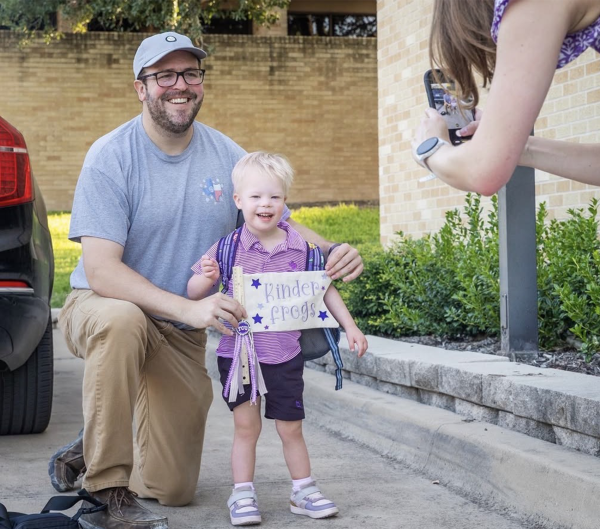 A KinderFrogs student arrives for the first day of school. (Courtesy of TCU Instagram)
Until expansion moves forward, applicants to both schools could wait up to two years to be accepted, according to an article from the Fort Worth Star-Telegram.
“Applicants who asked about possible admission for the 2027-2028 academic year will be called to inquire about their continued interest,” Lacina said. “Those calls will be made if there would be space in the appropriate class.”
As TCU works toward Research 1 status, the laboratory schools want to expand alongside the university. An R1 designation represents the highest level of research activity based on research spending and doctorate production.
There are 187 universities recognized by the Carnegie Classification of Institutions in Higher Education as R1 institutions.
Creating a facility for the lab schools that supports R1 research goals requires more room for researchers to observe students without disrupting classrooms.
“I hope that an equal focus would be on spaces where university students can come, experience and learn from our students,” Lacina said.