
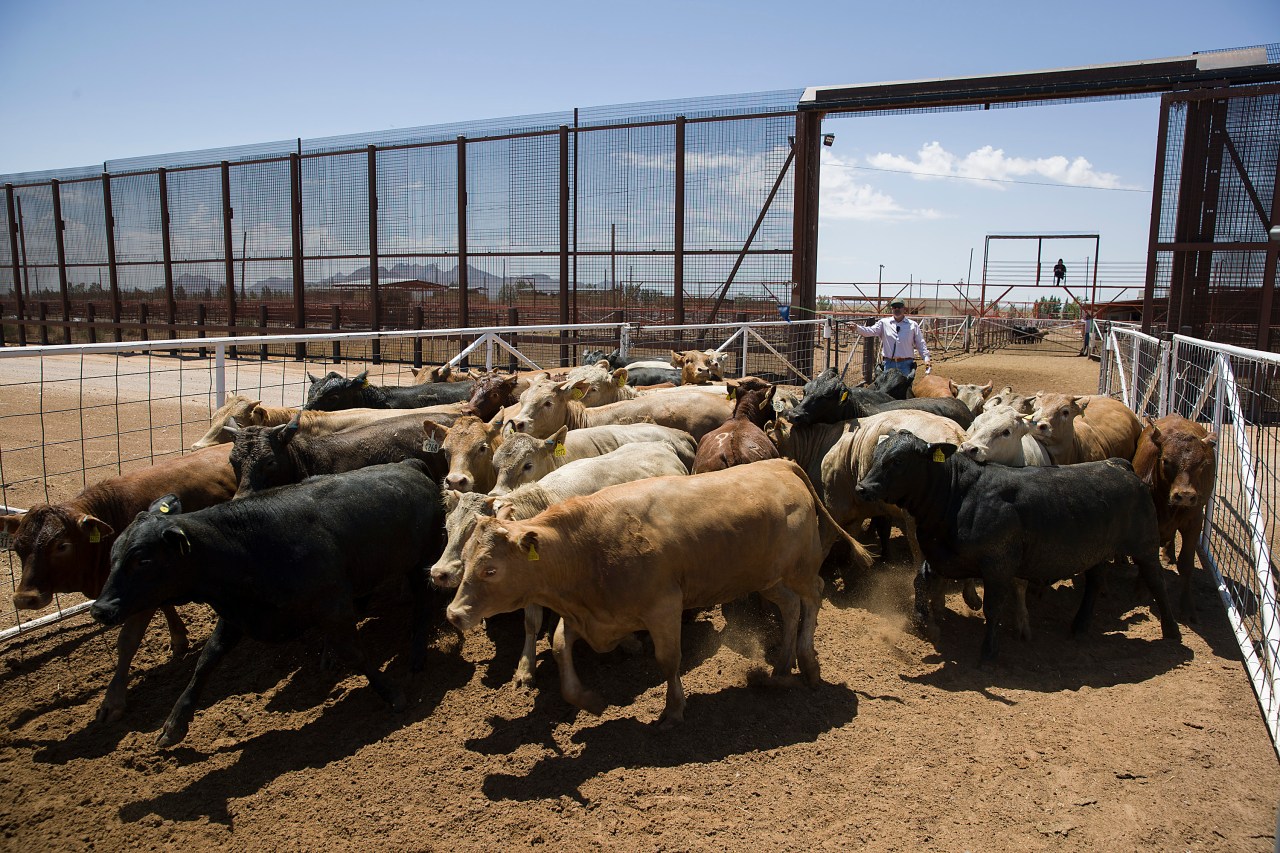
Editor’s note: New Mexico state officials confirmed the second case of New World screwworm in a horse on Thursday in Grant County. State animal health officials say they learned of the confirmed case after news conference with U.S. Secretary of Agriculture Brooke Rollins at the Santa Teresa Livestock Crossing, where Rollins announced that livestock imports would resume on Sept. 24. It remains unclear if the new case will affect livestock imports. A news release from the New Mexico Livestock Board and the New Mexico Department of Agriculture said they are coordinating with the U.S. Department of Agriculture and other state and federal partners to assess the situation and determine appropriate response measures.
EL PASO, Texas (Border Report) — U.S. Agriculture Secretary Brooke Rollins visited southern New Mexico on Thursday to announce the reopening of the Santa Teresa cattle crossing, a major entry point for livestock imported from Mexico.
Rollins stated that the Santa Teresa Livestock Crossing is scheduled to reopen Sept. 24, allowing the first head of cattle to enter the United States.
The U.S. Department of Agriculture said it is implementing a phased federal plan to restore cross-border livestock trade under new protocols intended to prevent the spread of New World screwworm.
New Mexico cattle industry hopes to ward off screwworm as border trade reopens
The crossing closed as federal authorities restricted livestock imports from Mexico in response to the northward spread of New World screwworm, a parasitic fly whose larvae infest open wounds and feed on the living tissue of warm-blooded animals.
The parasite can infect cattle, horses, wildlife, pets and, in rare cases, humans. It was eradicated from the United States in the 1960s through a program that released sterile male flies to disrupt reproduction.
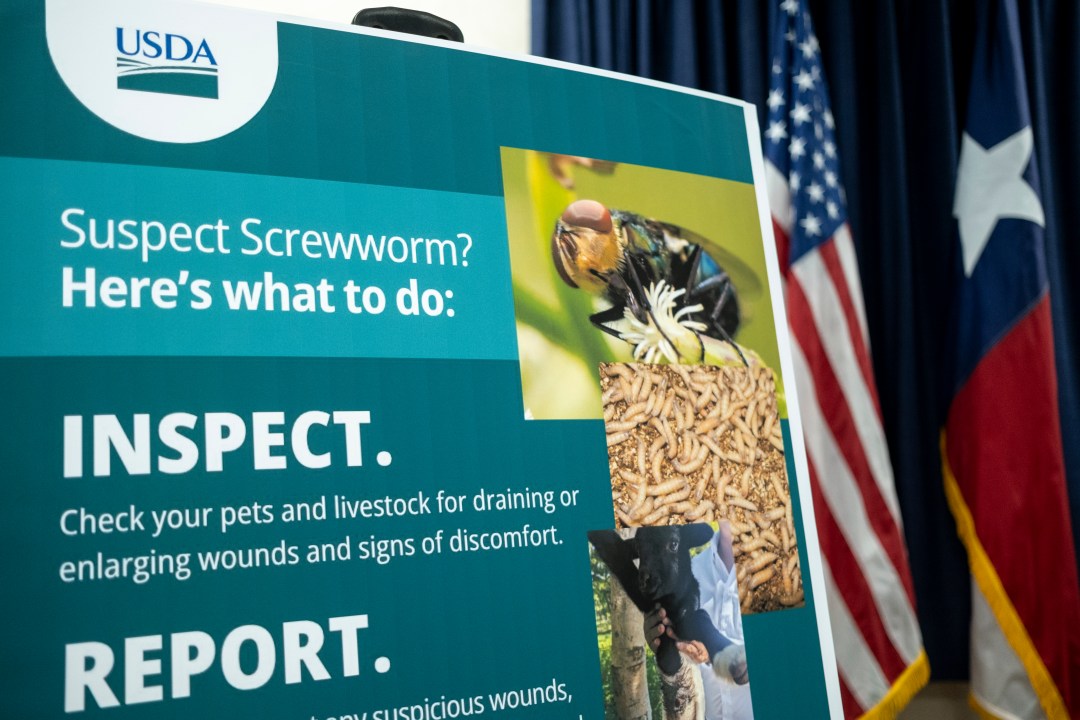 A poster with information on the New World Screwworm is displayed during a press conference with government officials at the Texas Division of Emergency Management State Operations Center on June 5, 2026 in Austin, Texas. The first case of New World Screwworm infection, since its eradication from the country in 1966, was reported in Texas by the United States Department of Agriculture on June 3. (Photo by Joel Angel Juarez/Getty Images)
The USDA began its phased reopening of southern cattle crossings Aug. 24 at the port in Douglas, Arizona. Federal officials said the agency would monitor operations there before reopening additional crossings in New Mexico and Texas.
Rollins said Wednesday that the Douglas operation showed livestock imports could resume safely under the new safeguards.
“What you all have proven for the last 20-plus days in Douglas is that this is manageable and doable,” Rollins said during a conference in Portland, Maine. She added that the USDA would close a crossing again if officials identified a new threat.
The agency has not released full details about the protocols required at Santa Teresa. Previously announced measures have included animal inspections, treatments and documentation intended to prevent infected livestock from entering the United States.
The prolonged closure has affected ranchers, livestock brokers and businesses on both sides of the border. Santa Teresa handles cattle arriving primarily from the Mexican state of Chihuahua before transferring the animals to U.S. ranches and feedlots.
The USDA has not said when other livestock crossings, including Columbus, New Mexico, will reopen.