
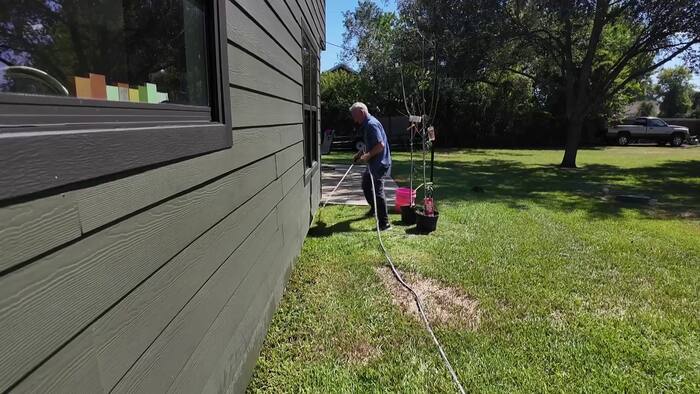
HOUSTON – Houston homeowners, you water your plants — but did you know you should also be watering the foundation of your home?
Joe Winter wants you to start.
“It seems crazy, right? Water your foundation,” Winter said. “You water your plants, you water your garden, you water your trees, but watering your foundation. It’s pretty much as simple as it sounds.”
Winter has worked in foundation repair and soil remediation for more than 40 years. He owns Honesty Foundation, where he answers the phone, evaluates homes and stays extremely busy.
 Joe Winter, Honesty Foundation (Copyright 2026 by KPRC Click2Houston – All rights reserved.)
“My phone constantly rings,” Winter said. “I had seven evaluations yesterday.”
Many of those calls come from homeowners who have noticed cracks, sticking doors or other potentially expensive problems. But Winter said one of the first warning signs may be outside the home, hiding in the dirt.
At one League City property, the ground had pulled so far away from the foundation that Winter could fit his entire hand inside the gap.
“The soil has shrunk and pulled away from the foundation. We can put our whole hand in it,” Winter said. “That’s over half to three quarters of an inch of expansion index shrinking the wrong direction.”
Winter said the homeowner now has to play catch-up, but his proposed first step was surprisingly simple: a $33 soaker hose.
A $33 first line of defense
Winter placed the 100-foot soaker hose around the home’s perimeter and connected it to a water source.
“It’s a perforated hose that leaks along the entire length of the hose,” Winter said. “So it’s an efficient way to water your foundation and hydrate the soil.”
The hose slowly releases water along its entire length, allowing moisture to soak into the ground surrounding the home. Winter said a soaker hose can be connected to a timer to make the process automatic.
“Personally, the key is doing it,” Winter said. “Whether it’s six inches or a foot away from the foundation, I don’t think is as imperative as doing it.”
Even with a gap large enough to fit his entire hand, Winter said the homeowner could still take action.
“No, it’s never too late to do the right thing. Never too late,” Winter said.
He said the soil will not rehydrate overnight, but several weeks of consistent watering could help it slowly expand again.
Those without a soaker hose can use a regular garden hose, but it will require more work. Winter recommended moving it around the perimeter and watering each section for several minutes.
“You could get your kid out there watering every day,” Winter said. “Anybody can water the foundation and it’s fun. They can spray themselves, get wet and children need a job, right? So what a great job for a child to water around the house.”
Why Houston homes need water
The reason watering matters lies beneath the home.
KPRC 2 meteorologist Justin Stapleton said Houston-area soil contains sand, silt and, most importantly, clay.
Clay can absorb significant amounts of water and expand when it is wet. When it dries, it shrinks and cracks. That repeated expansion and contraction can create uneven soil beneath a home and potentially contribute to foundation movement.
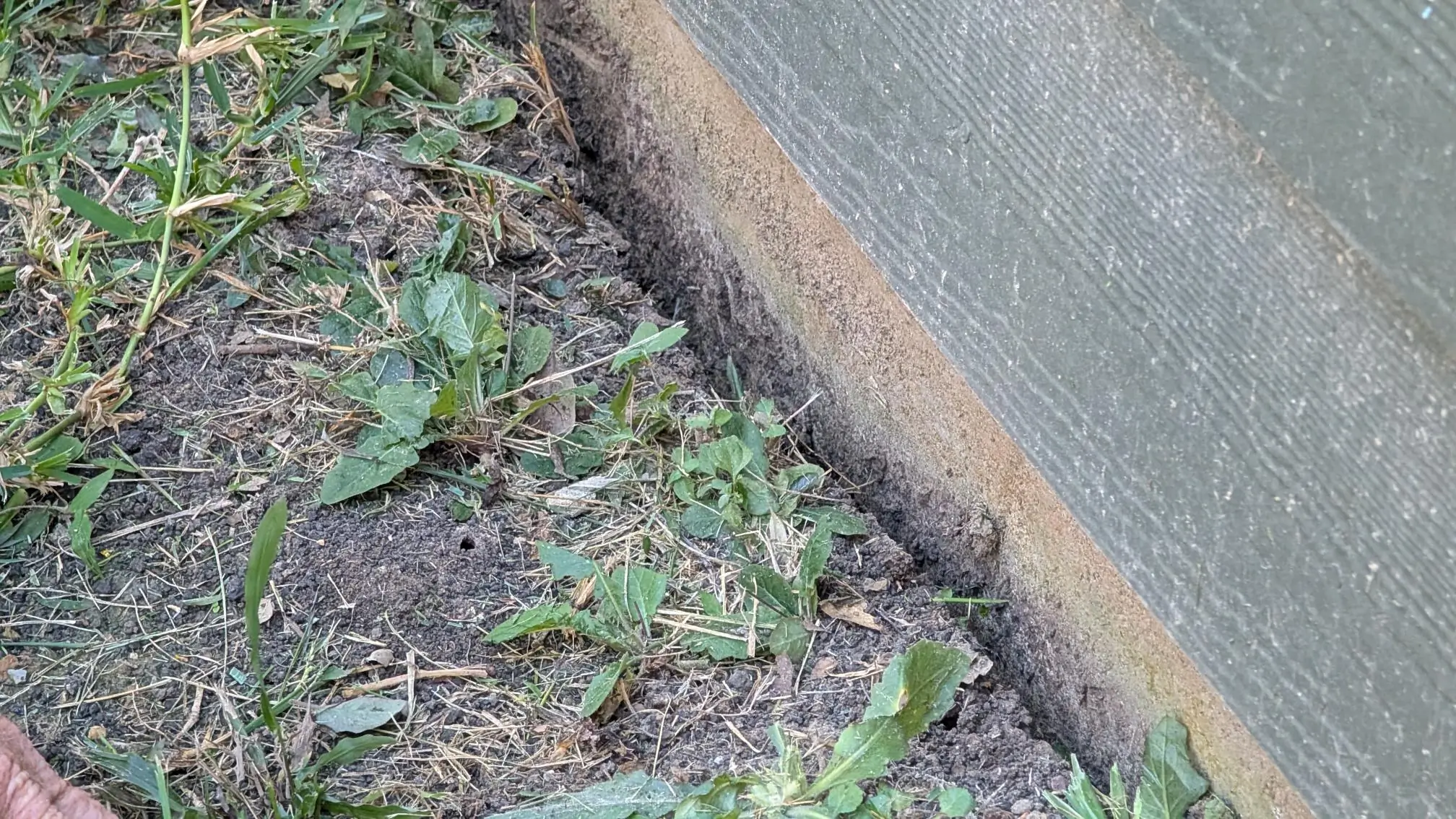 Houston’s clay soil can shrink during extended hot, dry weather, potentially contributing to foundation movement. A local foundation expert explains how a $33 soaker hose and consistent watering could help homeowners avoid repairs costing thousands. (Copyright 2026 by KPRC Click2Houston – All rights reserved.)
“Now the problem is sometimes it’s fairly heavy clay so that it can soak in a bunch of water, which is great because obviously we get big downpours and flooding at times,” Stapleton said. “But that also means that it can expand when it gets wet but when it dries out it starts to shrink and crack and that’s what most people find out when they start running into issues.”
Stapleton said Houston received substantial rain earlier in the summer, but conditions changed in August.
“August gets hot, August gets dry, upper 90s, 100s, most of September we’ve only had just a few rain days other than that it has been super scorching outside and so all of that clay that I mentioned starts to dry, shrink and contract and that’s what can lead to some unevening in the soil,” Stapleton said.
Although Houston remains slightly above its normal rainfall total for this point in the year because of rain earlier in the summer, Stapleton said the most recent six-week period has been “super super dry.”
“During these hot stretches though that makes the watering more important though,” Stapleton said. “Oh yeah I mean not only just for your foundation, your lawn right? Nobody wants crispy lawns out there.”
How often should you water?
There is no single watering schedule for every home.
Winter said homeowners must consider recent rainfall, temperatures, nearby trees, landscaping, sun exposure and whether the soil is already hydrated or severely dry.
Trees can be especially important. Winter said a large oak tree could consume as much as 100 gallons of water a day, drawing moisture away from the soil supporting the home.
At the League City property, where a sizable gap had already formed, Winter recommended beginning with two 30-minute watering sessions a day.
“The goal is to hydrate the clay and then let it absorb the water,” Winter said. “If you just water for hours and hours, you’re wasting water.”
Rehydrating severely dry clay could take weeks. Winter said homeowners should begin paying attention after a week or two without rain instead of waiting until the soil visibly separates from the house.
“And so your goal is to be a maintenance person,” Winter said. “You have to be proactive with it.”
Can you overwater your foundation?
Winter said homeowners should avoid leaving the water running for hours because it may flow through fractures in extremely dry soil instead of being absorbed.
Still, in his experience, foundation problems are much more commonly associated with insufficient watering.
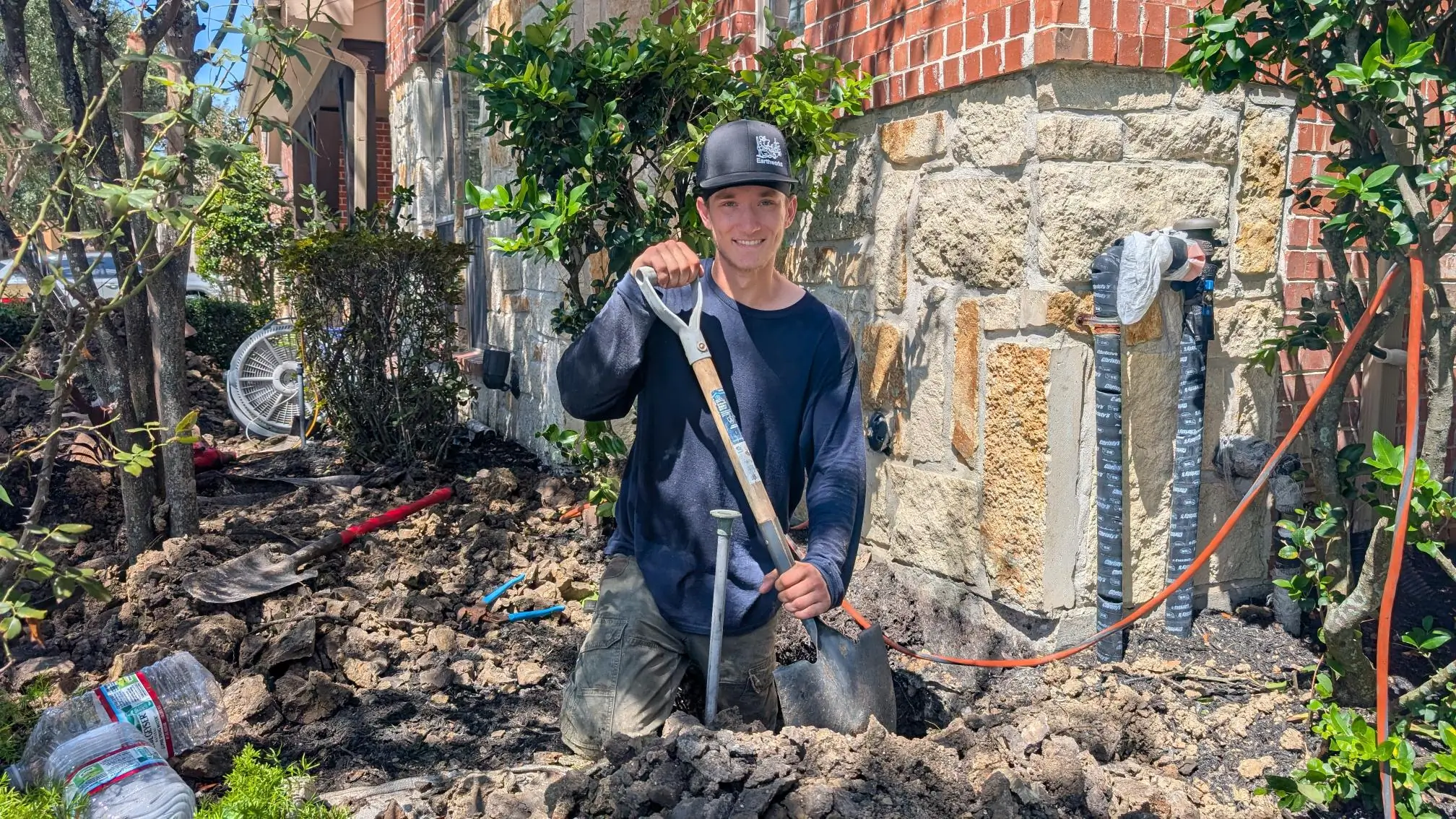 Joshua Winter, joes son and employee (Copyright 2026 by KPRC Click2Houston – All rights reserved.)
“Over watering, I think it’s darn near impossible,” Winter said. “The soil absorbs, it’s certainly possible, but I’ve never seen where over watering caused a foundation to fail. It’s typically because of under watering.”
Homeowners should follow local watering restrictions and avoid creating standing water or drainage problems around the property.
From a $33 hose to a $50,000 repair
Winter said watering cannot prevent every foundation problem or reverse serious structural damage. However, he has seen consistent watering make a difference.
He recalled visiting a family that did not have extra money to spend on foundation work. Winter recommended watering first and waiting to see what happened. Three weeks later, the homeowner called back to report that a sticking door worked again and a crack had closed.
“Not in all instances is it going to return the house to its original horizontal position? But it’s like tapping the brakes on a problem,” Winter said.
That relatively inexpensive step could help homeowners avoid an extremely costly repair.
“Foundation repairs can be from 3,000 to 20 plus thousand, depending on the severity,” Winter said.
In more severe cases, Winter said repairs could cost $40,000 or $50,000, depending on the damage, the work required and the company hired.
“Most people don’t have a lot of money to pile into foundation repair,” Winter said. “It’s not glamorous. It’s not a remodeled bathroom. It’s not a new kitchen. It is a level foundation. It’s anti-climatic.”
Foundation repairs may involve installing piers beneath a home to provide support and relevel it. Some homes only need work along the exterior, while others require piers beneath the interior.
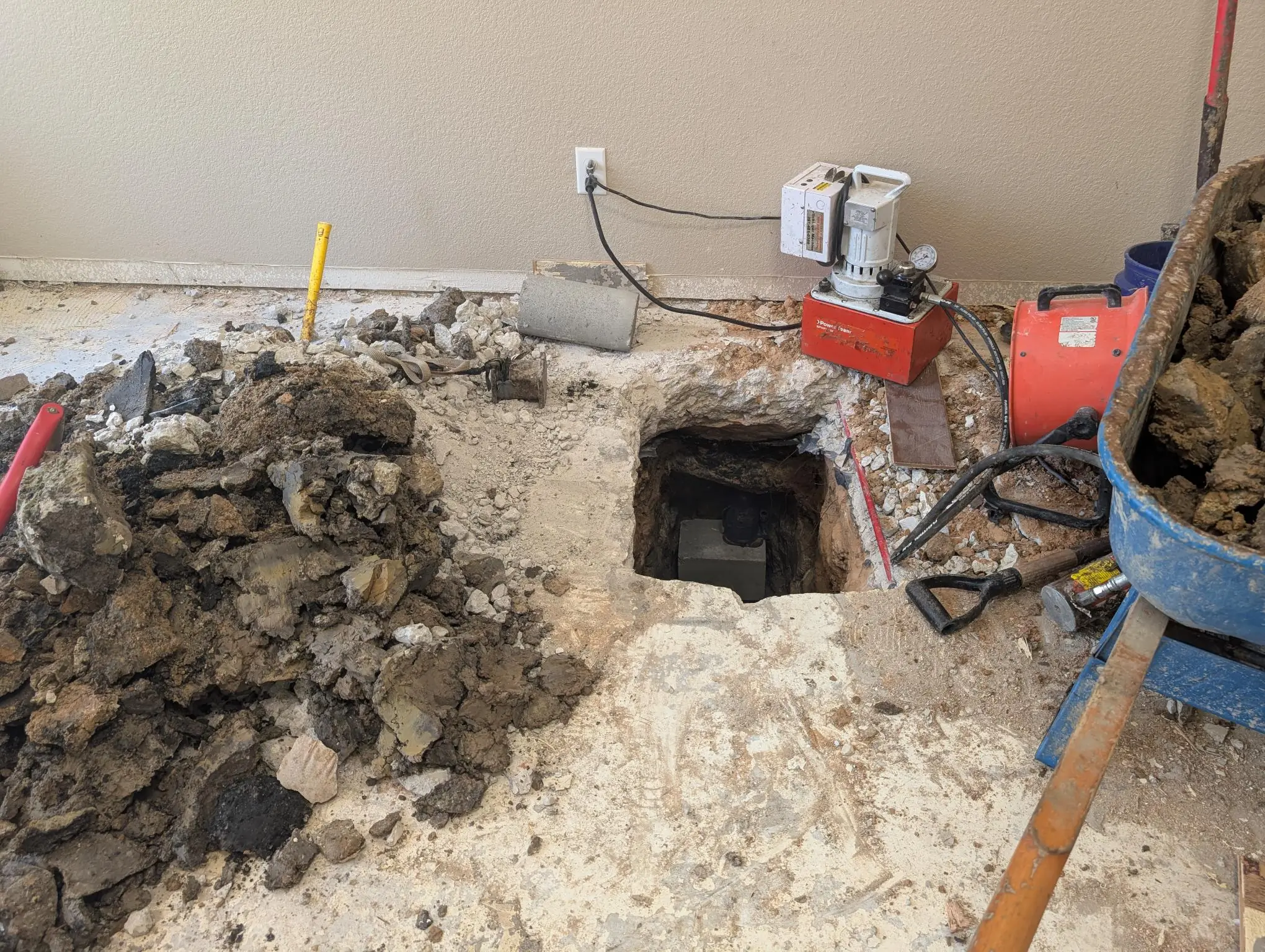 Interior work being done to fix foundation problems (Copyright 2026 by KPRC Click2Houston – All rights reserved.)
Winter said watering is not a guarantee, but it is one thing homeowners can control.
“Is it going to stop every foundation issue? I honestly can’t say, but it is the prudent thing to do, is to not let your soil separate and dry to its low expansion index,” Winter said.
Warning signs of foundation movement
Winter said homeowners should look for:
Soil separating from the foundation
New diagonal cracks near doors or windows
Cracks in brick, exterior siding, tile or interior walls
Doors that stick or do not close properly
Uneven gaps around doors
Separation between bricks or other building materials
Uneven or cracked floors
Winter said it never hurts to have a home professionally evaluated, especially if those warning signs appear.
“It’s a great first step,” Winter said of watering. “It’s a great first step at maintaining and possibly avoiding a visit from a foundation repair company.”
Copyright 2026 by KPRC Click2Houston – All rights reserved.