
More than four decades after digging began at one of Texas’ best-known Ice Age sites, researchers are still uncovering mammoth remains beneath the ground.
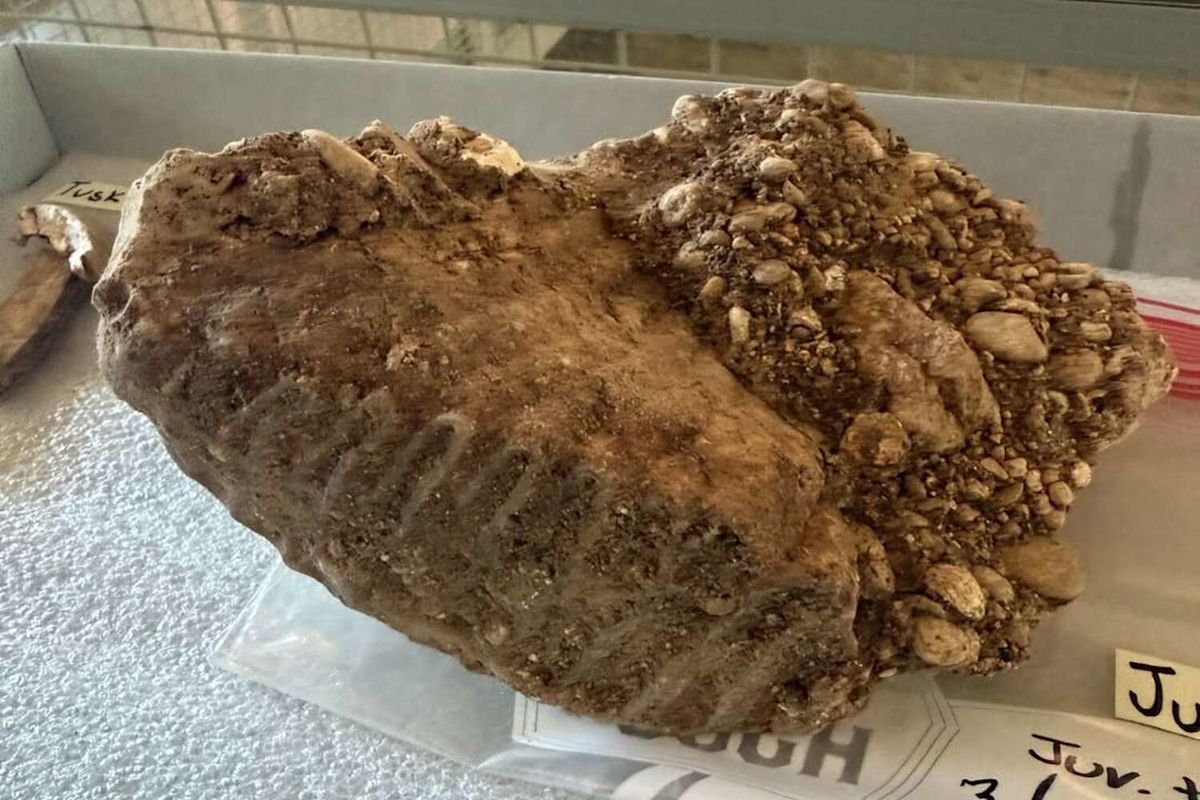
A paleontologist and Baylor University graduate student recently discovered a mammoth tooth along with several tusk and bone fragments during an ongoing geologic study of the original excavation at Waco Mammoth National Monument. The fossils have since been moved inside the monument’s Dig Shelter, where visitors can see them.
“This exciting find indicates there are more fossils to discover in addition to preserving and researching the existing 34 mammoths,” the monument said in announcing the discovery.
Chron reached out to Waco Mammoth National Monument for more details, including when and exactly where the fossils were found and whether they could belong to an additional mammoth.
The discovery adds another piece to a fossil site that has been revealing secrets about prehistoric Texas since 1978. That year, Waco residents Paul Barron and Eddie Bufkin spotted a large bone eroding from a ravine. Baylor University researchers identified it as the femur of a Columbian mammoth and soon began excavating the area.

A Columbian mammoth fossil on display at Waco Mammoth National Monument in Central Texas. (Arpad Benedek/Getty Images/iStockphoto)
Today, the National Park Service describes Waco as the nation’s first and only recorded site of a nursery herd of Columbian mammoths, made up of adult females and their young. The Dig Shelter also preserves evidence of other Ice Age animals, including a Western camel and the tooth of a saber-toothed cat.
Columbian mammoths were among the largest mammoth species, reaching roughly 13 to 14 feet tall and weighing as much as 10 tons. Unlike their shaggy woolly relatives farther north, Columbian mammoths roamed the grasslands and woodlands of what is now Texas. Their enormous molars were built to grind vegetation, and mammoths cycled through six sets of teeth during their lives.
It’s not the first mammoth tooth to surface around Waco. In 2022, Art Castillo discovered a fossilized Columbian mammoth molar in a riverbed along the Cotton Belt Trail. The tooth, estimated to be 25,000 to 50,000 years old, was donated to Waco Mammoth National Monument.
Texas has produced several other striking mammoth finds in recent years. A roughly 40,000-year-old skull with tusks estimated at 12 to 13 feet long was excavated from an Ellis County quarry in 2025, while researchers recovered an isolated mammoth tusk from a dried creek bed on a West Texas ranch.
And in Houston, one mammoth fossil surfaced somewhere considerably less ancient: a thrift store. A woman paid just $5 for what experts later identified as a likely Columbian mammoth tooth.
More News
Politics | Houston judge candidate says opponent bailed on scheduled debate
Coins | Texas lottery winner strikes it rich and reveals first big purchase
Nerds | PAX Unplugged gaming convention coming to Houston
Safety | Texas A&M e-scooters and e-bikes could be banned after crashes rise
For the latest and best from Chron, sign up for our daily newsletter here.
This article originally published at Rare mammoth fossils found beneath famous Texas Ice Age site.