
Our “Big, Tasty Tex-Mex History” continues. Part one focused on retired city planner Jim Duncan’s research on Mexican restaurants and food suppliers that thrived by 1975. This part covers 1976 through the early 1990s.
For readers who find that we’ve skipped one of your favorite comfort spots, send nominations for the next round to mbarnes@statesman.com.
1976: Texas Chili Parlor
The Texas Chili Parlor is an iconic dive bar known for chili.
AMERICAN-STATESMAN FILE
Specializing in chili con carne, an indispensable part of Tex-Mex food, the Texas Chili Parlor opened in 1976. Its founder, George Evans Lovett, had previously invented Undertakers Chili, won the Howdy Roo Chili Cook-off and received a city variance for 14 parking spaces. That same year, chili was named the official state dish by the Texas Legislature. Later purchased by Thomas Chase and his wife, Margaret, the parlor was shuttered in 2002 over $36,000 in unpaid taxes. Regular Scott Dunlap “Zoob” Zublin paid off the debt and assumed ownership. The air in the parlor is filled with the smell of chili and booze, and the décor is a mishmash of neon signs, old photos and an obligatory list of dive-bar rules.
Article continues below this ad
While enchiladas, tacos, tamales and burgers are available, chili is the most popular menu item. When ordering chili, the main thing to know is the heat level (mild, medium or hot) and bowl size (taster, small or large). Among early patrons was a group of local literary luminaries known as the “Mad Dogs,” led by Gary Cartwright. In their honor, the parlor serves “Mad Dog Margaritas.” Guy Clark immortalized the drink on his album “Dublin Blues” with the lyric: “I wish I was in Austin in the Chili Parlor Bar / drinking Mad Dog Margaritas and not caring where you are.” The parlor was also the setting for Quentin Tarantino’s “Death Proof,” starring Kurt Russell. Lovett died in 2012 and Zublin in 2025.
1977: Trudy’s Tex-Mex
Trudy’s “world famous” Mexican martini.
Austin 360
Gary Wayne Truesdell, an Austin motorcycle policeman, opened the first Trudy’s Cafe in 1977 just north of the University of Texas at 2900 Guadalupe St. He claimed that it was the first gringo restaurant in Austin to serve migas. In 1980, Truesdell quit the police force and moved Trudy’s around the corner into a converted Craftsman bungalow at 409 W. 30th St. In 1981, he married Cheryl Diane Finley, a Trudy’s waitress. During the early 1980s, business was good, and Trudy’s rapidly expanded, opening cafés in 1984 at 1000 South Lamar Blvd. and in 1986 in Oak Hill at 6281 U.S. 290. After Gary and Cheryl divorced in 1986 and split ownership of Trudy’s, a fourth café opened in 1987 in North Austin at 8820 Burnet Road, a fifth in 2008 at Interstate 35 and Little Texas Lane and a sixth in 2011 at 13059 Four Stars Blvd.
Article continues below this ad
With rapid growth, however, the chain also encountered problems, including a fire, a controversial unpermitted deck, a lawsuit and the COVID-19 pandemic. In 2020, Trudy’s declared bankruptcy, and Dan Smith and Hunter Hargett Capital Management bought the chain for $6.5 million. In 2021, the new owners opened a seafood concept, Trudy’s del Mar, at 1600 South Congress Ave. which only lasted about a year. In 2025, the last Trudy’s closed on Burnet Road, and in 2026, Black’s Barbecue announced that it would occupy the former Trudy’s on West 30th Street.
1977: Tres Amigos
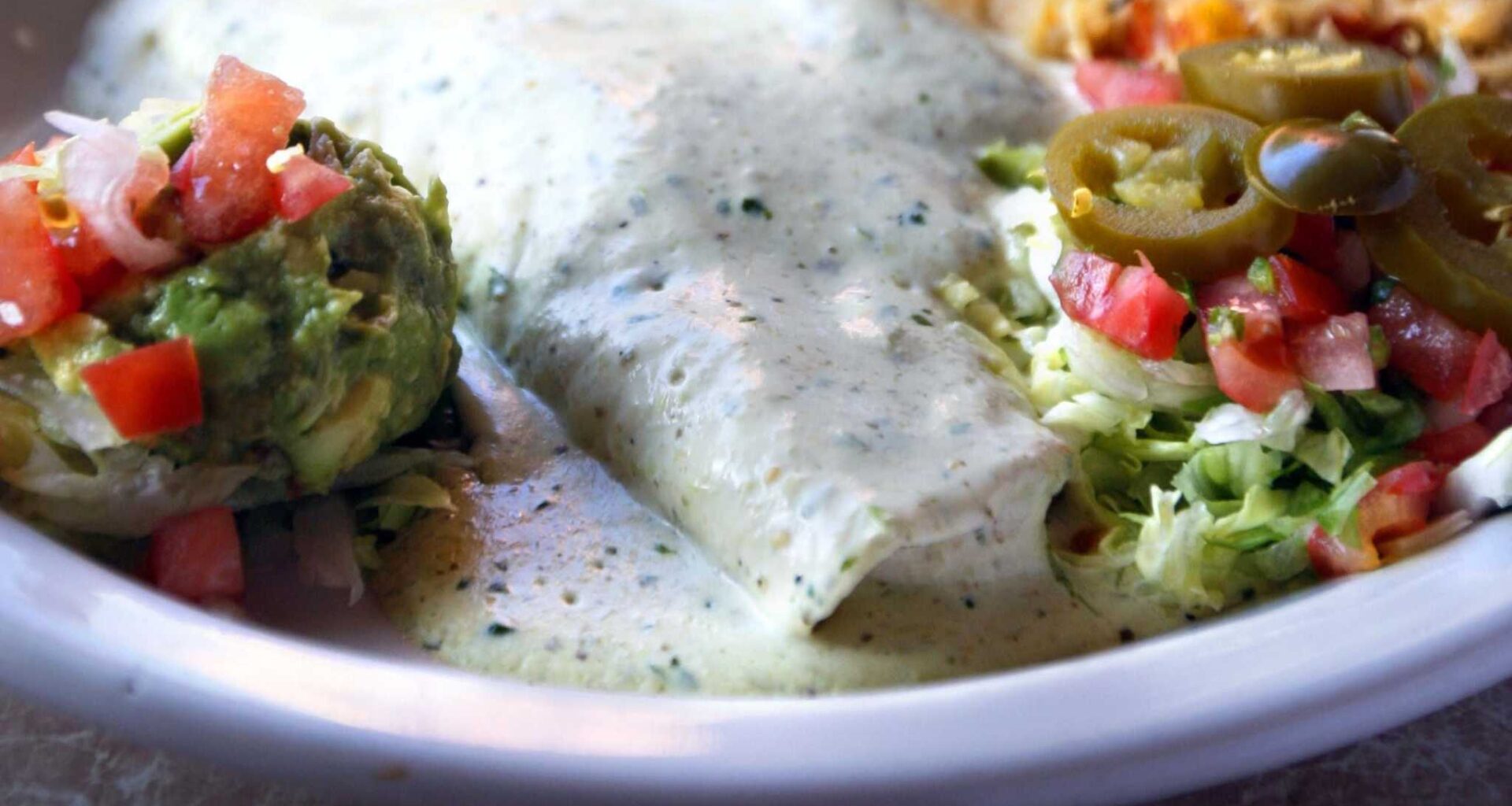
Chicken enchiladas with Sour Cream Sauce at Tres Amigos.
Austin American-Statesman
With the sale of two of its three Tex-Mex restaurants, Tres Amigos is now Uno Amigo. After several years of downsizing, the only location remaining is where it all started in 1977 at U.S. 183 and U.S. 290 in northeast Austin. In 2015, the Tres Amigos on Loop 360 near West Lake Hills, which opened in 1978, was acquired by the owners of Steiner Ranch Steakhouse and renamed Vaqueros. In 2017, the Tres Amigos on Ben White Boulevard in Southpark Center, which opened in 1985, became DK-Maria’s Legendary Tex-Mex. A fourth Tres Amigos in the 26 Doors shopping center on West 38th Street, which opened in 1989, closed earlier.
Article continues below this ad
The first and only remaining Tres Amigos was founded by three veteran Austin restaurateurs: Kenneth Louis “Ken” Koock and Lee Buslett of Green Pastures, and Fay “Arkie” Sawyer of Arkie’s. Some locals might remember the restaurant’s catchy 1999 TV advertising jingle in which three sombrero-adorned mariachi singers advised Austinites that “for delicious enchiladas, it’s Tres Amigos / for finest margaritas, it’s Tres Amigos / for prettiest señoritas / it’s Tres Amigos / so, let’s all go and meet, and get something to eat / at Tres Amigos.” (Or something like that). Koock died in 2022 and Sawyer in 1998.
1979: Las Manitas / La Peña
Las Manitas Avenue Cafe on Congress Avenue closed its doors officially after serving on Sunday the last day of August 2008.
American-Statesman file
Two sisters went from pedaling tacos on the Drag to becoming Austin culinary and cultural legends. In 1979, after two years on the street, Lidia and Cynthia Perez leased the 35-year-old Avenue Café at 211 Congress Ave., added Las Manitas to its name and made its menu a morning migas magnet. Although small, it became an affordable gathering place for musicians, artists, political activists and government insiders. You had to walk through the kitchen to get to the bathroom or back patio.
Article continues below this ad
Over the next 27 years, Las Manitas became a significant part of the downtown culinary scene, but with a cultural twist. Art exhibits, poetry readings and music performances were delivered with the food. In 2006, however, the music stopped. The restaurant’s lease was up, and developers wanted the property to make way for what was then the second-largest Marriott hotel in the world (26 stories and 1,000 rooms). For several weeks, it was Las Manitas versus Marriott in the media. The sisters moved into La Peña, a Latino cultural center a few doors north that they owned. They now sell tacos on the side.
1980: Juan in a Million
The Fourth of July Barrio Parade passes by Juan in a Million on June 30, 2012.
Austin American-Statesman
Juan Pablo and Myrna Yolanda Meza opened the popular East Austin spot at 2300 E. Cesar Chavez St. in 1980. In addition to local acclaim, the restaurant has received national and international press from outlets such as USA Today and the BBC. Menu favorites include the migas plate, huevos rancheros, Con Queso Breakfast and the famous Don Juan El Taco Grande — a heaping plate of bacon, potatoes, eggs and cheese on a warm tortilla. It’s the most popular item thanks to college students looking for a filling meal at a price that doesn’t break the bank. Some say it can feed a family of four. There’s even an ongoing contest to see who can eat the most Don Juans in one sitting. The record is currently 13.
Article continues below this ad
Today, Juan in a Million remains a family business, with son Juan Jr. managing day-to-day operations and daughter Christina managing media relations. Juan says the secret to survival is owning your real estate: “We would have closed down years ago if we were leasing. You want to have control over what is going on around you. That was the initial intent. We kept investing, and now we have a real estate company and a restaurant.” As for expansion, he says, “I thought about it, but it’s hard to be in multiple places at the same time. We don’t want to dilute it.”
1981: Baby Acapulco
A special version of the game loteria was created for Baby Acapulco.
Austin American Statesman file photo
Credited as the inventor of the Purple Rita and Fruity Ritas, Baby Acapulco or “Baby A’s,” as it is more often called, has made an interesting contribution to Tex-Mex drinks and dishes. Founded by Jerry Soto and Margaret Helen Sanchez, the restaurant operated as Casa Acapulco until 1988.
Article continues below this ad
In addition to its Tex-Mex menu and colorful margaritas, the restaurant is also known for its signature tortilla soup and lively atmosphere. An Austin Chronicle food critic once said, “Try this place for great enchiladas and popular flavored margaritas that should come with warning stickers: Muy Bueno!” The restaurant also provides live music on weekends. Baby A’s is now owned and operated by Soto and his daughter Clarita Sanchez Ramirez. In 2024, the chain closed its longstanding Barton Springs Road location. It has two Austin-area locations today — 1705 S. Lakeshore Blvd. and 9505 Stonelake Blvd.
1982: The Oasis / Cantina del Lago
You can’t beat the view at the Oasis.
American Statesman staff
If you and your friends like high places, then you need to slip on down to the Oasis. The largest restaurant in Texas and one of the largest in the world sits on a cliff in West Austin overlooking Lake Travis. In 1979, Robert Harvey “Beau” Theriot bought a 500-acre ranch on the shores of Lake Travis. Within three years, he converted the ranch house into a Tex-Mex restaurant (Cantina del Lago) and an American café and bar (Oasis on the Lake). The property has a spectacular view of the setting sun, and with its terraced, west-facing seating, the Oasis quickly became known as the “Sunset Capital of Texas.”
Article continues below this ad
Then on June 1, 2005, tragedy struck. Lightning ignited a fire that consumed most of the property. Parts of the facility that were not damaged reopened within weeks, while other parts were rebuilt. During the two years of rebuilding, only the outdoor entertainment venue was used, and food was served from a trailer. The rebuilt Oasis is now a mammoth multiuse venue that includes a 30,000-square-foot restaurant that seats 2,000 diners, an indoor entertainment facility, multiple banquet rooms and several retail shops. In 2013, Theriot sold the Shops at the Oasis to Comanche Acquisitions, a local investment group led by Bob Schultz.
Tex-Mex Trivia:
“Tex-Mex, certainly Austin’s variety, began in the cocinas of Tejano women who lived around Guadalupe Square,” writes Ted Eubanks, a certified interpretive planner based in Austin. “Families in the neighborhood would make tamales and Mexican candies to sell along Congress Avenue. These kitchens were the beginnings of the Tex-Mex industry that helped shape American cuisine.” The area of town was also known as “Mexico.”
1982: Chuy’s
Chuy’s got its start on Barton Springs Road in Austin.
Austin American-Statesman
Chuy’s is the house that Elvis never left. It is also the most successful Tex-Mex restaurant chain to ever come out of Austin. The first Chuy’s opened in 1982 on Barton Springs Road and provided seating for about 60, a women’s restroom the size of a broom closet and a men’s restroom out back. Four decades later, the chain employs more than 7,400 people in 100 restaurants in 15 states, mostly in the South and Midwest. Co-founders Michael Roger Young and John Anthony Zapp had a vision of a “fun and funky” Tex-Mex restaurant that possessed Austin-style weirdness and served authentic, fresh food in a fun atmosphere for everyone.
Article continues below this ad
Young and Zapp decorated their first roadhouse with an oversized velvet Elvis painting, and all restaurants thereafter included an Elvis shrine. Each location also comes with unique thrift-shop-style décor that includes fish wearing sunglasses. Since 1988, the Chuy’s Children Giving to Children Parade has collected toys that are distributed to underprivileged children by the Austin Police Department each year. Young and Zapp sold their majority interest in Chuy’s in 2006. Young retired from the board in 2017, and Zapp stepped down in 2018. Steven J. Hislop has been Chuy’s president and CEO since 2018. In 2024, Darden Restaurants bought Chuy’s for $605 million. Young died in 2023.
1983: La Palapa
Founded in Nuevo Laredo in 1971, La Palapa opened in Austin in 1983.
American-Statesman File
La Palapa is unique in that both the restaurant and its founder came to Austin from Mexico. After its founding in the border town of Nuevo Laredo in 1971, La Palapa opened its second eatery in Austin in 1983. A third opened in Laredo in 1998. In both name and design, the restaurant mimics the huts called palapas found in the fishing villages of southern Mexico, which have thatched roofs made of dried palm leaves.
Article continues below this ad
Located in North Austin at 6640 E. U.S. 290, La Palapa has a high interior ceiling that emulates the feel and look of a palapa. Since it opened, its menu has expanded to include a variety of Tex-Mex favorites, including flaming queso with chorizo. It also offers a huge hamburger inspired by the owner’s love of burgers. David Allen Mallak joined La Palapa as a managing partner in 1990, and he and his wife, Debra, purchased the restaurant in 1995. In 2017, La Palapa was acquired by Jearl Dean Ledbetter, the owner of the Short Stop burger chain. Mallak died in 2016 and Ledbetter in 2026.
1983: Dos Hermanos / Habanero Cafe
The Habanero Cafe and its owner Arturo Ibarra on Tuesday, Nov. 19, 2024
Ricardo B. Brazziell/American-Statesman
After living the migrant life and annually caravanning from South Texas to Oregon chasing crops, the Ibarra family moved to Austin in 1983, where brothers, Miguel and Efraim, opened a café-bakery at 2730 E. Cesar Chavez St. They named it Dos Hermanos Tortilla Factory and Restaurant. The following year, they opened a second restaurant at 501 W. Oltorf St. When the brothers retired in 1998, Miguel’s son, Arturo, took over the Oltorf location and renamed it Habanero Cafe.
Article continues below this ad
The Chavez location closed after a fire in 2004. Statesman dining critic Matthew Odam describes Habanero as “the kind of restaurant that has the vibe of your aunt or grandfather’s dining room, with extended family always coming and going, workers moving with proficiency while maintaining warmth.” In 2024, Odam inducted Habanero into the Statesman Restaurant Hall of Fame. Arturo Ibarra’s advice to aspiring entrepreneurs: “The first five years were really hard. Trying to run a business is way different than just running a kitchen and buying supplies. I’ve learned a lot. There have been ups and downs, but you can make a really good living.”
1984: Fiesta Tortilla Factory
Elvira and Jaime Picos are the founders and owners of Fiesta Tortillas. Their children, from left, Luis Picos, A.J. Picos and Natalia Picos, are involved in the family business.
Jay Janner, Jay Janner / American-Statesman
Fiesta Tortillas produces 2 million corn tortillas and 500,000 flour tortillas each day and serves restaurants and grocery stores throughout the greater Austin area. In 1984, Jaime A. Picos and his wife, Elvira, occupied a small space on Briarcliff in East Austin and borrowed machinery from relatives to start their tortilla factory. Their mission was to produce five-ingredient flour tortillas without additives or preservatives.
Article continues below this ad
Jaime’s parents had owned a small tortilla factory in Del Rio, where they mastered a handmade flour tortilla recipe. The couple delivered fresh, warm, soft tortillas to grocery stores nearly every day, eliminating the need for extended shelf life. In 2001, they moved into a new factory at 3800 Promontory Point in Northeast Austin, where they could expand production to serve customers in San Antonio. Today, they employ more than 100 people and serve clients as far away as New York, where a taco stand wanting “the authentic stuff” pays to have Fiesta to fly tortillas overnight.
1984: Manuel’s
Manuel’s Arboretum remains open, but the classic first restaurant on Congress Avenue is gone.
Austin 360
While pursuing a graduate degree in Latin American studies at the University of Texas, Gregory Scott Koury had the idea for Manuel’s. Rather than typical Tex-Mex fare, his vision was to create authentic dishes from Mexico’s interior and coastal regions. Koury credits the Fonda San Miguel founders with opening a market for regional Mexican food: “They bulldozed those walls in Austin and educated this public greatly.”
Article continues below this ad
He opened Manuel’s downtown at 310 Congress Ave. in 1984. Adding a nostalgic touch to the location, Koury incorporated the historic “sit-in” barstools from the demolished downtown Woolworth drugstore into the décor. As Austin grew to the north, he opened Manuel’s at Great Hills in 2000. Koury and his wife, co-owner Jennifer McNevin, have collaborated on other restaurants, including the now-closed Iguana Grill and Changos Taquerias. In 2020, Manuel’s downtown closed. Despite a 2017 announcement that the Arboretum location would be replaced by a mixed-use development, it remains open at 10201 Jollyville Road.
Tex-Mex Trivia:
Not just tacos and enchiladas: Tex-Mex has remained stubbornly identifiable as its own fare, whether cooked and served by Lebanese, Chinese, French, African American or Anglo American immigrants and descendants, alongside Mexican and Central American trailblazers who brought the rich traditions from their heterogeneous homelands.
1985: El Mercado
Frozen and on-the-rocks margaritas from El Mercado, which was replaced on South First Street by De Nada, which also serves excellent margaritas.
Austin American-Statesman
When Camilo Joe “C.J.” and Gudelia “Tootsie” Villegas — along with their sons, Anthony “Tony” and Lawrence “Larry” — initially opened El Mercado at 1302 S. First St. in 1985, their plans were for a tortilla factory and a market for hard-to-find Mexican food products, as well as takeout meals. That is why they named it El Mercado, which means “market” in Spanish. Gudelia’s father, Antonio “Tony” Villasana, had owned Tony’s Tortilla Factory. Public demand, however, changed those plans.
Article continues below this ad
From the first day, customers wanted to sit down and eat. So they did, and after surviving the 1980s, the Villegas family opened a second restaurant in North Austin at 7414 Burnet Road in 1991. They also acquired a distressed property in Central Austin at 1702 Lavaca St. in 1994 that had been Jorge’s Uptown Enchilada Bar since 1978. According to Tony Villegas, “the 1990s were a mecca,” and then the building boom hit and property values and taxes skyrocketed. Within four years, the restaurant’s annual taxes for the South First Street location tripled from $36,000 to more than $100,000, making it difficult to break even. A victim of rising property taxes and COVID-19, the Lavaca location was sold in 2022 and will be replaced by a high-rise building. The El Mercado on Burnet remains open, but the South El Mercado closed in 2025 and was replaced by De Nada Tacos. Camilo died in 2007 and Gudelia in 2019.
1985: Don Dario’s Cantina
Ray Vera, left, and Frank Wilm lunch on classic Tex-Mex at Dario’s on Austin’s east side in 1998.
Ted Albracht/American-Statesman File
Born in Bejucos, southwest of Mexico City, Dario Perez Gonzales came to Austin with his parents, Esquivel and Trinidad Gonzales. After learning the restaurant ropes at El Matador in Round Rock, he opened his own restaurant in 1985 at 1800 E. Sixth St. in East Austin. He named it Dario’s. The building had previously been home to Taco Village. Promoting migas as the “Cadillac of Mexican breakfasts,” Gonzales made them his specialty menu item. A Statesman food critic described Dario’s as “about as plain as a pinto bean. A few electric signs, spangled sombreros and velvet paintings on the walls were the only frills.”
Article continues below this ad
As East Austin continued to gentrify and property taxes started to soar, Gonzales opened a second restaurant, Don Dario’s Cantina, in 2010 at 8801 S. I-35 across from Southpark Meadows in South Austin. Four years later, he closed the East Austin location to focus on South Austin. Dario’s has become watch party central for events, including San Antonio Spurs games, and World Cup matches and special occasions such as Father’s Day and Mother’s Day. The former East Austin location is home to Suerte, an award-winning upscale restaurant specializing in interior Mexican cuisine.
1986: Güero’s
Guero’s on South Congress combines interior Mexican and Tex-Mex favorites.
Austin 360
Located in the heart of SoCo is a rustic structure whose successive occupants have served the farm and food needs of Austinites for four generations. Built in 1905 by Henry Crawford Greer at 1412 South Congress Ave., it opened as a feed and seed store. After Greer was killed in a burglary in 1923, Joseph Morgan Crawford bought and operated it as a grocery and seed store until he died in 1940. Odas V. Jung then owned and operated it for another 50 years as Central Feed and Seed.
Article continues below this ad
Its current occupant, Güero’s Taco Bar, was founded by Rob and Cathy Lippincott as a small taqueria on Oltorf Street in 1986. When 1412 S. Congress Ave. became available in 1993, the Lippincott’s relocated Güero’s to the more prominent and spacious building and transformed it into a funky eatery offering interior Mexican food with more than a hint of Tex-Mex. The bar area looks like a classic border town cantina, and the dining room features vaulted ceilings, exposed brick walls and rough-hewn plank floors left over from its feed store days. The front porch and adjacent beer garden allow customers to enjoy al fresco dining. Lyle and Bette, the Lippincott daughters, currently manage the restaurant. Jung died in 1995 and Rob Lippincott in 2022.
1987: Serranos Cocina y Cantina
Serranos Cocina y Cantina operates at four locations in the Austin area.
David P. Smith/Serranos
“Have peppers — Will travel” could easily be Café Serranos’ motto. After naming their restaurant after a Mexican chili pepper that ranks in heat somewhere between the jalapeño and habanero, David Quintanilla and Adam Gonzales peppered Central Texas with a baker’s dozen more of their mesquite-grilled Tex-Mex restaurants. When they opened their first Café Serranos at 321 W. Ben White Blvd., it was at the end of a building boom in Austin and the beginning of a five-year recession. By 1992, they had added three more restaurants — Symphony Square, East Riverside Drive and Research Boulevard. It was considered an impressive business accomplishment.
Article continues below this ad
By 1996, they added locations on West Anderson Lane, North Interstate 35, West Lake Hills and Barton Springs Road, bringing their total to eight. In the 2000s, they opened four more locations on Sixth Street and South MoPac, and in La Frontera and South Park. Over the years, Café Serranos has sponsored many community events, such as hot sauce festivals. In 2017, Serranos was rebranded, highlighting its mesquite grilling and award-winning salsas and fajitas. Four of the 14 locations are still open: Lakeline, South MoPac, South Park and Cedar Park.
1988: Mr. Natural
Mr. Natural takes a fresh approach to Mexican cuisine with a vegetarian menu.
Austin American Statesman file photo
Looking for the most distinctive Mexican food restaurant in Austin? Try Mr. Natural. Its menu features fajitas without beef, hamburgers without meat, tamales without pork, ceviche without fish and chorizo without animal products. It is a vegetarian restaurant, health food and supplement store, bakery, juice bar, herb bar and deli. In 1988, two new Austinites from Monterrey, Nuevo León, Jesus and Luisa Mendoza, opened Mr. Natural in a former Honda showroom at Chicon and East Cesar Chavez streets. They later opened a second restaurant at 2414 S. Lamar Blvd. Jesus describes Mr. Natural as “a family-owned business that firmly believes good nutrition starts at the dining table. Everything is made in-house.”
Article continues below this ad
He also shares an old Mexican saying: “If you want to be strong like the bull, then don’t eat the bull. Eat what the bull eats.” The Statesman welcomed the eatery, saying, “With its Mexican theme and non-meat cooking, it makes a significant contribution to the diversity of dining in Austin.” Actor Ethan Hawke has called it the first place he goes when in Austin. It is also one of filmmaker Rick Linklater’s favorite spots. In 2008, the U.S. Small Business Administration recognized the Mendozas’ efforts with an award presented by President George W. Bush in Washington, D.C. They closed the South Lamar location in 2023.
1988: Texican Cafe
A native of France, Mourad “Mo” Belkacem opened the first Texican Cafe in 1988.
Courtesy of Texican Cafe
A native of France founded one of Austin’s popular Tex-Mex restaurant chains. Mourad “Mo” Belkacem honed his early culinary skills as a pizza maker and sous chef in the suburbs of Paris. After immigrating to Austin to study at the University of Texas and working for Mr. Gatti’s, Belkacem opened the Texican Cafe in 1988. Located in far South Austin at 11904 Menchaca Road, the Texican specializes in “El Paso-style Tex-Mex,” a blend of cuisines featuring chili peppers and spices native to northern Mexico, West Texas and southern New Mexico.
Article continues below this ad
Fifteen years later, in 2003, Belkacem opened his second café in far North Austin near Lakeline Mall at 11066 Pecan Park Blvd. For his third restaurant in 2008, he chose a closer-in South Austin location in the Brodie Oaks shopping center at 4141 S. Capital of Texas Highway. For his fourth café in 2019, he opened a location in Kyle at 856 Kohlers Crossing. In addition to his Texican chain, Belkacem has opened and sold several other restaurants, including Sports Gastropub, Draft Pick and Café 1626.
1990: Mi Madre’s
Veronica Torres delivers food at Mi Madre’s Restaurant.
Mikala Compton/American-Statesman
When the Torres family moved to Austin from Saltillo, Mexico, in 1988, they brought with them a tradition of Sunday morning barbacoa. Aurelio Torres worked briefly for Chuy’s before deciding to open his own place and serve his Saltillo-style tacos. What started as a 10-seat taco shop in 1990 evolved into a full-scale restaurant with two dining rooms, a patio and a to-go area.
Article continues below this ad
Aurelio was an experienced chef but did not know how to make breakfast. Rosa was learning English from behind the cash register. More critically, the couple had to pay off their purchase of the restaurant in weekly installments. Aurelio said of his arrival in Austin, “I came with $100 in my pocket, but I had a million dollars of ideas.” The family has since expanded its Manor Road footprint to include School House Pub and Vida Pura Juicery. “In hindsight, buying these properties was the best thing for our family. A lot of the restaurants that are closing were leasing their property month-to-month,” he says. The couple has retired, leaving the restaurant to their children, but they still come in to prepare tacos for the University of Texas band on game days.
1992: Camino Real
Camino Real is a culinary keeper.
Camino Real
In a city where restaurants come and go, Camino Real is a culinary keeper. Founded by Luciano Henriquez three decades ago, the popular neighborhood café is located in an aging Northwest Austin shopping center at U.S. 183 and Spicewood Springs Road. Camino Real offers one of the most extensive and inexpensive Tex-Mex menus in town. From its 17 breakfast items — plus an assortment of breakfast tacos — to its seven specialty shrimp selections (fried, grilled or sautéed), it offers a broad range of selections at affordable prices. The most expensive item on the menu is the $24 El Tejano fajita (shrimp, beef or chicken) plate, and the least expensive is a 25-cent tortilla.
Article continues below this ad
Camino Real also has a full-service cantina that serves margaritas in several flavors. If you want to skip a trip to the grocery store, it even sells select basic grocery items at the checkout counter. While Henriquez attempted to replicate his Camino Real success at four other Central Texas locations — 2200 S. I-35, 14735 Bratton Lane, 202 Walton Way in Cedar Park and 907 FM 685 in Pflugerville — none generated customer traffic like the original.
1992: Jovita’s
An outside image of Jovita’s as it deteriorated on South First.
Austin American-Statesman
The saddest chapter in the history of Austin Tex-Mex probably belongs to Jovita’s. Founded by Jovita Patino, her brother Amado “Mayo” Pardo and his wife, Amanda, Jovita’s Restaurante y Cantina opened in 1992 at 1619 S. First St. in an aging house and garage, with no air conditioning. It soon became a cultural mecca that mixed music, murals and Mexican food. Its enchiladas, however, were never its primary draw. It was a sanctuary for musicians, artists, poets and political causes. The Gourds, Vanguards, Don Walser and Cornell Hurd all regularly called Jovita’s home.
Article continues below this ad
Mayo’s reputation for political activism grew. He used the business to host fundraisers, spearhead voter registration efforts and promote Mexican American pride and unity. Gov. Rick Perry once threw a birthday party there. In 2012, however, the bubble burst when federal agents raided the premises and charged Mayo and 17 others with drug trafficking. After federal prosecutors alleged he was the ringleader, Mayo died in 2013, and many others were sent to prison. The owner of nearby Roadhouse Relics art gallery has said: “Jovita’s was a big part of a lot of people’s lives. It’s just tragic that it ended the way it did.” Today, the property has been scraped and is awaiting new development.