
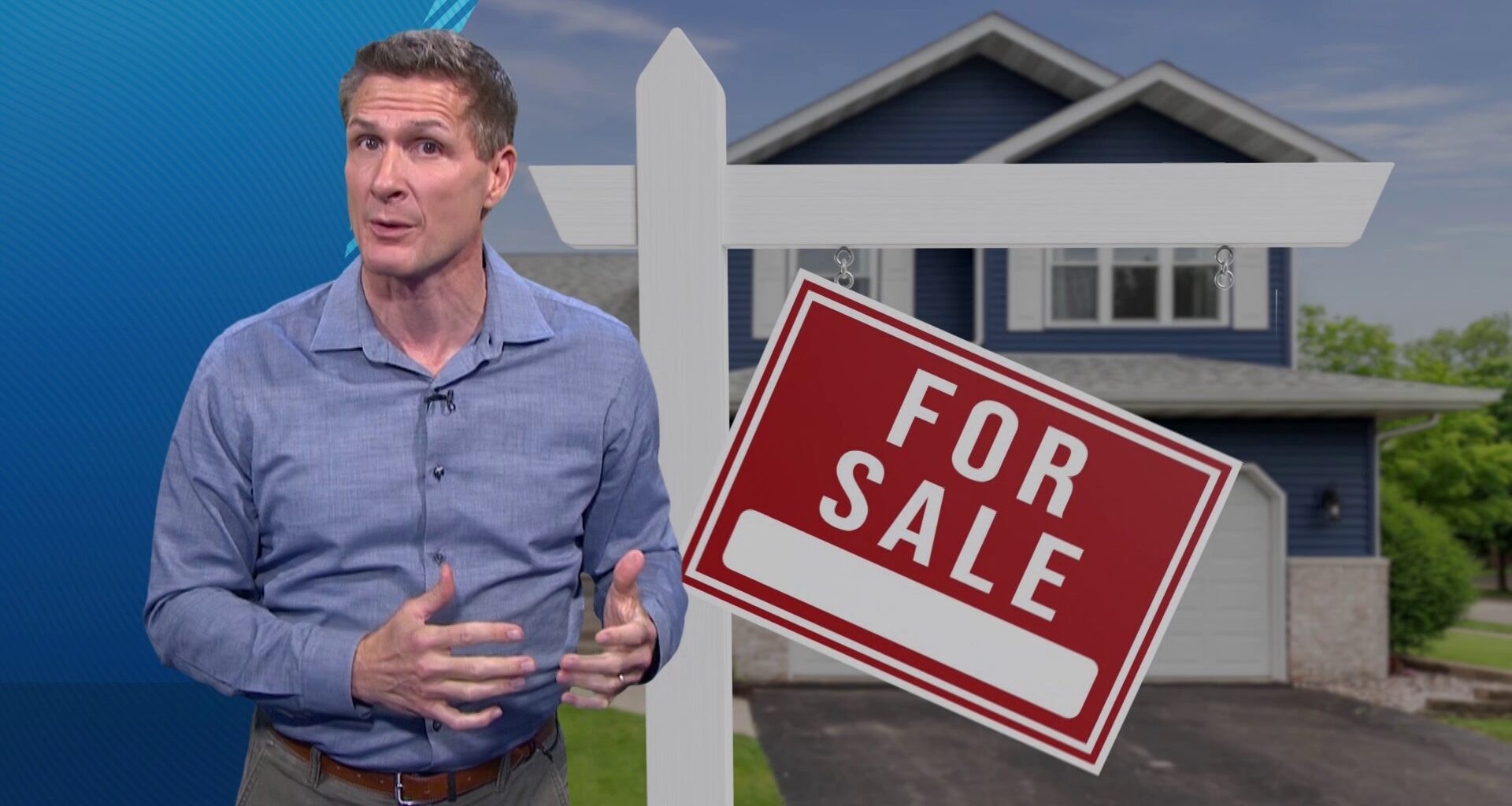
The widespread cuts are happening as inventory climbs and higher mortgage rates hit buyers.
DALLAS — Some in real estate in Texas have been telling me that this is looking a lot like a buyer’s market – if you can just find a buyer.
Even with increasing inventory of homes for sale to choose from and softening prices in some markets, home prices have increased in Texas in recent years. On top of that, buyers have been confronted with resurgent higher mortgage rates. So, some of them may still be sitting on the sidelines, or they may be especially selective and disciplined with their budget if they are actively shopping.

This story continues below.
More in Business
New Costco planned for fast-growing Collin County suburb
AI data center builder to put first Texas office in Uptown’s tallest tower
Price, price, price
In many cases, it doesn’t help that some home sellers are still pricing their homes higher than the market will tolerate. Real Estate Broker Joe Atkins, of Joe Atkins Realty, says, “I think sellers in general don’t realize where the current market really is versus where it has been.”
So, the takeaway message from Atkins: In addition to location, location, location…real estate right now is very much about price, price, price.
“Price is everything…what people can afford has gone down drastically,” versus what they could afford when mortgage rates were in the three and four percent range, he says.
Sellers also have to face a shifting market where available homes significantly exceed buyer demand. Look at the gap between the two on this chart by Redfin. And Atkins says simply, “The more inventory you have, the more that price really does matter”.
Atkins says he’s seen homes priced just $10,000 more than their peers not get showings, “I was talking to an agent friend yesterday and she was telling me she has a couple listings in Prosper. Well, one of her listings is over a million, just slightly over a million. And she’s been on the market for 30 or so days and has had zero showings. She has another one that’s a little bit under a million. And I think she’s averaging one showing about every 10 days. So, you start to think about that. What are the odds of selling your house if nobody’s been in it in the last month?”
And in cases where sellers ask way over what a buyer and their agent feel the property is worth, Atkins says he has seen a number of buyers who have loved the property, but were too polite to even bother presenting a much lower offer.
“Buyers we work with are like, well, we just think it’s overpriced. And it’s like, well, it is. But let’s offer what we think it’s worth. And a lot of times we have to talk them into offering because they’re like, well, we don’t want to be offensive. You’re not being offensive. We’re offering what we legitimately think it’s worth. But a lot of these buyers are not making those offers.”
This feeds into a pattern Atkins has been seeing in the wildly swinging real estate market that began in the pandemic years: “I always say in real estate, a good transaction is when both buyer and seller are feeling happy at the end. And unfortunately, since COVID…and you can ask almost any realtor, broker, et cetera…you don’t see a lot of that.”
Price cuts. Lots of them
In this particular market gyration, he says it’s often the sellers who end up less than satisfied. Part of that is driven by price cuts. That has been happening a lot in Texas. “The share of units undergoing price cuts in April was under 40%. Today that’s one in two,” says Jason Lewris of Parcl Labs. That firm has been focusing a lot lately on home sellers in the Lone Star State.
“We’re seeing them becoming very aggressive on their price-cutting strategies. And what we measure is called the Motivated Seller Index, which is more robust than simple price cuts. It’s looking at price cut velocity. So how quick is the duration between the cuts, and then how deep are those price cuts?”
Parcl Labs crunches a lot of data: “Over 5,000 sources of information a day”. Then, they produce daily snapshots of real estate markets across the country that look like this. Recently, four of their top five cities for price drops were in Texas.
And they saw that in Collin County, “You have upwards of 70% of homes that are undergoing price cuts”.
Lewris says in Austin, Dallas, and San Antonio, many of those recent price cuts may have been driven by homebuilders building aggressively and then also cutting prices to attract buyers.
In contrast, he says, “Sherman, Texas, on the other hand (which also recently appeared in their top 5 most motivated markets) is a slightly different story. That seems to be a story about data center buildouts and the local communities, investor speculation, which is all creating volatility within the Sherman housing market, which isn’t that big. And so, you know, investors are speculating.”
Volume of inventory in Texas creating ‘double dippers’ and ‘accidental landlords’
There have also been quite a few ‘double dippers’ in Texas who simultaneously market their home for sale and for rent. And Texas has also had the most of what Lewris calls ‘accidental landlords’, “Twelve percent of every single-family home on the rental market across Texas is coming from these folks that tried to sell their single-family home and couldn’t.”
So those former home sellers instead rent their homes to generate cash flow. Joe Atkins has seen that stat come to life out on the streets, “We’ve leased out more properties, and not just properties, but luxury properties this year than we have probably in the last decade.”
And to underscore how much competition there is, Lewris offers this data point on the total share of homes that are in Texas and Florida: “Texas and Florida are very large states. They account for roughly 17% of every single home in the country.”
And yet, he says even though the two states contain 17% of all the homes in the USA, recently, Parcl Labs found those two states accounted for about 25% of all the homes for sale. That means those two states have an outsized for-sale inventory, which contributes to price slashing. If you are selling, that is something to think about.
Pricing
You might also consider price ranges. Let’s say you list for $315,000. Broker Joe Atkins says, “There’s a whole sector of people that are setting their search range to 300 and they’re not going to see your listing at 315 when they do their automated searches. And I think a lot of people forget that.”
Indeed, Redfin says here that, “Most buyers set hard search filters for price”. So, a home price just outside a price bracket will “hide” it from buyers. They and others also point out that if you cut your price, you should make it meaningful. Such a cut could be up to 5 percent or even more.
Some warn that multiple micro cuts can signal desperation. Respected sources also say that about 2 to 3 weeks after you list your home, if offers are not happening and showings are sparse, a cut may be needed. And that you should cut on a Thursday, as buyers are mapping their weekend shopping plan.
Of course, this is general information, and each home and selling situation is unique. You should always rely on the advice of your real estate professional when setting or changing the price of your listing.