
Subscribe to The Blast, The Texas Tribune’s premier newsletter, for exclusive reporting, nonpartisan analysis and the first word on political moves across the state.
Audio recording is automated for accessibility. Humans wrote and edited the story. See our AI policy, and give us feedback.
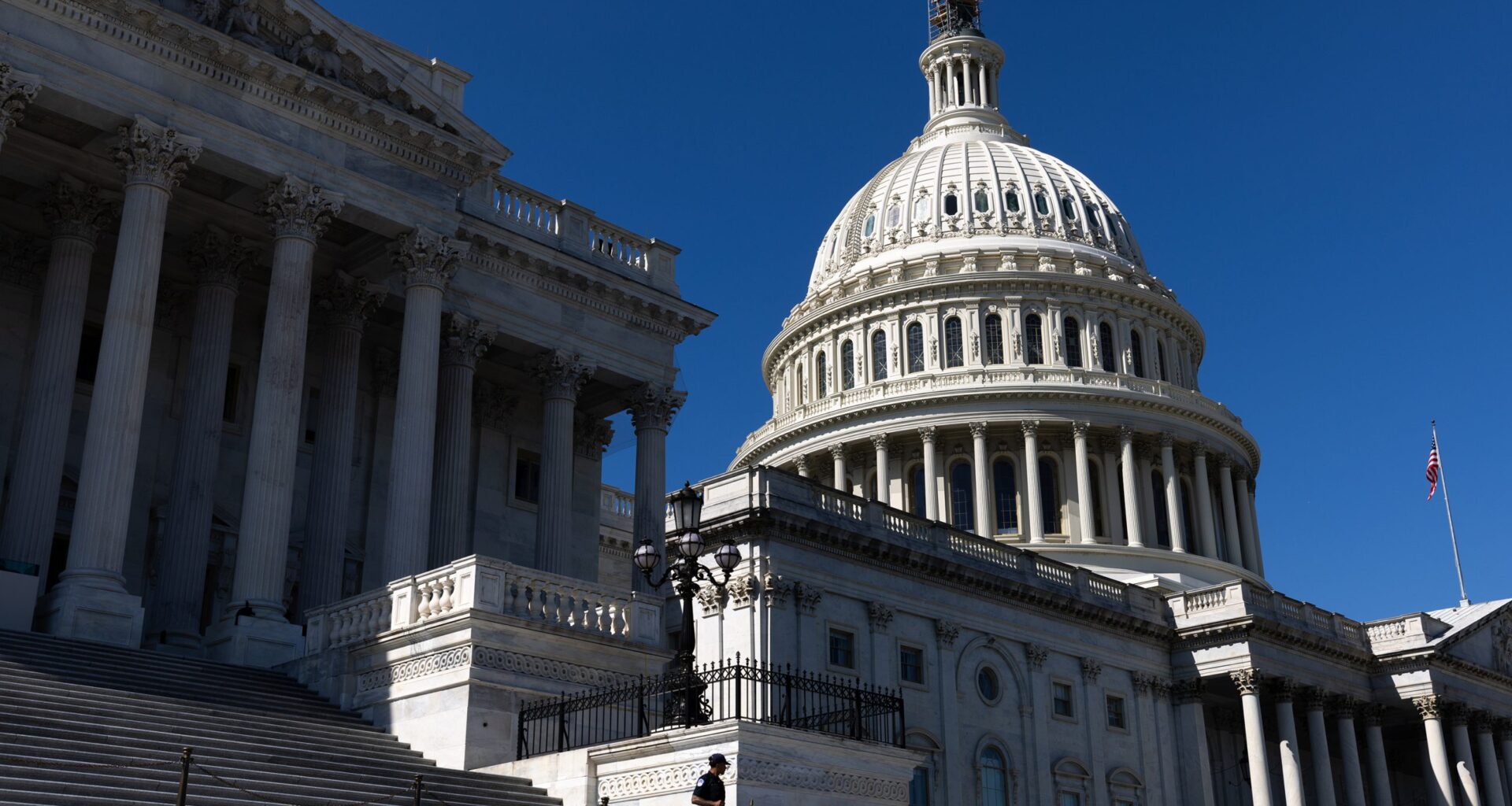
The U.S. Senate passed a funding deal late Monday to end the nation’s longest-ever government shutdown, sending the bill to the House of Representatives and inching closer to restoring full SNAP benefits and ending air travel chaos.
The bill was backed by nearly every GOP senator, including Texas Sens. John Cornyn and Ted Cruz, along with eight Democrats, giving the measure enough support — 60 votes to 40 — to clear the upper chamber. The funding package still needs to pass the House, where Republicans’ narrow majority affords them only a few defections unless they receive Democratic support.
If approved, the deal would fund the government through the end of January, with certain agencies funded through September, including those that provide food assistance payments. As part of the agreement, Democrats will also get a vote on an extension of the Affordable Care Act subsidies that have been at the center of the dispute, which has left thousands of federal workers without pay since the shutdown began Oct. 1.
But the promise of a vote still leaves the tax credits in limbo: Even if a bill to extend the subsidies or make them permanent were to pass the Senate, there is no guarantee that the House, controlled by a GOP that is mostly opposed to the enhanced ACA credits, would take up the bill.
The deal, first announced by the group of eight defecting Senate Democrats on Sunday, would guarantee back pay to federal workers for the weeks they worked without pay. The Trump administration has also agreed to rehire those who were laid off during the shutdown.
Cornyn blasted Senate Minority Leader Chuck Schumer, D-New York, in a post on X, calling the past 40 days the “longest [and] dumbest government shutdown in history.”
“I am proud to have voted more than 15 times to reopen the government, [and] I look forward to POTUS signing government funding into law so the Senate can turn to pressing legislation like the annual defense authorization bill instead of wasting time on Chuck Schumer’s desperate attempt to save his political career,” Cornyn said.
A procedural vote to advance the funding package was briefly held up Sunday while Cornyn traveled from Texas back to Washington; he was the crucial 60th vote that unlocked the Senate’s ability to proceed with the bill.
On his podcast Monday, Cruz, the chair of the Senate Commerce Committee, predicted that the shutdown would officially end by Wednesday, but he warned it could take some time for airports to become fully operational again. Airports across the country, including in Texas, have been dealing with cancellations and delays due to staffing shortages, and the Federal Aviation Administration decreased flight volume by 10 percent at Dallas-Fort Worth International Airport, George Bush Intercontinental Airport and Houston Hobby Airport on Friday.
“In a week, do I expect things to go back to normal?” Cruz said. “Yes — a week after things open up. But it could easily take several days for people to say, ‘Okay, I’m gonna come back into work now.’ That doesn’t happen automatically just by flipping a switch.”
Attached to the stopgap funding are three yearlong appropriations bills that would fund the Department of Agriculture, military construction and veterans’ affairs, and the legislative branch through the current fiscal year, which ends Sept. 30. That would ensure continued funding for the Supplemental Nutrition Assistance Program and other agriculture initiatives even if Congress fails to avert another shutdown when the stopgap money runs out Jan. 31.
Before voting on the funding package, senators preserved language in the bill that would ban the sale of hemp-derived products with over 0.4 milligrams of THC, rejecting an amendment from Sen. Rand Paul, R-Kentucky, that sought to strip the provision.
Texas GOP lawmakers, led by Lt. Gov. Dan Patrick, passed a bill imposing a similar THC ban in the state earlier this year, but the measure was vetoed by Gov. Greg Abbott, who later issued an executive order imposing age and other restrictions on the hemp industry.
Patrick celebrated the hemp vote on social media Monday evening, writing that the margin of the 76-24 showed the Senate “recognizes the danger of these poisonous THC products.”
The issue split Texas’ senators. Cruz voted in favor of the amendment, saying hemp regulation should be a state issue. Cornyn voted with the majority against the amendment, helping keep the THC ban intact.
Cornyn’s prospective Democratic challengers, former U.S. Rep. Colin Allred and state Rep. James Talarico, both said they would not have supported the deal and had harsh words for the Democrats who voted with Republicans to advance it.
Without a guarantee that the House will hold a vote on the expiring ACA subsidies, the underlying issue driving the shutdown — a sharp rise in premiums that could result in hundreds of thousands, if not over a million, Texans dropping ACA coverage — was not resolved, the Texas Democratic Senate candidates said.
“This deal is a joke that sells out working people and their health care,” Allred said in a statement. “Millions of Texans are relying on us to keep their premiums from skyrocketing. If we don’t stand our ground for our people, then who will?”
Talarico added: “Any ‘deal’ that kicks 1.7 million Texans off their health insurance isn’t compromise; it’s surrender.”
Senate Republicans shot down a proposal Monday that would have opened the door to extending the subsidies for another year as part of the funding package. The vote failed on party lines.
Rep. Greg Casar, the Austin Democrat who chairs the Congressional Progressive Caucus, called the deal a “betrayal of millions of Americans” and said it amounted to “capitulation.” And Rep. Veronica Escobar, D-El Paso, told Axios that Schumer should not remain as Democratic leader.
The bill now goes to the House, where Speaker Mike Johnson, R-Louisiana, has little margin for error to deliver the votes for the deal. Any House GOP opposition could put the spotlight on moderate Democrats like Reps. Henry Cuellar, D-Laredo, and Vicente Gonzalez, D-McAllen, who could wind up as potential swing votes.