
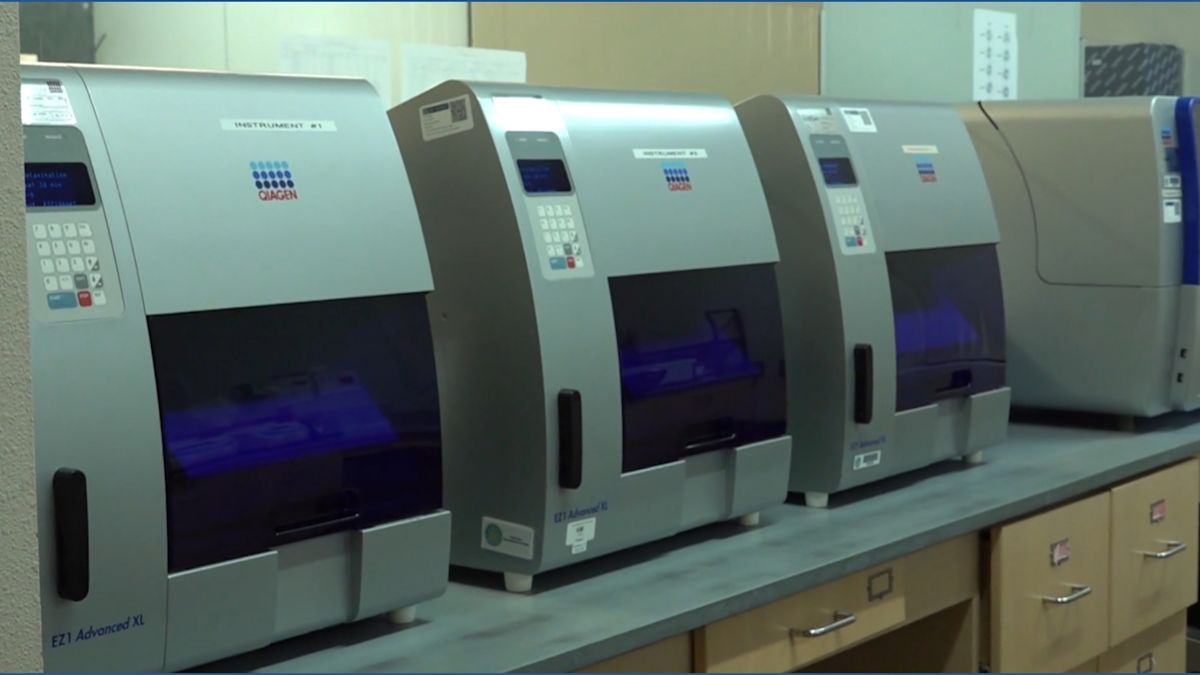
The Texas Department of Public Safety’s Corpus Christi Crime Lab opened its doors as part of National Forensic Science Week, giving students and community members a behind-the-scenes look at forensic science and the work done inside a crime lab.
The open house gave visitors a chance to learn more about what forensic scientists do and what a career in the field can look like.
Forensic scientists help law enforcement analyze evidence connected to criminal investigations. DPS says its crime laboratories work with evidence ranging from DNA and biological material to firearms, seized drugs, toxicology, digital evidence, fingerprints and trace evidence such as hair, fibers, paint and glass.
For students visiting the Corpus Christi lab, the experience offered a chance to see what happens behind the scenes.
One student said they wanted to learn more about what actually happens inside forensic laboratories.
Lab Manager Brian Nacu said the job is not always as glamorous as television shows make it appear, but the work can have a major impact on the community.
Forensic scientists often work with evidence connected to people during some of the most difficult moments of their lives, helping investigators find answers and families find closure.
A look at the work happening across Texas
The Corpus Christi lab is part of DPS’ statewide Crime Laboratory Division, which includes 16 accredited labs and programs and about 712 employees.
DPS says its Crime Laboratory Division processed 113,259 requests for forensic testing over the past year and uploaded a record 148,993 arrestee and offender DNA samples to the Combined DNA Index System, or CODIS.
The department is also working on new technology and programs, including a Rapid DNA pilot that could allow booking facilities to compare an arrestee’s DNA against CODIS in less than two hours.
DPS is offering free public tours at some of its crime laboratories during National Forensic Science Week, giving visitors a closer look at the science and people behind forensic investigations.