
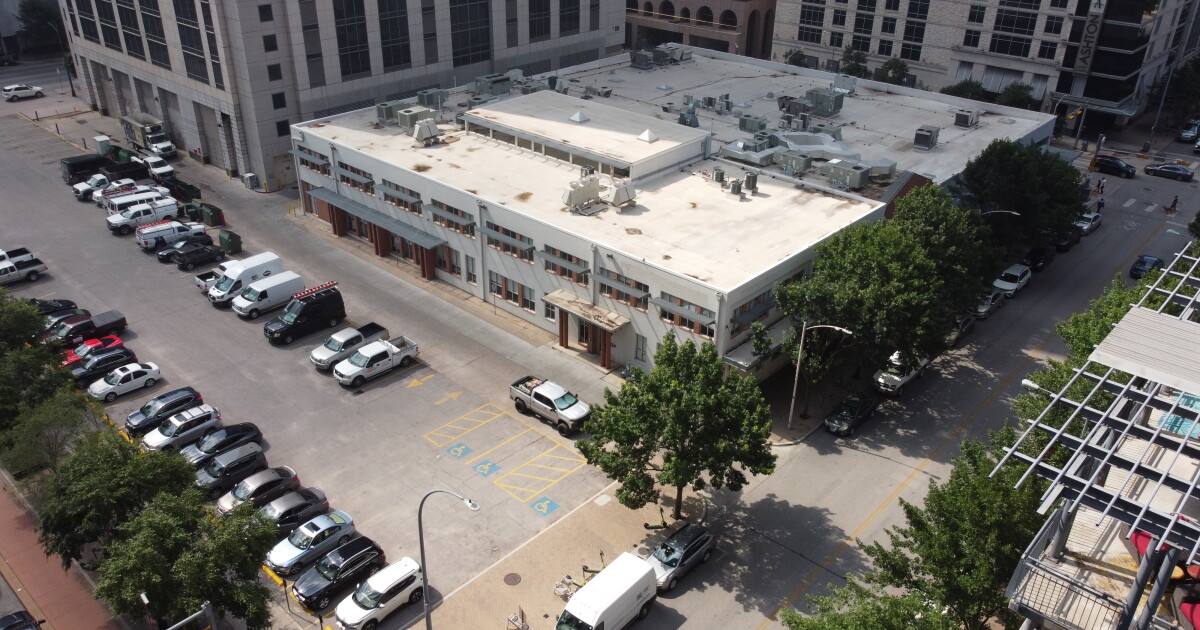
The agency building Austin’s light-rail system has scrapped a controversial $47 million plan to relocate its headquarters to a lakefront high-rise at 100 Congress Ave. Instead, the Austin Transit Partnership will expand its existing downtown office to the address next door.
The exact cost savings are difficult to pin down because the leases are different lengths. But a rough calculation suggests the new arrangement would cost about $500,000 less per year.
The original proposal would have put ATP into 51,576 square feet of Class A office space, a term used to describe the highest end commercial space in a city. The 22-story high-rise at 100 Congress Ave. opened in 1987, but its 2023 renovations have been featured in at least one architecture publication.
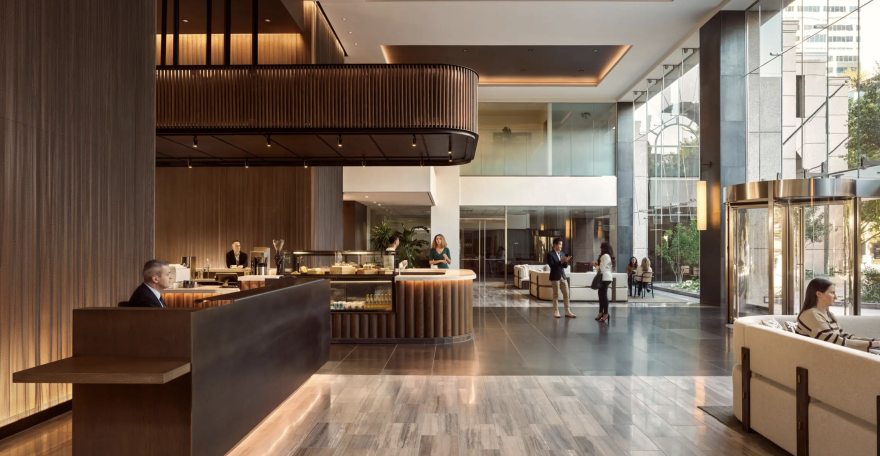
The 22-story building at Congress Avenue and Cesar Chavez Street was renovated in 2023.
That lease would have cost $5.37 million a year over 7 1/2 years, after accounting for a landlord reimbursement.
The new plan works out to about $4.88 million annually over four years. Both estimates spread one-time renovation costs over the respective leases.
The ATP board unanimously approved the plan Monday, five months after Mayor Kirk Watson objected to the original proposal and pushed the agency to consider cheaper alternatives.
The new agreement allows ATP to remain at 203 Colorado St. and expand into the neighboring address at 201 Colorado St. in March 2027.
The board authorized up to $13.5 million for the four-year lease and $6 million for renovations and equipment. Board members also approved $400,000 to extend ATP’s existing lease through February.
The agency plans to occupy about 54,000 square feet, slightly more than the space it had been seeking at 100 Congress Ave.
ATP officials said the option to expand next door didn’t become available until May, a month after an unusually public dispute over how the taxpayer-funded agency should spend its growing pool of money.
Watson, who’s one of five voting members on ATP’s board, publicly objected in April to moving the agency into a tower overlooking Lady Bird Lake.
“I oppose these two items, and the Executive Director was told that I’m opposed,” Watson wrote.
In a text message to an aide, obtained by KUT News under the Texas Public Information Act, the mayor was more blunt.
“What is he thinking?!” Watson wrote on April 11. The staffer had sent Watson a social media post about the lease by X user @data_atx that was attracting negative attention.
“It’s a bad idea and now he’s pushed me into a corner,” Watson wrote in another text message. “Doesn’t pass the smell test.”
Michael Minasi
/
KUT News
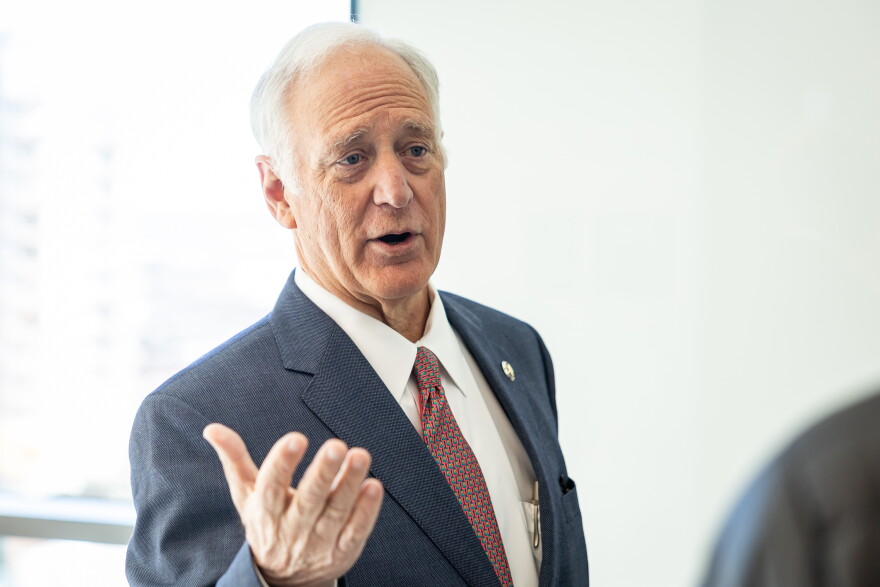
Mayor Kirk Watson had texted an aide in April that the original plan to move ATP into a high-rise overlooking Lady Bird Lake didn’t “pass the smell test.” He pushed the board to reconsider. This week, the board approved a lease that costs about $500,000 less per year. The annual price tag is now $4.88 million, including renovation and equipment costs.
At Watson’s urging, ATP board Chair Veronica Castro de Barrera postponed a vote on the lease to give staff more time to study other options, including the possibility of moving into unused space at CapMetro’s headquarters east of downtown.
City Council Member Paige Ellis, who also serves on CapMetro’s board, later called the proposal “tone-deaf” during a panel at the KUT Festival.
ATP considered moving in with CapMetro and examined other properties. But officials told the board that an opportunity to expand into neighboring space made the most sense.
“I believe that the process worked,” Watson said Monday. “The stop, the slowdown and the analysis did end up working. We’re facing now a lease of these items that is less expensive and has less time.”
The agency currently houses 200 people in about 32,000 square feet. Only about 64 are employed by ATP. The others work for light-rail contractors and consultants like AECOM, Herzog, Kiewit and Stadler. Others are employed by the City of Austin Project Connect Office and Capital Metro.
ATP expects that number of people to grow to roughly 280 as work on the light-rail project moves forward.
Officials estimate bringing all the contractors together could save up to $50,000 a month. ATP says it pays for separate offices for some of its contractors.
Board members pressed staff to document those savings and explain how much taxpayers will save by providing offices for contractors. ATP officials agreed to put the comparisons in writing.
“It’s not lost on us that this has struck a chord with the community of how much they want to make sure that there’s fiduciary responsibility exercised by this board,” Castro de Barrera said. “We acknowledge that we received that communication.”
Light-rail is the centerpiece of Project Connect, a public transit system funded by a property tax increase authorized by voters in 2020. The tax rate is expected to generate another $197 million in revenue over the next fiscal year.
ATP has received environmental clearance for the project but is still waiting for word on whether the federal government will cover up to half the cost, estimated at $8 billion, not including interest payments on debt.
A legal challenge of the project is still working its way through Texas courts. The lawsuit is based largely on an argument that voters were duped into approving a 20.2-mile system with a downtown subway that was later reduced to a 9.8-mile surface level route because of cost increases.
During Monday’s meeting, ATP’s board authorized $166 million in spending to advance design and construction work on the 9.8-mile route with the goal of breaking ground next year. ATP expects to bring the designs to roughly 50% to 60% completion over the next fiscal year as it works to secure federal funding.