
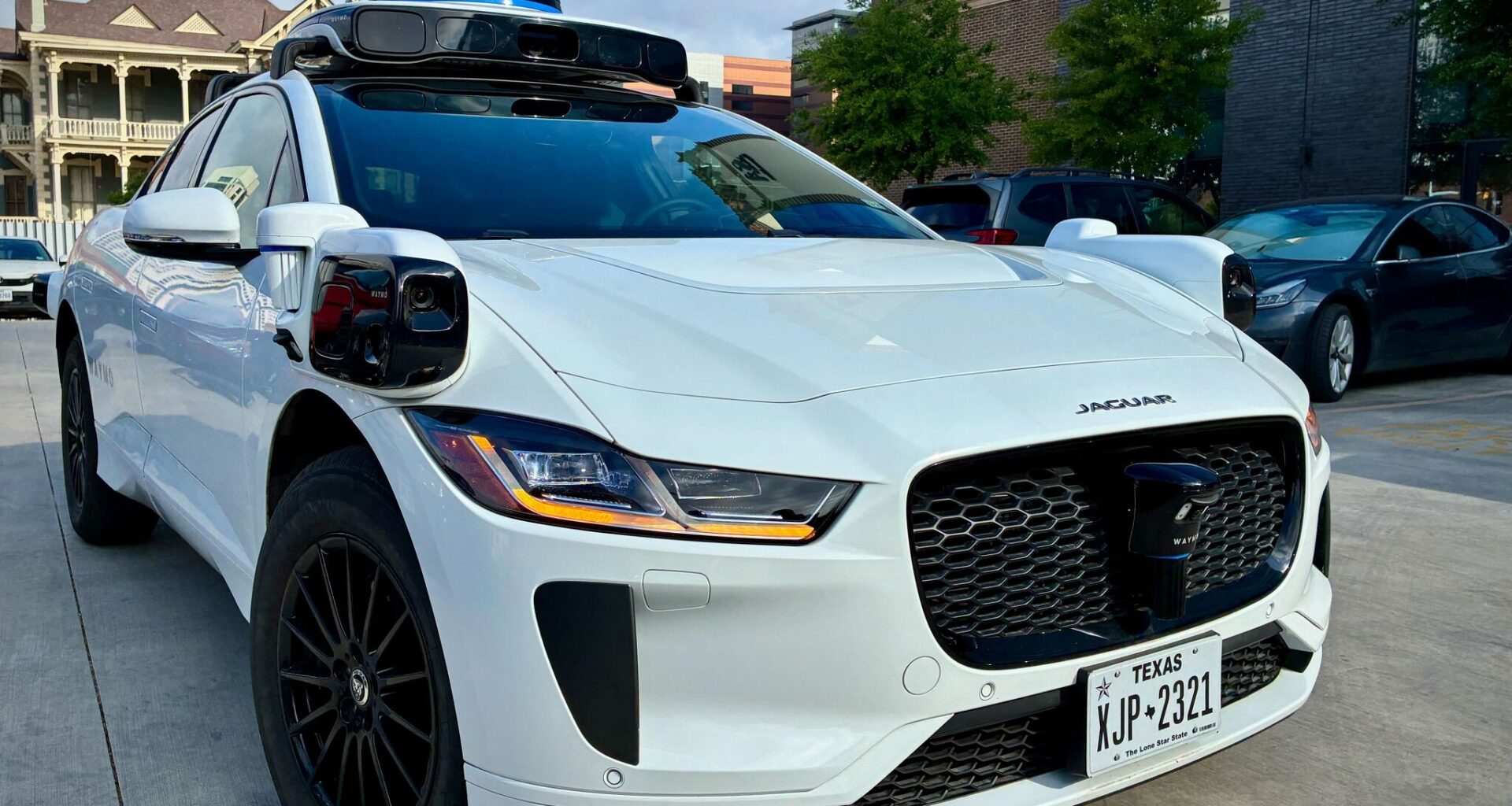
After a pause in service due to safety concerns last April, Waymo’s futuristic robocars are officially back on the streets of San Antonio. The autonomous driving technology company says several key software improvements have been implemented to better prepare for future flooding.
MySA recently took a Waymo trip from work to a smoothie shop and back. Here is what we noticed and what San Antonians should know before booking a ride:
Dozens of vehicles are up and running across a 60-square-mile service area. San Antonio Waymo trips are available through an “early access” feature that will initially be limited to previous users. In the coming weeks, Waymo will gradually welcome additional riders from its waitlist. After that, once operations are ready, the general public will be invited to use the rideshare service. The company did not share when that might be.
This week, MySA took a short trip in a Waymo vehicle. Its flood-improvement protocols are not strictly noticeable on a clear day, though. So here is what we can say about the return of its vehicles, which some local Reddit users have called “worrisome.”
Waymo cars are stylish, clean and striking. If you feel anxious about even minor social interactions, like saying “hello” to rideshare drivers, a driverless car may be for you. The car door automatically unlocks as you approach. Aside from a guaranteed “quiet ride,” there are plenty of chill vibes in a Waymo.
I didn’t love that the car’s trunk seemed to open no matter what during both pickup and drop-off, but that was a minor inconvenience. It sometimes feels like the car makes abrupt stops or has trouble navigating out of parking lots, and there was even a close call as the vehicle pulled out onto the road near an oncoming bus. But you could argue it had the right-of-way.
As for price, it’s a little higher. A round-trip spanning a total of about 2 miles costs $20.28. But on the other hand, there was no one to tip.
A company representative told MySA that Waymo has conducted a thorough audit of potential flooding zones in the Alamo City after an unoccupied vehicle entered a flooded roadway during heavy rains last spring. The vehicle was then pulled into Salado Creek, and the robocars were taken off the roads after arriving only a short time earlier in February 2026. It wasn’t the only “wrong way” mishap for the driverless vehicles in San Antonio.
Since returning in September, the fleet of autonomous Jaguars has adjusted software triggers and alerts for when local conditions, like heavy rainfall, may call for updated operations so that Waymo can act quickly when conditions change. The company also said it has seen these improvements work well in other cities.
“We did a thorough audit of potential flooding zones, incorporating first, second, and third party data sources to identify areas of high risk and have targeted, location-specific limitations for them,” product communications manager Chris Bonelli told MySA.