
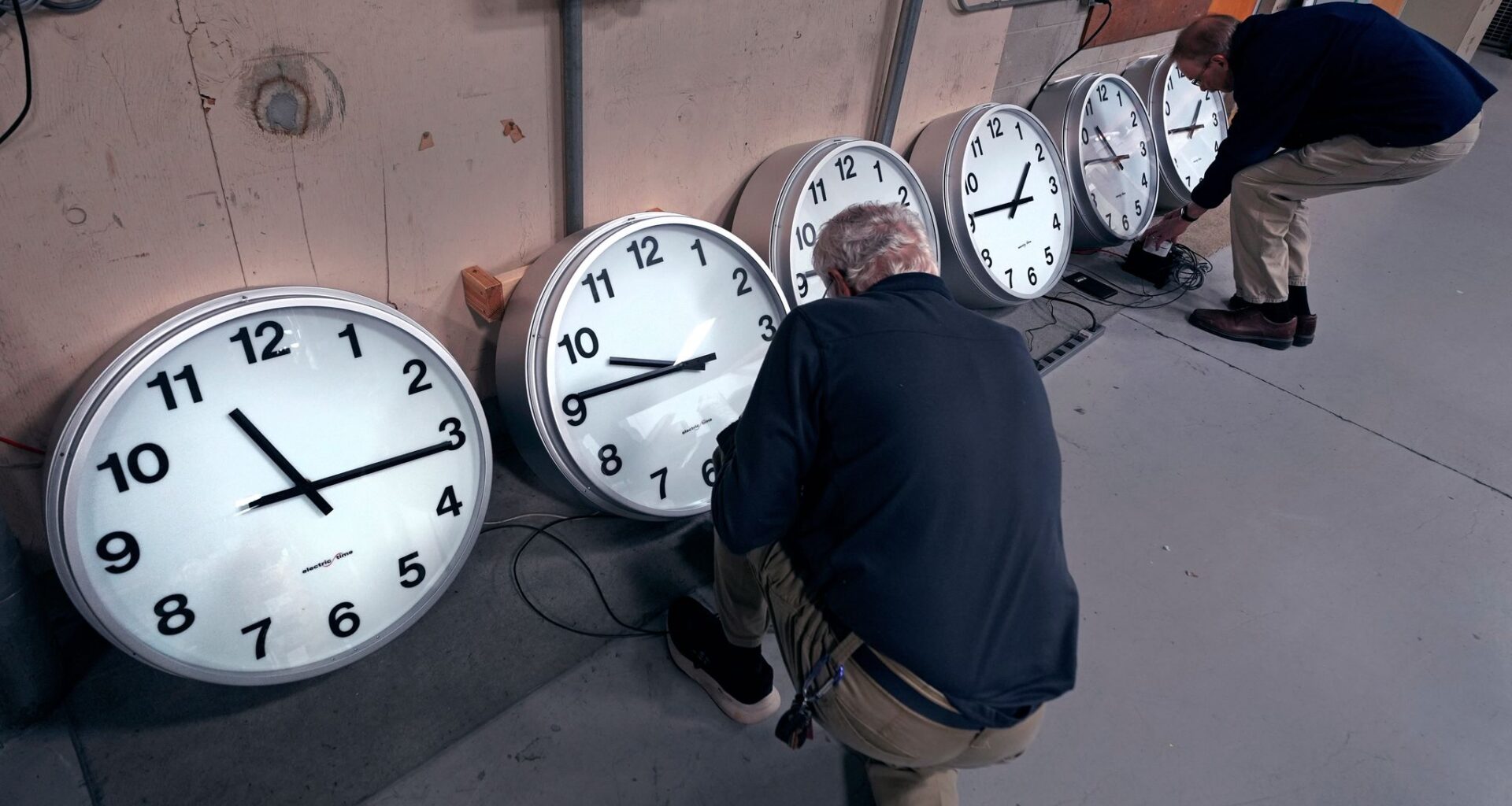
Don’t forget to set your clock. That reminder occurs every spring and fall when it’s time to prepare for daylight saving time.
The time is set to change again in Houston on Nov. 1, when DST officially ends at 2 a.m. At that time, clocks will move back one hour to 1 a.m.
TIME CHANGE FACT CHECK: Has the US already ‘tried’ and ‘hated’ making daylight saving year-round?
Daylight saving time, or DST, is the practice of setting clocks forward during part of the year to use natural daylight, according to the Time and Date website.
Article continues below this ad
DST is typically one hour ahead of standard time and lasts from spring to fall. The ongoing discussion centers on whether DST or permanent daylight saving time is the better option. While many U.S. states push for legislation to keep daylight saving time year-round, others, including medical and sleep organizations, support permanent standard time as a way to better align clock time with the body’s natural circadian rhythm.
What is daylight saving time?
On this day, sunrise and sunset will occur one hour earlier than the previous day. That means more light in the morning and less light in the evening.
What is standard time?
Standard time grew out of the railroad industry’s effort in 1883 to establish standardized time zones and reduce confusion caused by communities using their own local “sun times,” according to the U.S. Department of Transportation.
Article continues below this ad
Standard time was a uniform timekeeping system that helped synchronize train schedules. Federal oversight of U.S. time zones began in 1918 with the Standard Time Act.
When is daylight saving time?
In the U.S., DST starts on the second Sunday of March and ends on the first Sunday of November, when clocks “spring forward” and “fall back.”
Why? DST has its origins in World War I-era Germany, when the country was trying to save fuel and energy by making daylight extend longer into the evening, according to Time and Date.com. Other European countries adopted the DST concept soon after.
Article continues below this ad
In the U.S., DST took longer to take hold. It became standardized practice through the Uniform Time Act of 1966. The law established uniform dates for observing DST, while allowing states to exempt themselves from it.
What is permanent daylight saving time?
Much of the ongoing discussion about DST centers on whether to eliminate the twice-yearly clock change by keeping daylight saving time in effect year-round. Under permanent daylight saving time, clocks would remain one hour ahead of standard time all year.
The key arguments of permanent daylight saving time, according to a report in Mount Sinai Today, include:
More light in the evening during the winter months.
Mornings will be darker as the sun will rise later in winter. Commuters to work and school will wake and travel in the dark.
More light after work and school for outdoor activities, sports, and recreation.
Economic benefits: more evening activity could allow people to shop and eat out, adding a boost to local businesses.
Safer roads: more light in the evening hours can improve visibility.
Article continues below this ad
Over the last decade, 19 states, including Texas, have enacted legislation that could lead to year-round daylight saving time if federal law changes. Separately, the U.S. House of Representatives passed the Sunshine Protection Act in July 2026; the bill was referred to the Senate, where it remains pending.
Two U.S. states — Arizona and Hawaii — and the U.S. territories of American Samoa, Guam, the Northern Mariana Islands, Puerto Rico, and the U.S. Virgin Islands, observe permanent standard time. Most of Arizona does not observe DST.
Some medical organizations support permanent standard time, arguing that it better aligns with the body’s natural circadian rhythm. The American Academy of Sleep Medicine says the United States should eliminate seasonal time changes in favor of permanent standard time for health and safety reasons.