
Texas Democrats have been promising for more than a decade now that they’ve got a candidate who can actually win this reliably red state. So far, each bid has ended in disappointment.
But this time is different, Texas Democrats say. Because 2026 is actually, finally, the year a Democrat will win the state and flip a US Senate seat.
“What’s different this time is that there is an excitement,” said Reyne Telles, executive director of the county Democratic operation, as phones rang and volunteers chattered in the other room.
Get Starting Point
A guide through the most important stories of the morning, delivered Monday through Friday.
Texas is poised for change, he said, and battleground Tarrant County is “the last stand.”
Indeed, in 2026, the electoral stars seem to be aligning for Texas Democrats. An unpopular president started an unpopular war that has increased inflation and gas prices, putting Republicans on the back foot even in reliably red areas across the country.
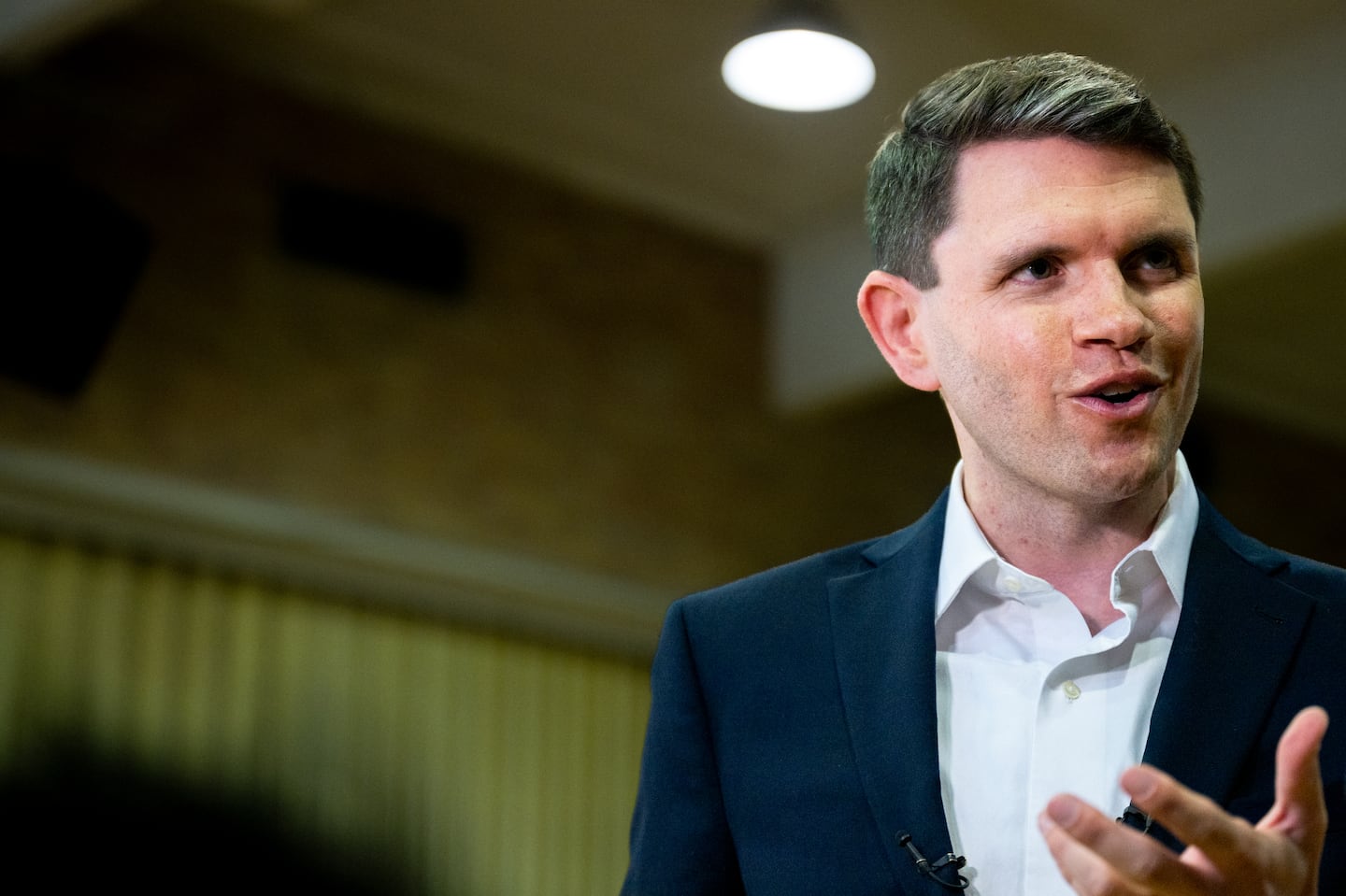
And in Senate nominee James Talarico, Democrats have found their most promising recruit yet. A state representative who grew up outside Austin, Talarico is a former teacher and a preacher-in-training, a baby-faced 37-year-old who has connected even in some of Texas’s reddest corners and emerged as one of the top fund-raisers of the cycle, raising $69 million as of the last deadline.
Perhaps more significantly, the flaws of Talarico’s opponent make him uniquely vulnerable.
Attorney General Ken Paxton is a close Trump ally with a trunk full of baggage, from alleged adultery to his 2023 impeachment by the Republican-led Texas House. (He was acquitted in the GOP-led Senate.) Recent public polling has shown Talarico leading Paxton in a tight race.
If Talarico wins Texas, he’d be the first Democrat to do so in over 30 years, and the shockwaves would be felt well beyond November. Hanging in the balance is not only control of the US Senate, but Texas’s status as Republicans’ cornerstone in the Electoral College, the counterweight to California for Democrats. A Talarico victory could put the state in play in a way it hasn’t been in decades.
Talarico’s path runs through the hotly contested Dallas-Fort Worth area, particularly Fort Worth and surrounding Tarrant County, which has become a battleground in recent election cycles. The most populous red county in Texas, home to one of the country’s biggest Republican-led cities, Tarrant County went blue for O’Rourke in 2018 and President Biden in 2020, but not for Kamala Harris in 2024. That record, and the county’s fast-changing demographics, have left Democrats feeling bullish and Republicans on defense.
“It’s hard to find a more important [bellwether],” O’Rourke said in an interview. He quoted a common adage: “As Tarrant County goes, so goes the state.”
O’Rourke knows better than anyone that in Texas, “you just can’t promise anything.” But, he said, “I don’t think the conditions have ever been so favorable.”
“If ever there were a year,” he said, “given the conditions — Trump, Paxton, the economy, the war in Iran, the candidates, the coalition — it is this year.”
***
One recent Monday evening, those Democratic hopes took shape in the back of Lydia Bean’s minivan in an elementary school parking lot in suburban Arlington. In sneakers and a ponytail, the candidate for Tarrant County clerk was the cheerful maestro organizing volunteers to door knock in the 94-degree evening heat.
“Is this too cheesy?” Bean asked before organizing the small group into a sports team-like huddle. “One, two, three, Team Tarrant!”
Bean believes Tarrant County is more competitive this year than it’s been in decades. If Talarico wins the county by a convincing margin — say, 4 to 6 percentage points — she believes she and other down-ballot Democrats can make it over the line, too.
“This is the most positive we’ve ever seen it,” said Bean, 45, a repeat candidate who said she has been knocking on doors in nearly every election since 2000. “This is a bigger wave than we’ve ever seen.”
Picture the map of Texas, colored in all in red. Now picture the major cities as big blue dots: Houston to the east, El Paso on the western tip, Austin toward the middle and Dallas a few notches above. For years, those blue dots have been blooming, slowly staining the suburbs purple. Dallas County government flipped to Democrats in 2006; Harris County, home to Houston, followed in 2016. The bet for Democrats is that at some point, the blue will finally overwhelm the red, tipping the state into their column. And Tarrant County, home to Fort Worth, is the last of the big counties still wobbling through the purple haze.
“If you ever had a chance of flipping the state, this is now,” said Gilberto Hinojosa, the former chair of the Texas Democratic Party and the father of the party’s gubernatorial nominee, Gina Hinojosa. “It’s almost a perfect storm against the Republican Party.”
Republicans are skeptical, to say the least.
“This is Lucy and the football,” said Dave Carney, a longtime political adviser to Texas’ Republican Governor Greg Abbott. Ever since “Wendy Davis, who was going to be God’s gift to the Democrats,” Carney said, “they have conned donors into thinking that this is the year.”
This cycle is not “comfortable,” for Republicans, Carney acknowledged — “it’s going to be competitive.” But ultimately, he predicted, “the Democrats are going to come up short. They’re going to get really close, and so that will make them spend even more money next time.”
Yet even cautious prognosticators acknowledge this cycle feels different. Past Democratic hopefuls never consistently led in polls the way Talarico has.
“There is something different going on here,” said Jim Henson, a longtime pollster and executive director of the Texas Politics Project at the University of Texas. “This race is more competitive than any race we’ve seen in Texas in decades.”
One big reason for that is Paxton himself. A three-term attorney general, he spent nearly a decade battling securities fraud charges, and his wife, state Senator Angela Paxton, filed for divorce last year after widespread coverage of his infidelity. Paxton was investigated and impeached by fellow Republicans in the Texas House over allegations that he used his office to perform favors for a political donor. While he was subsequently acquitted by the GOP-led Senate, a stink has followed him ever since, raising questions about his ethics on issues big and small. A recent Talarico ad showed footage of a notorious incident when Paxton pocketed a $1,000 Montblanc pen after a fellow attorney left it behind in a courthouse security line.
For all those reasons, many Texas Republicans hoped to nominate Senator John Cornyn again this year, putting up an establishment stalwart to hold the seat in a competitive cycle. But Paxton, with President Trump’s help, ousted Cornyn in a bruising primary.
Paxton allies argue his vulnerabilities are already baked in: Voters know who Paxton is, warts and all, and they’ve elected him many times before. And Republican PACs have started to flood the state with money to support Paxton and attack Talarico. The GOP leadership-backed Texas PAC could reportedly spend as much as $200 million.
“The race is close today, but this is still September,” said Anthony Holm, a Republican consultant who has worked for Paxton but is not involved this cycle. The money allows Paxton allies to blast negative ads about Talarico, defining him by the social views they argue are too liberal for Texas voters.
“Texans are about to learn who Talarico is, and that’s going to collapse him,” Holm said. “The last two decades, Democrats have been saying, ‘This is our cycle!’ And they failed, and they will fail again.”
Meanwhile, Republicans are also working to shore up their own side, urging GOP voters to hold the line in thinly veiled remarks that sometimes avoid Paxton’s name altogether. At a luncheon for Fort Worth Republican women last week, attendees were urged to “vote the party,” even “if you can’t vote that candidate.” Angela Paxton herself has told fellow Republicans to keep the Senate seat “in the family — even if we’re mad at them.”
An August poll showed there are more Texas voters who plan to vote for Paxton than there are voters who consider him “honest and trustworthy.” In Tarrant County, not far from Paxton’s political home base in the Dallas suburbs, many in the GOP are willing to hold their noses.
Republican Ken Botts plans to vote for Paxton even though he has “issues with his ethics.”
“He’s made some bad choices,” said Botts, who is self-employed and a precinct chair, as he stacked water jugs into the trunk of his van at a Fort Worth grocery store. “I’m not a huge fan of Paxton, but he’s the better option.”
Still, Democrats are counting on defectors. Paxton may have won under difficult conditions before, but “we never had him running with this many warts,” Hinojosa cracked.
Perhaps the biggest question of the Senate race is how many Republican-leaning voters will cross over to vote for Talarico, support the Libertarian candidate, or leave the race blank altogether. Talarico has made a direct appeal to Cornyn supporters who feel they cannot back Paxton.
Some of Talarico’s most prominent Republican supporters are longtime leaders in contested Tarrant County.
Paxton is “only in it for himself,” said Glen Whitley, a lifelong Republican who was Tarrant County’s executive for 16 years. He backed Cornyn in the primary before endorsing Talarico.
“There’s a lot of people who’ve identified as Republicans who are either going to sit it out, or they’re going to vote for Talarico,” Whitley said. “There’s room on the bandwagon.”
***
If Texas is in the middle of a perfect electoral storm, Tarrant County may be the point of greatest impact. It’s part of why the county has attracted visits from both Senate candidates, including Paxton as recently as Monday.
“Tarrant County is still a conservative county, despite what the Democrats want to say, but it is their focus and it is their target,” Tarrant County GOP chair Tim Davis warned at an event in Fort Worth last week.
Democrats here already had high hopes after flipping a state Senate seat in a special election earlier this year. Then, late this summer, the Republican-led county voted to close about a third of the county’s polling locations, a decision that has galvanized left-leaning voters.
Republicans said the decision was intended to save money in a low-turnout midterm election year. But Democrats saw it as an attempt to suppress turnout or sow confusion. They were particularly enraged about a shuttered polling site at the University of Texas Arlington.
“They’re trying to keep it red by taking out these polling places,” said Andrea Smith, 50, a nurse who lives in Tarrant County and plans to vote for the Democratic ticket.
Bean, the county clerk candidate, trotted out those same arguments as she knocked doors last week in a West Arlington neighborhood with Halloween decorations in the windows and boats in some driveways.
“Talarico’s going to win Tarrant County by several points, but we need people to vote in every race,” she told voter after voter.
It was a good night door knocking, all things considered. A few weeks back, Bean was nipped by a pitbull, but managed to secure three votes from his family. (“The dog was MAGA, the people were not,” she joked.)
Most people Bean met said they planned to vote for Democrats, or at least agreed to read the campaign literature she tucked behind their screen doors. But even Democrats weren’t interested in putting up a campaign sign in their yards. Some joked about their MAGA neighbors while others pleaded HOA restrictions.
Around 8 p.m., the sky dark except for an occasional burst of heat lightning, Bean resolved to try one more block. She landed on the doorstep of Lavonda Patterson, a local educator who was eager to chase the GOP out of county government and beyond.
If Democrats want to take back control, “we have to win” some red areas of the state, Patterson said, standing at her front door in shorts. “I’ve been saying this since Beto ran.”
As they talked more about the strategy and the stakes, Patterson agreed to put up a yard sign, becoming Bean’s first taker of the night.
It had been a dry summer, making the Texas terrain feel impenetrable when the Democrat tried to position signs in yards and along highways. But after a recent spot of rain, Bean hoped the ground had softened. After some steady pushing, she found just enough give to get the stakes into the grass.
Emma Platoff can be reached at emma.platoff@globe.com. Follow her @emmaplatoff.