
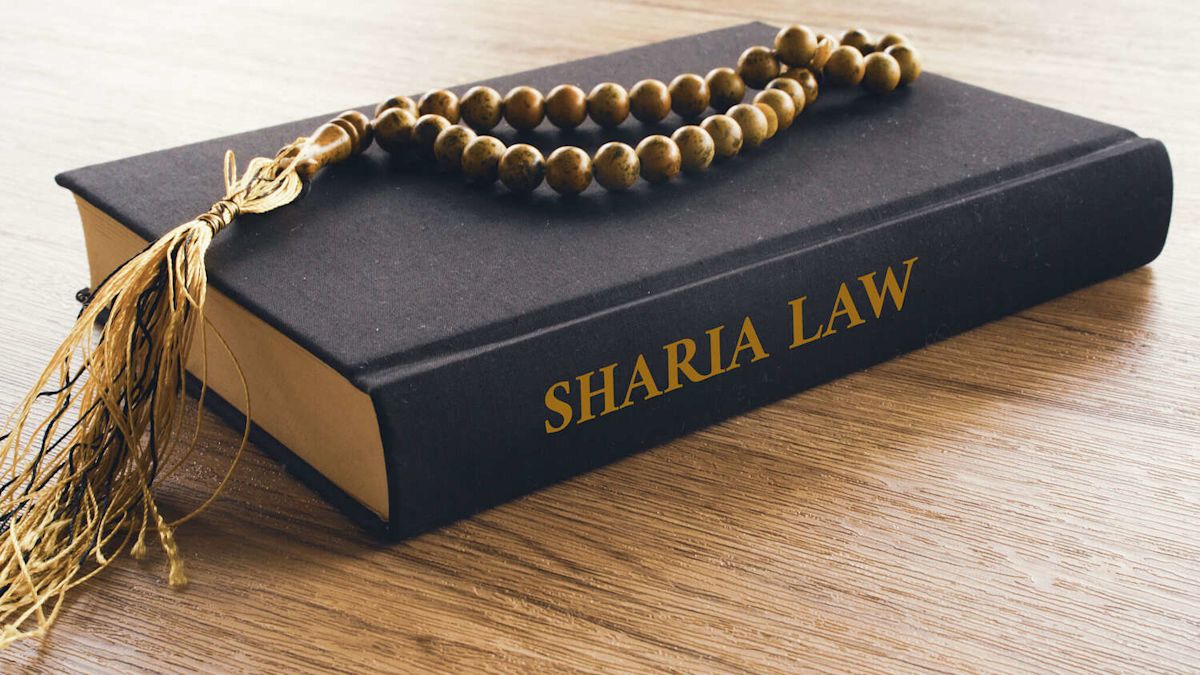
The Texas Supreme Court has rejected a Houston businessman’s attempt to have his “secret” Sharia Law divorce recognized in Texas, ruling that his wife did not receive adequate notice or an opportunity to be heard before the divorce was finalized.
The Friday ruling is the latest chapter in a nearly decade-long divorce saga between Houston real-estate magnate Mohammad Ali Choudhri and his estranged wife Hira Azhar. Per court records, Choudhri obtained a divorce in Pakistan without Azhar’s knowledge; she learned of it two years later.
At the heart of the debate are $100 million in shared marital assets and whether the merits of a Pakistani divorce under Sharia law-which does not require wives to be directly notified of divorce-should be recognized in the state of Texas.
Choudhri, a Houston real estate businessman who has built several businesses and amassed more than $100 million in community assets during his marriage, has been involved in multiple legal disputes, including bankruptcy litigation and a federal lawsuit brought by the National Bank of Kuwait.
While the ruling rests on the wife’s lack of notice, it comes at a time when Texas Republican leaders are actively railing against the execution of Sharia Law in the Lone Star State, leading to 95 percent of voters in the March GOP primary supporting a statewide prohibition.
“International judgments should not be recognized in Texas courts when they are issued without due process or when they run contrary to Texas public policy,” the ruling stated, referencing a previous ruling.
Divorce under Sharia
According to the Islamic Sharia Council, Talaq allows husbands to unilaterally divorce their wives without requiring her consent. The Talaq procedure calls for the husband to make three separate “declarations” of his intent to divorce verbally or in writing on three separate occasions.
Then a three-month waiting period should ensue, and after this period the divorce can be finalized.
But, according to court records, that process failed to “adequately” occur. Instead, Choudhri’s only documented attempt was publishing a notice in a small local Pakistani newspaper, which Azhar claims to not have seen and only found out about two years after it was published.
“Five days of publication in a single obscure outlet does not suffice,” the Texas Supreme Court argued.
The court also questioned why other means of communication-such as calls, texts, email or direct or indirect communication with mutual friends-were not used to tell his wife of his intent for divorce.
“Gamesmanship designed to ‘hide the ball’ and prevent the defendant from learning of the lawsuit is inconsistent with our foundational notions of justice,” the court argued.
A “ruse” to get divorced
According to the court opinion, Choudhri and Azahr wed through an arranged marriage in Pakistan in 2008. Azahr was 18 at the time and Choudhri was 28.
Choudhri was a U.S. citizen and had lived in the Houston area since he was three, while Azhar worked to obtain her visa. By 2010, Azhar joined her husband in Houston where the couple reportedly amassed over $100 million in community assets.
Azhar alleged that Choudhri physically and mentally abused her during the marriage, claims detailed in the court record.
In 2013, according to the opinion, Choudhri sent Azhar to Pakistan to renew her visa. While she was there, Choudhri worked to obtain a divorce under Sharia law known as Talaq, which was finalized in May 2013.
Local courts side with Pakistani ruling
After returning to Houston in 2015, Azhar filed for divorce in Harris County.
The trial court ultimately recognized the Pakistani divorce and entered a judgment that denied Azhar a division of the couple’s marital estate. The court of appeals upheld that decision.
That included upholding Pakistani principles, such as denial of a wife’s claim for division of the marital estate, unlike how it is allowed in Texas.
“It accordingly rendered a take-nothing judgment against the Wife [Azhar]” the opinion stated.
The Texas Supreme Court reversed.
The justices said the Pakistani divorce could not be recognized because Azhar was never properly notified and had no opportunity to participate in the proceeding.
As opposed to following any divorce mandates of a foreign country, “She should be able to pursue divorce in Texas under Texas law,” the court argued.
More News
Politics | Houston judge candidate says opponent bailed on scheduled debate
Coins | Texas lottery winner strikes it rich and reveals first big purchase
Nerds | PAX Unplugged gaming convention coming to Houston
Safety | Texas A&M e-scooters and e-bikes could be banned after crashes rise
For the latest and best from Chron, sign up for our daily newsletter here.
This article originally published at Texas Supreme Court rejects ‘secret’ Sharia divorce in $100M case.