
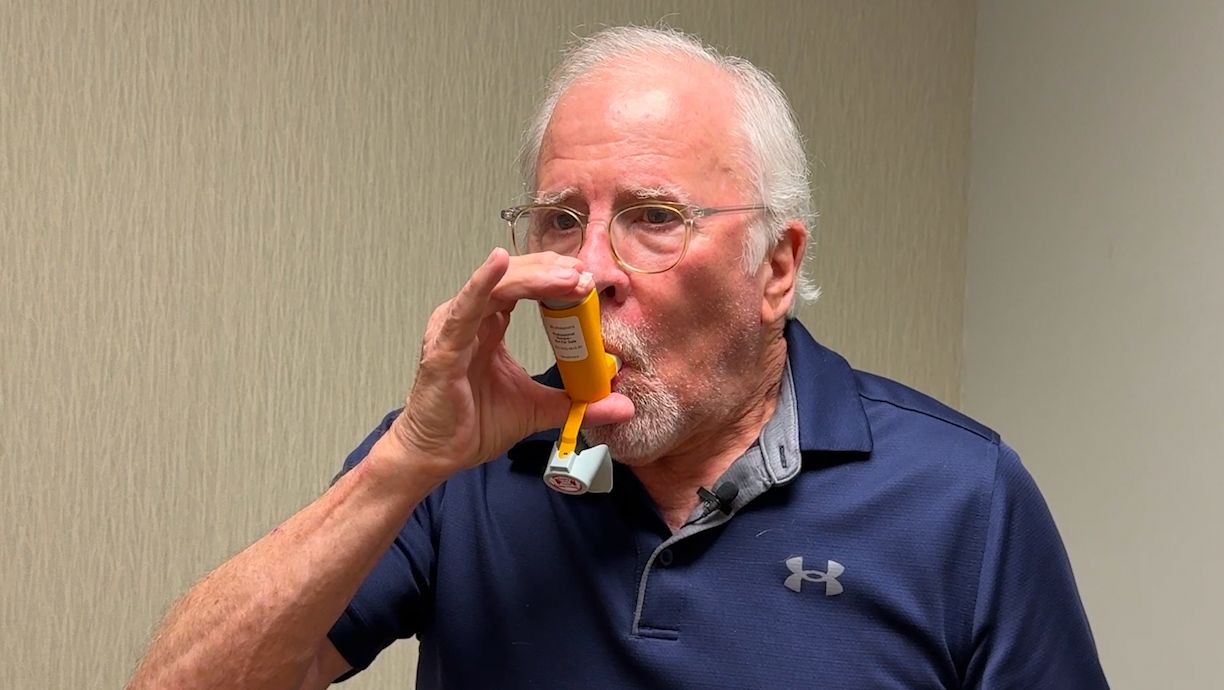
DALLAS — For Michael Lanham, managing asthma has become part of his routine.
“Asthma is pretty treatable, at least in my experience with it,” Lanham, a Dallas-Fort Worth resident, said.
Lanham has been dealing with asthma and allergies for nearly 50 years. He still visits the Dallas Allergy and Asthma Center regularly for treatment.
“Every five weeks I’m here getting my shots and and doing my normal treatments,” Lanham said.
“I do use a couple of inhalers, some when I’m having an asthma attack, some are just preventive and maintenance kinds of things,” Lanham said.
For Lanham, that treatment is accessible.
But a new report shows that is not the reality for everyone living with asthma in Dallas.
The Asthma and Allergy Foundation of America’s 2026 Asthma Capitals report examined 100 metropolitan areas and found Dallas ranked No. 18 among the most challenging places to live with asthma.
“I was surprised and disappointed,” said Lara Gross, an allergist at the Dallas Allergy and Asthma Center.
Dallas is not the only Texas metro area on the list.
Five others also made the list, including El Paso, San Antonio, Austin, McAllen and Houston.
Gross says part of the challenge comes down to something basic: access to care.
“Many asthma patients without insurance can’t make it to doctors for asthma care,” Gross said.
The report also ranks Dallas third among the 100 metro areas for lack of health insurance.
Gross says that can make it harder for Texans to manage their asthma before it turns into a bad flare-up.
“It’s always so tragic to hear about an asthma related death, because this is a disease that can be well controlled if you have the resources to do so,” Gross said.
She says there’s another challenge here in North Texas — allergens.
“We do know in Texas we have we have long pollen seasons. We don’t get hard freezes in the winter. So, our pollen seasons are long, which for many people with asthma, that’s a trigger for their asthma,” Gross said.
That’s something Lanham knows all too well.
“Pollen is my main, my main nemesis,” Lanham said.
He says knowing his triggers means paying attention to what’s in the air and adjusting his routine when necessary.
“I think that’s the key message: be diligent about it,” Lanham said.
Lanham says he hopes all Texans living with asthma can find the care and treatment they need.
Because after nearly half a century of dealing with it, he’s learned it’s something he can manage — not something that has to hold him back.