
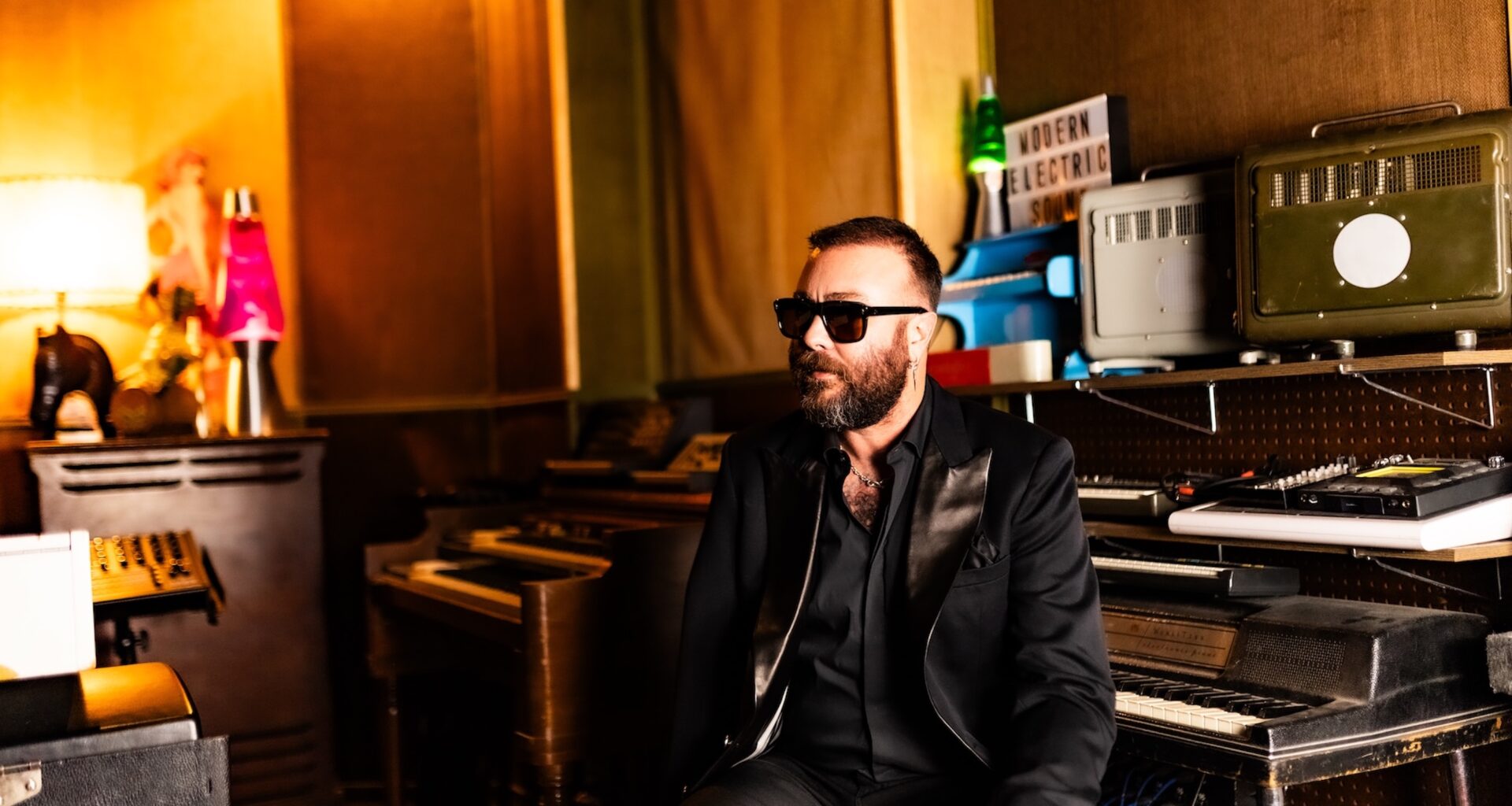
From a hospital bed in the intensive care unit, Jeff Saenz wasn’t sure what had happened to him, how he survived, what the rest of his life would look like and when he could get back in the control room at his recording studio, Modern Electric Sound Recorders.
On June 1, 2021, Saenz came into contact with a downed power line.
“We had a killer day at the studio, worked with an incredible cast of guys, and had such a great session, went home that night, tried to get home early enough to just see [my daughter] before it was bedtime,” he says.
Following an aggressive storm in the days before, there was a blackout on his street in Little Forest Hills; Saenz walked into his front yard to investigate. Watching the shadow figures of his neighbors peer down the street is his last solid memory of the night.
Sign up for the Music newsletter to get the latest stories delivered to your inbox
THANK YOU!
You’re all set.
CLOSE
“I later came to find out that moonrise that night wasn’t even for another two hours, so the moon was below the horizon, no cloud in the sky for it to even reflect off of. It was eerie, and it was just black,” he says.
He was shocked by 7,876 volts, or more specifically, 12 amperes. At one ampere, the heart stops pumping blood normally; cardiac arrest is almost certain; amputations aren’t even a question. Miraculously, his heart never stopped beating. He believes it’s because the current flowed through a silver St. Michael’s medal around his neck, a traditional pendant worn as a symbol of protection and strength, rather than his heart. He still wears it.
After almost two weeks in a medically induced coma, another 10 weeks in a burn unit to address third- and fourth-degree burns covering 25% of his body, and several surgeries, including the amputation of his right arm and left hand, Saenz returned home to his wife, Monica, his children and music.
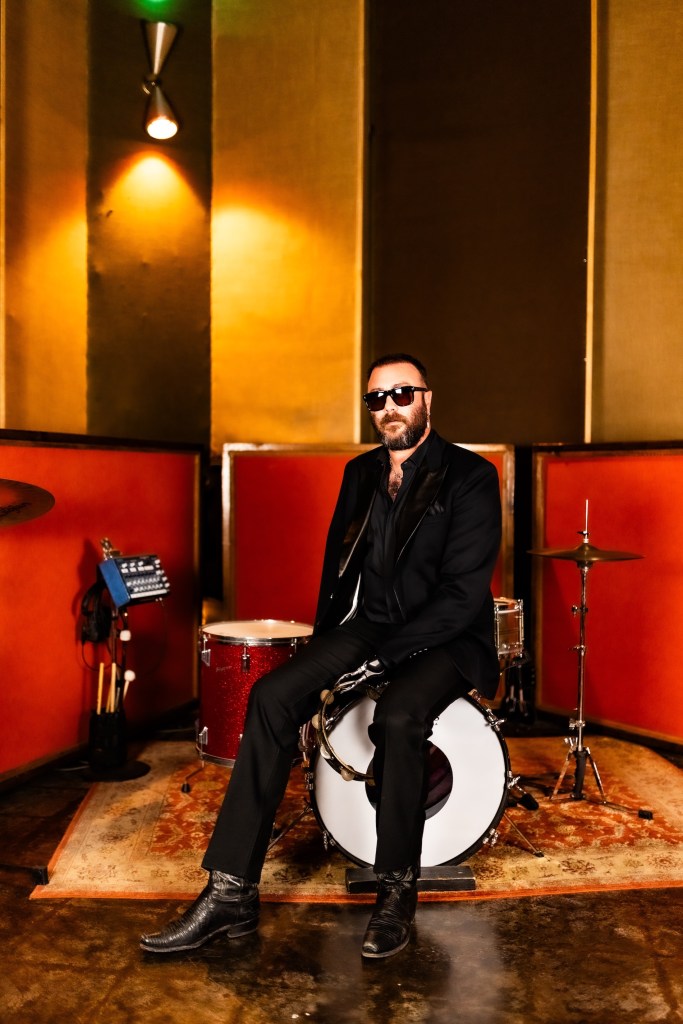 As the owner of Modern Electric Sound Recorders, Saenz has spent years behind the scenes. With his new record, he’s ready to unveil Baby Snakes & the Electric Co.
Now, five years later, Saenz views his life in two segments: before the accident and after. Having endured a challenge unlike any most people will ever face, Saenz decided that life in the after would sound just as beautiful and loud as the life before. By the end of 2024, he set a new goal for the next year: write and record one original song each month.
Music, up to that point, had gotten Saenz through every hard and every beautiful moment in his life. He knew it could get him through many more.
On Oct. 23, Saenz, under the moniker of Baby Snakes and the Electric Co., will release a 12-track album titled “Ouroboros,” his first-ever solo project. The work, originally intended as a creative outlet and a reclamation of music, was never written to be released, but after a year of tribulations, Saenz is opening his lyrical diary, hoping to share his story of tenacity.
“I’m blown away by the fact that I could pick up the pieces after an accident like the accident that I had, and I’m blown away by the fact that I could make something that I’m proud of, and I feel is beautiful out of such a difficult year of life,” he says. “I would only hope that people could find some power in that for themselves.”
High Voltage
He’s still not sure exactly how the accident happened; he remembers the night like you remember a dream — hazy and in fragments. He knows there was a power outage on his street; he remembers walking outside, still holding the lighter he had used to light as many candles as he could find inside his home.
He remembers a feeling, an overwhelming buzz that made him feel like he was bursting from the inside out. He remembers flying through the air before slamming into the ground and then he remembers staring into the panicked face of Monica above him.
He can still feel the harsh juts of the stretcher collapsing; he can see the uncomfortable glow of fluorescent lights in the back of the ambulance that broke the eerie dark of the pitch-black night; he can still hear how the muted sirens sounded from inside; and he’ll never forget the last words he heard that night as the EMT loaded his body with fentanyl.
“You’re gonna be okay, bud.”
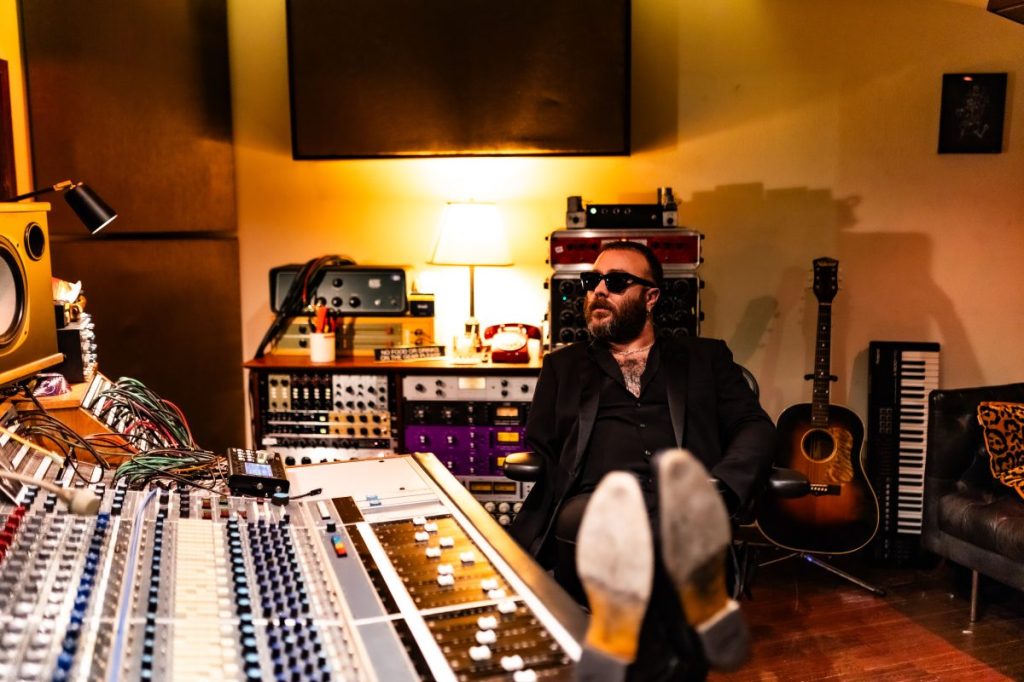 Saenz is releasing his debut solo record later this month as Baby Snakes & the Electric Co.
To this day, he’s not sure of the exact details of how he came into contact with the power line, but assumes he brushed it with his right hand. At such a high voltage, Saenz would have immediately lost muscle control, rendering him unable to unlatch himself from the line and leaving him entangled for the duration of the accident.
He spent 10 days in a coma as doctors performed a series of necessary surgeries, including the amputation of his right hand. He awoke with Monica at his bedside, and a choice to make: whether he would surrender to the new difficulties life presented to him, or to find a new way to live.
“It was either be angry, and be sad, and be sullen, and depressed, and all these things, and nobody’s going to blame you, and you’re going to go through a lot of that regardless, or just look forward and get home to your family and get to work,” Saenz says.
Changing tune
Make no mistake, “Ouroboros” is not about the accident, nor is it about triumph.
“At no point on the album is it ever suggested that we won, we survived, we made it,” he says. “But I also was really adamant when we were writing these songs about not ending anything with a question mark, or some big looming wondering of whether or not there was hope.”
Life is still hard for Saenz. Daily, he’s presented with new problems to solve. The simplest tasks, like using finicky remotes, are puzzles. Many times, his only route is to fail and then fail again until he finds new normals. But life’s inconveniences spare no one.
“We got past the initial physical trauma, but people don’t often think about the tribulations that come after that,” says Monica. “There’s a lot more invisible hardship that comes after something like that. That’s what [the album] is about. It’s not about the initial, big physical accident that everyone thinks it probably is. It’s like what happens when you get back to real life.”
The album chronicles a year of Saenz’s life, featuring tributes to Monica and their two children (their seven-year-old daughter even has credits on one of the songs), and ends with the title track, the only song written about the artist himself. It creates a multi-dimensional work filled with love and loss, inspired by both good days and bad.
“Last year was just extremely difficult for me; I needed to go as deep as I could into that space,” Saenz says. “But I found a way to write some truly happy moments into this, and I’m really proud of that, because amidst all of the pain, to be able to convey these moments of beauty and hope is tricky.”
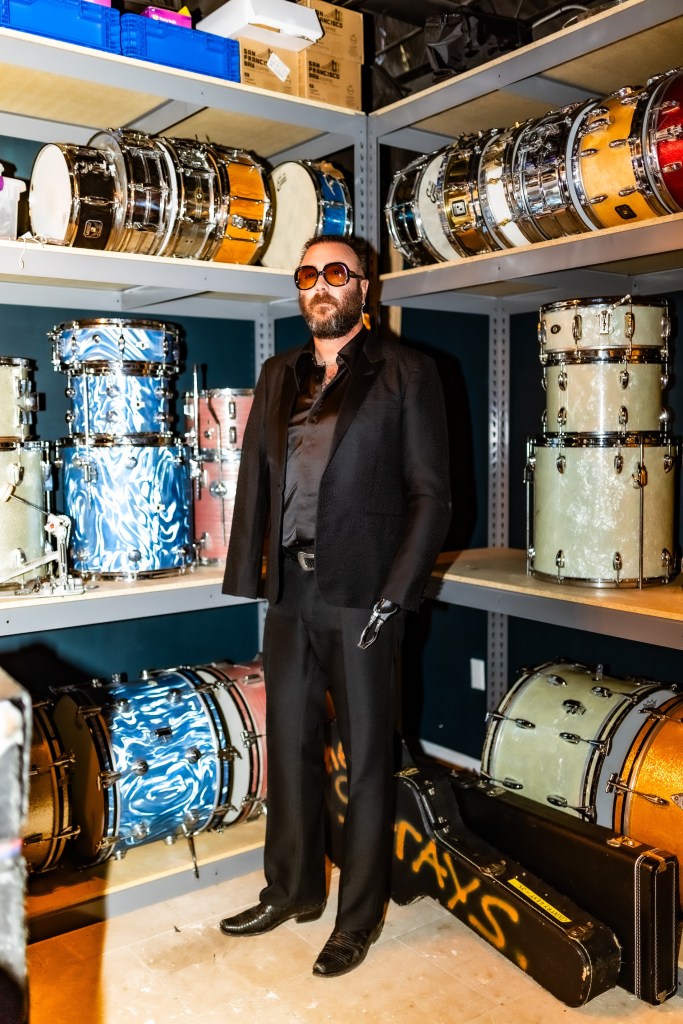 Saenz has a large collection of drums, his favorite instrument, at his Modern Electric Sound Recorders studio in East Dallas.
Monica has been watching her husband adapt for years. She’s watched him relearn how to brush his teeth, make his morning coffee and use a phone. But watching him relearn musicality was one of the more rewarding moments the last few years have held.
“I was definitely excited for him to be able to do music again in his own way,” she says. “To be able to create something without being able to play instruments and kind of just see how it would go with him being more involved in the writing and producing aspect than he had been before was really cool to see.”
For a lifelong musician, losing the ability to play almost all instruments (he’s now only able to play the tambourine) is a seismic event, but Saenz says it has changed him in an unexpected way, and gifted him a sort of sixth musical sense.
“I’m revitalized; I’ve found myself capable of being more useful to songs. I hear things differently now that I can’t reach for an instrument,” he says. “It haunts me, and I have to figure it out and communicate it. It can be a little frustrating, but it’s like the ideas are just rampant, because I don’t have an outlet.”
Striking the right note
There was always going to be an album; it had been Saenz’s goal since he escaped a suffocating record deal in 2008. But his career as a producer took priority, and then the accident derailed any plans he’d had before.
“An album would have come about because the reasoning for the album didn’t really have anything to do with the accident per se,” he says. “Maybe a little bit, but the album was really kind of a way for me to get back to my own music because I originally got into [production] so that I could make my own records.”
“Ouroboros,” made in installments, was an undertaking in itself. Saenz worked with a team of career musicians who also happen to be his closest friends in order to bring the rhythms in his head to life. Each song was written and conceptualized the morning of its recording session. It’s truly a catalog of a year in his life, captured in bite-sized pieces.
 The longtime Dallas musician and producer returned to his control room soon after the accident. But now, he’s stepping on the other side of the glass.
“[From] him sitting at the piano and tapping out melodies, to the band interpreting that and getting a vibe, then Jeff working out lyrics while listening to the band, we’d go from nothing to having the bones of the song in a single day, and by the end of the next day have most of everything that you hear on the record,” says Joel Raif, Saenz’s co-producer and friend.
Listening to the Baby Snakes & the Electric Co. album in chronological order is like reading the frontman’s diary from front to back. It’s emotional, real and balanced.
“It takes a lot of very talented and creative people to make something like that happen, a lot of trust between those people, and a lot of emotional courage to write like that, without giving yourself the time and space to filter or edit or second-guess where your head was in that moment,” Raif says.
Despite spending much of his early career on the country music circuit, “Ouroboros” is entirely rock-forward and influenced by artists and albums that helped Saenz through the last five years: Sharon Van Etten, Manchester Orchestra, Nick Cave and specifically the “A Deeper Understanding” album by the War on Drugs, which he asked doctors to play in the operating room.
“I probably wouldn’t hear the same things in [those albums] right now if I listened to [them], or maybe I would, but it felt like [they were] written for me in that moment,” he says. “Which I think that all of us as songwriters are like hoping somebody finds in it, even if it is an entirely different meaning.”
Three singles, “Dark Horse,” “Kintsugi” and “Diamonds On The Chorus,” were released this summer. The first is a deeply passionate love letter to Monica, with Saenz at his freest and most vulnerable, anchored by layered strings. “Kintsugi,” named after the Japanese art form of mending broken pottery with gold, is Saenz at his poetic best. With guttural, desperate belts, Saenz’s message of persistence is felt no more than on this track, which relies on tempo just as much as it does lyricism for storytelling. But the latter is the one Saenz is most proud of. Unlike other tracks, there is no desperation, heartbreak or conflict in the song. It’s love at its simplest and purest.
“The words were all reversed / ‘till the day you came along / You are the diamonds on the chorus / The lyrics to my song,” he sings.
Before the accident, Saenz was a devoted father and a talented musician. After the accident, he is all the same. “Ouroboros” is not about reaching the finish line or finding a silver.
“There’s no big minor chord ending,” says Saenz. “The whole message is ‘We’re going to fight.’ I’m still swinging. Just keep on going. I’m not going to give up.”
“Ouroboros” will be released on Oct. 23. A free album release party is scheduled for Oct. 22 at ShyBoy HiFi.