
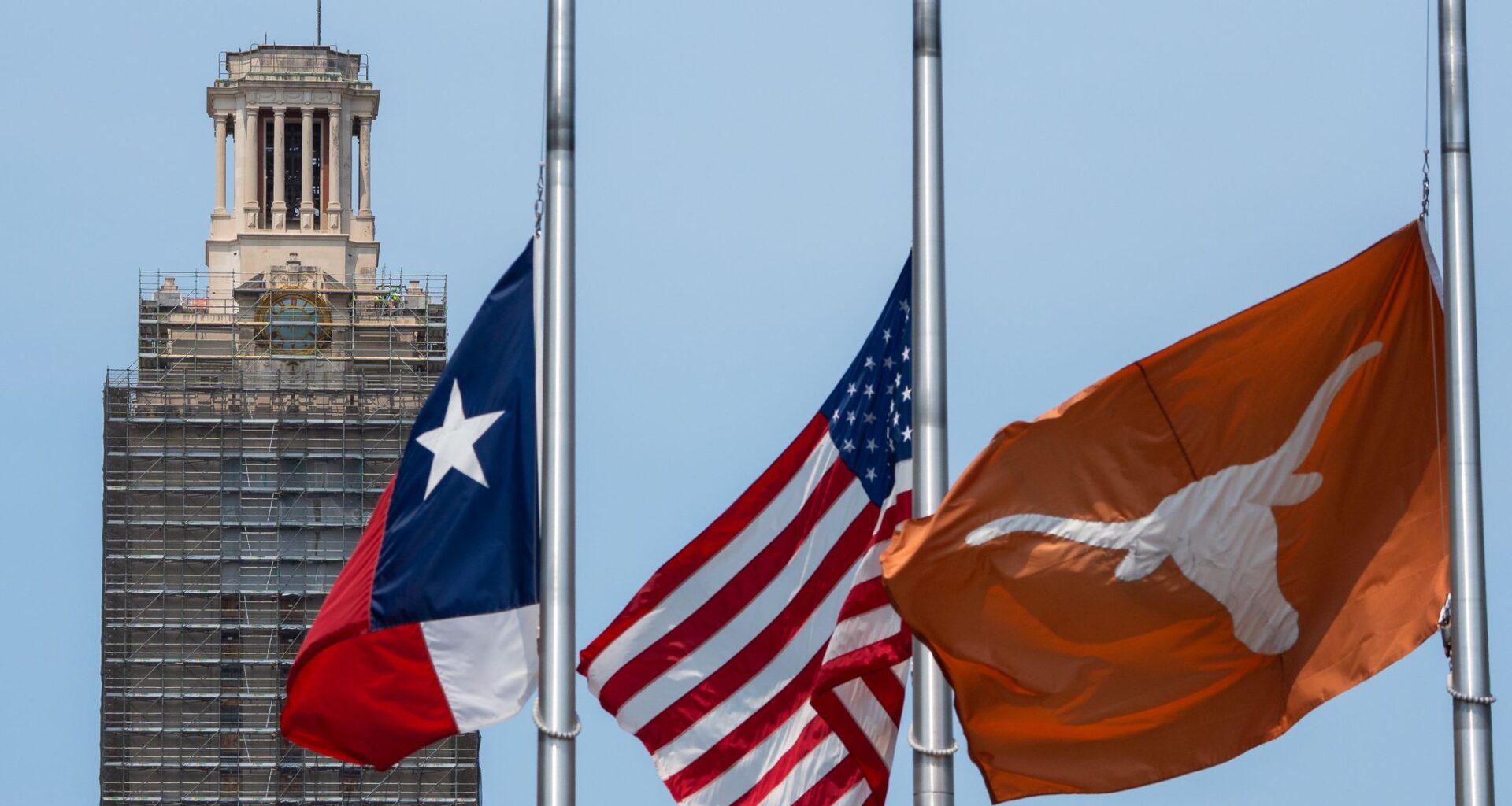
The backdrop of this moment is Senate Bill 37, in effect since Sept. 1, 2025. The law abolished faculty senates and mandated five-year curriculum audits. To the dismay of the bill’s original author, however, SB 37 did not wind up dictating what professors could teach. In fact, legislators expunged a 99-word passage that would have banned courses on “identity politics” and “systemic racism, sexism, oppression, or privilege” so that the bill could pass.
Rather than following the law on the books, Davis and Inboden acted as if the defeated draft had become policy. Last October the president announced UT would be carrying out the first “thorough reconsideration of [its] core requirements” in 20 years. Among the 18 faculty members Davis tapped for this undertaking, not one was a scholar of gender and ascriptive identities, or systemic oppression. In fact, three-quarters of College of Liberal Arts’ (COLA) departments had no seat on the curriculum committee.
One professor in COLA predicted the women’s, gender and sexuality studies program was done for. Asked by the Chronicle of Higher Education whether he agreed, Inboden replied: “My plea to everyone on campus is: Wait until we actually have something announced, and then we can have that discussion.”
Without Davis and Inboden clearing the air, I have struggled to understand how their apparent priorities — clutching the detritus of SB 37, retrofitting syllabi for the pre-civil rights era — advance any policy goal, such as post-graduate job placement or legal compliance. On the contrary, the opacity and arbitrariness emanating from the Tower is anathema in higher education, especially in times of change.
The lesson of UT’s last major curriculum review is that administrators should embrace consultation, not shun it. In 2004-06, Presidents Larry Faulkner and William C. Powers Jr. led an inclusive and deliberative reassessment of undergraduate education. Their task force included students and eschewed ideological conformity. It also helped make a great university even greater. Between 2011 and 2022, the four-year graduation rate rose 21 points (to nearly 74%). UT-Austin entered the top 40 of all U.S. universities and the top 10 public ones. Dozens of its graduate programs became national leaders.
Jason Brownlee is a professor in the Department of Government at the University of Texas and the author of “Force Without Authority: America’s Wars in the Middle East and South Asia.” He is expressing his views as a private citizen.