
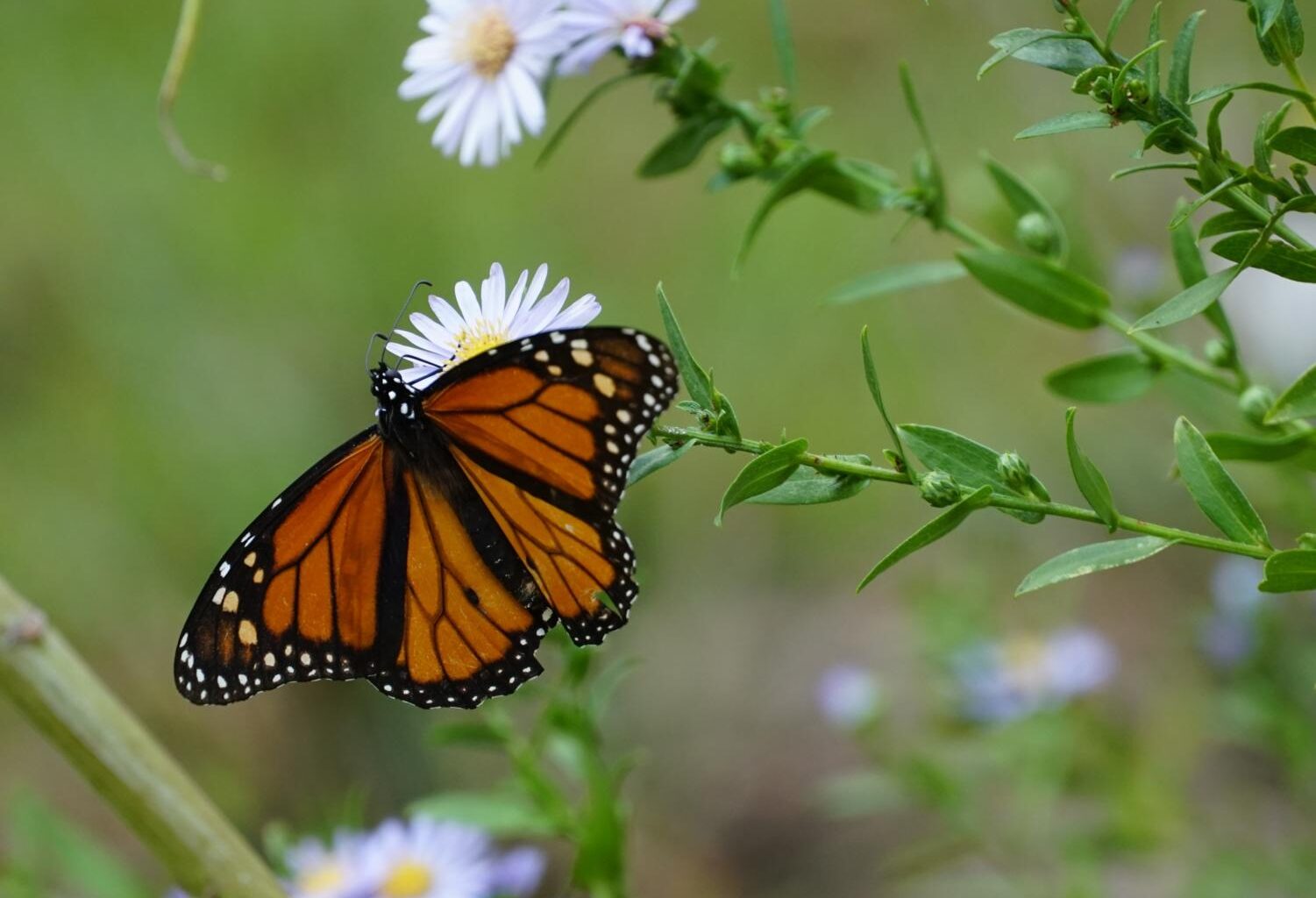
Monarch butterflies have begun their fall migration and are en route to pass through Texas.
Their migration begins as far north as Canada and ends in central Mexico.
Monarch butterflies migrate in the fall to conserve energy and avoid harsh winter conditions. They will return in May for the warmer weather. According to Monarch Watch, monarch butterflies can travel up to 3,000 miles, unlike most butterfly species.
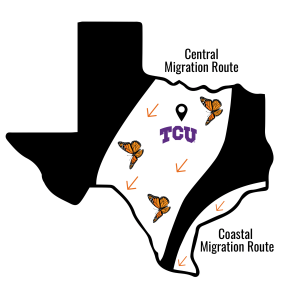 The two migration pathways that monarch butterflies travel on during migration. (Kaylem Raley)
The butterflies have two 300-mile migration route options to pass through Central Texas and along the coast. Monarchs either fly along the Texas coast or travel through the center of the state in a northwest direction.
Monarchs migrating through Central Texas arrive in the state during the last days of September and reach Mexico in early November. Other traveling monarchs will enter along the coast around the third week of October and leave by mid-November.
Monarchs make frequent stops to drink nectar along their migration journey. Drinking nectar from flowers promotes pollen transfer, a crucial factor in food supply and environmental health, contributing to the significance of the migration cycle.
TCU students have an opportunity to observe the monarch butterflies by visiting the TCU Pollinator Garden.
The TCU Pollinator Garden, established in 2021, is a landscape bed located in the Tom Brown/Pete Wright Community that hosts native plants that attract pollinators with minimal pesticide use.
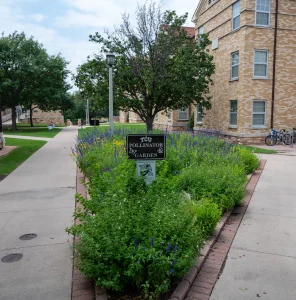 The TCU Pollinator Garden located in the Tom Brown/Pete Wright Community. (TCU360/file photo)
Those who want to help the monarch butterflies get to their destination can participate in the following ways:
Avoid the use of pesticides
Plant seeds that support pollinators
Incorporate plants that ensure a quality butterfly habitat around your living space
Report monarch butterfly sightings
Help monitor monarch larvae