
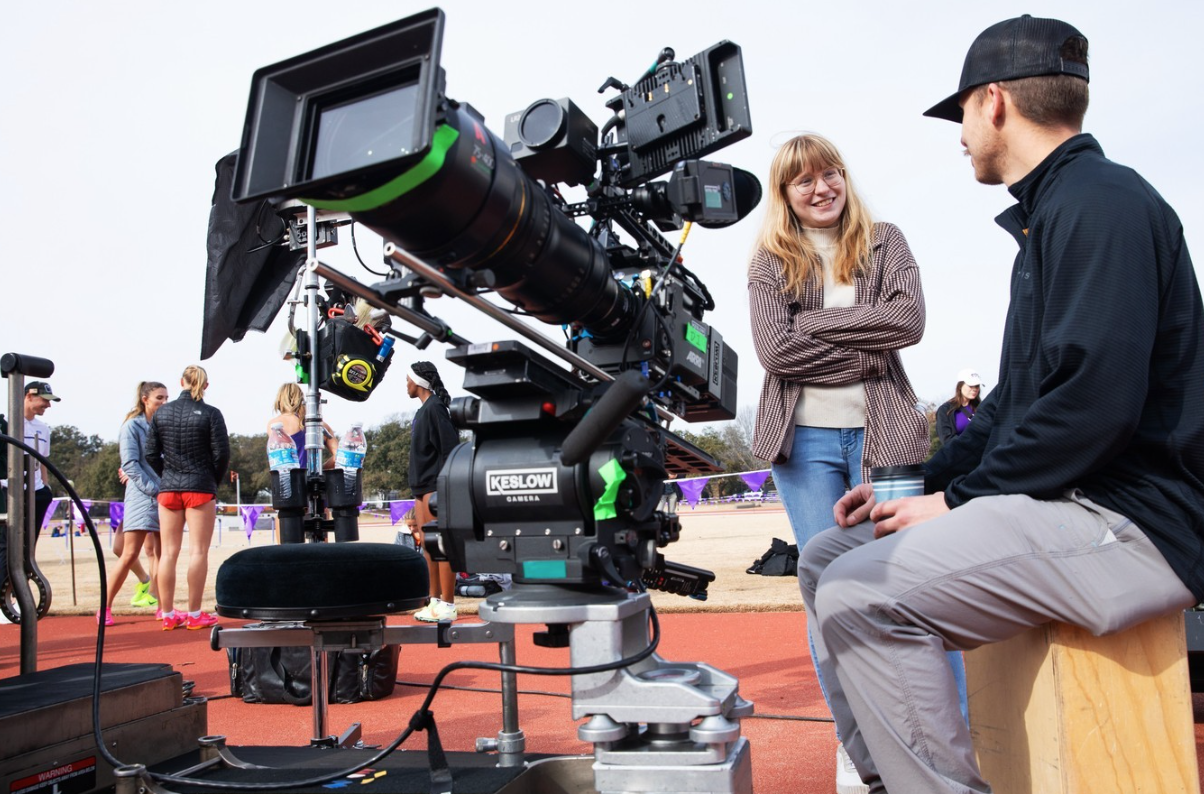
After applying to roughly 100 internships and jobs, TCU senior Sarah Seifried received one interview.
The professional production work she did land came another way: through connections.
Seifried, a senior double majoring in creative writing and film, television and digital media, has worked as an assistant producer and producer on “The Shift,” an independent reality series about respiratory therapy. She later worked as a production assistant on “America’s Sweethearts: Dallas Cowboys Cheerleaders” and most recently on an untitled dating series from the creators of “Love on the Spectrum.”
“All of my connections, all of my projects that I’ve worked on have come from some sort of connection within the university,” Seifried said.
Seifried’s experience highlights the complicated path TCU students face as Fort Worth’s film and television industry expands. Productions are filming in the area, and students are finding ways onto sets, but interviews with students, faculty and a local production professional show that access can vary.
In an industry built around short-term productions and personal networks, getting an opportunity can depend as much on relationships and hands-on experience as on an application.
A changing industry in Fort Worth
Dr. Tricia Jenkins, a TCU film, television and digital media professor and assistant provost of undergraduate affairs, has served as chair of the executive committee for the Fort Worth Film Commission, a municipal organization dedicated to bringing more production to the city, for the past six years.
“Ten years ago, there was hardly any production in Fort Worth outside of a few independent films and commercials that shot here,” Jenkins said. “The landscape today is vastly different, and that’s largely because of Taylor Sheridan and 101 Studios relocating a lot of their production to Fort Worth.”
 Actors Demi Moore, Dani Raen, Jon Hamm and Rylie Rodriguez at TCU’s Lowdon Track and Field Complex during season one filming of “Land Man” (Photo by Emerson Miller for Paramount+)
That growth has also created opportunities for TCU students. Jenkins said students have been invited to shadow production units on “Landman,” which has filmed scenes at TCU, allowing them to observe a professional production and make connections on set.
Jenkins said 101 Studios has also sent industry professionals to speak to TCU students, and TCU graduates have gone on to work for the company.
Still, interviews with students show that access to those opportunities can differ.
Students find different paths into the industry
Ivery Lechuga, a senior double majoring in creative writing and film, television and digital media, has found professional experience through connections.
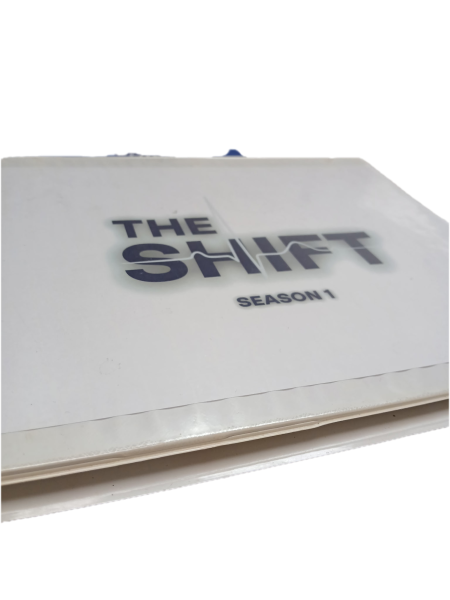 Production materials for season one of “The Shift,” an independent reality series about respiratory therapy. (Photo courtesy of The Shift)
Lechuga worked on season two of “The Shift” after Seifried told her about production applications. She also began an internship with a veteran producer after Jenkins communicated the opportunity to a group of students.
For Lechuga, one lesson about entering the film industry has become particularly clear: Connections, connections, connections. She said her classes have provided a foundation in film, but she would like to see more hands-on production work incorporated into coursework.
Ethan Kenagy, a sophomore theater major with an emphasis in acting, has worked as a background actor on Taylor Sheridan productions. Kenagy said the work has given him experience on professional sets. He has experienced networking opportunities at TCU, including a seminar connected to a Sheridan production filming on campus.
First-year student Miranda Morin has found a larger market for acting opportunities since coming to TCU.
Morin is a marketing major pursuing acting outside of her major. She grew up in a small town in Michigan and performed throughout high school and at a community theater, where she also stage managed and choreographed musical theater productions.
Since coming to the Dallas-Fort Worth metroplex, Morin has gained experience on one set and auditioned for other opportunities in the region.
“There’s so much opportunity for so many things,” Morin said. “I just think there’s so many different options if you’re not originally from here.”
Abby Smith, a sophomore business of entertainment media major, has had a different experience. Smith said she hasn’t heard about many film opportunities so far, though she acknowledged she could make greater use of the resources available to her.
Smith, who is interested in costume and production design and potentially directing, said she would like more opportunities to learn about both the business and production sides of the industry.
The students’ experiences show that being close to a growing production industry does not create the same path into it for everyone.
Networking beyond TCU
Jenkins said building that network is not entirely the responsibility of faculty or the department. Students also have a role in seeking opportunities and becoming involved.
Students can build relationships with classmates, participate in organizations such as the Student Filmmakers Association and develop professional networks while still in college.
Chris Rupert, director and partner at Fort Worth-based NameTag Films, said relationships are fundamental to working in film.
“This is such a people business,” Rupert said. “It’s a network business. It’s a who you know business.”
NameTag Films moved its production company from Dallas to Fort Worth several years ago. The company also operates Shine Cine, a camera rental house in Fort Worth, and has worked with college interns.
Rupert said students entering the industry may encounter a job market that operates differently from more traditional professions.
“I think one of the bubbles I hate to burst for all people coming out of school for this industry is that there are very, very, very few full-time jobs,” Rupert said.
Film and television work is often project-based, Rupert said, meaning someone may work on one production before moving to another, making professional relationships especially important.
Rupert said students trying to get their first opportunities should not focus only on creating an impressive portfolio. For entry-level set positions, reliability, communication, work ethic, integrity and anticipating what a production needs can influence whether someone gets called back for another job.
“Those are the things that will really get you on set, and are kind of more important than a portfolio,” Rupert said.
For TCU students, Fort Worth’s growing film and television industry means professional productions are operating closer to their classrooms, but their experiences show there is no single route from campus to a professional set. For those preparing to enter an industry built around projects and personal networks, getting onto the first set may be only the beginning.
“It is fun. It’s hard. It’s a lot of work, but there are so many opportunities right now, and especially in Fort Worth,” Rupert said.