
There’s one thing Texans can all agree on: The traffic in the Lone Star State is no joke. As billions of dollars in highway construction projects inundate Central Texas and beyond, more alternative transportation modes are being proposed to relieve traffic congestion — including both high-speed rail and a vacuum tube-esqué underground tunnel system.
Elon Musk, the Tesla and SpaceX CEO turned both the world’s richest person and a Texas resident, posted on social media in mid-September that The Boring Company is working to develop a “Hyperloop tunnel” linking Austin and San Antonio, with users traveling approximately 200 miles per hour and arriving at their destination in mere minutes.
“Due to traffic congestion, that journey [between Austin and San Antonio] can currently take up to 2.5 hours,” Musk wrote. “[The Boring Company] can reduce that to a consistent <30 mins.”
It’s not the first time Musk has proposed a Hyperloop project in Texas or other states. The concept has been floated here in Texas for nearly a decade, with a testing facility constructed at The Boring Company’s headquarters in the Austin suburb of Bastrop. To date, no commercial sized, full-scale intercity hyperloops are actively operating; the closest concept operating is the Vegas Loop, where Tesla electric vehicles drive passengers point to point underneath the Las Vegas Strip as opposed to between cities.
In Nashville, the Music City Loop is under construction, with crews continuing tunneling operations beneath Austin’s pseudo-sister city, per an August project update. As opposed to linking communities, the Music City Loop is projected to operate as a 10-mile underground route connecting downtown Nashville with the Nashville International Airport.
Hyperloops are conceptual systems where small passenger vehicles travel inside low-pressure vacuum tubes to various points, allowing those vehicles to reach higher speeds to cut down on travel times.
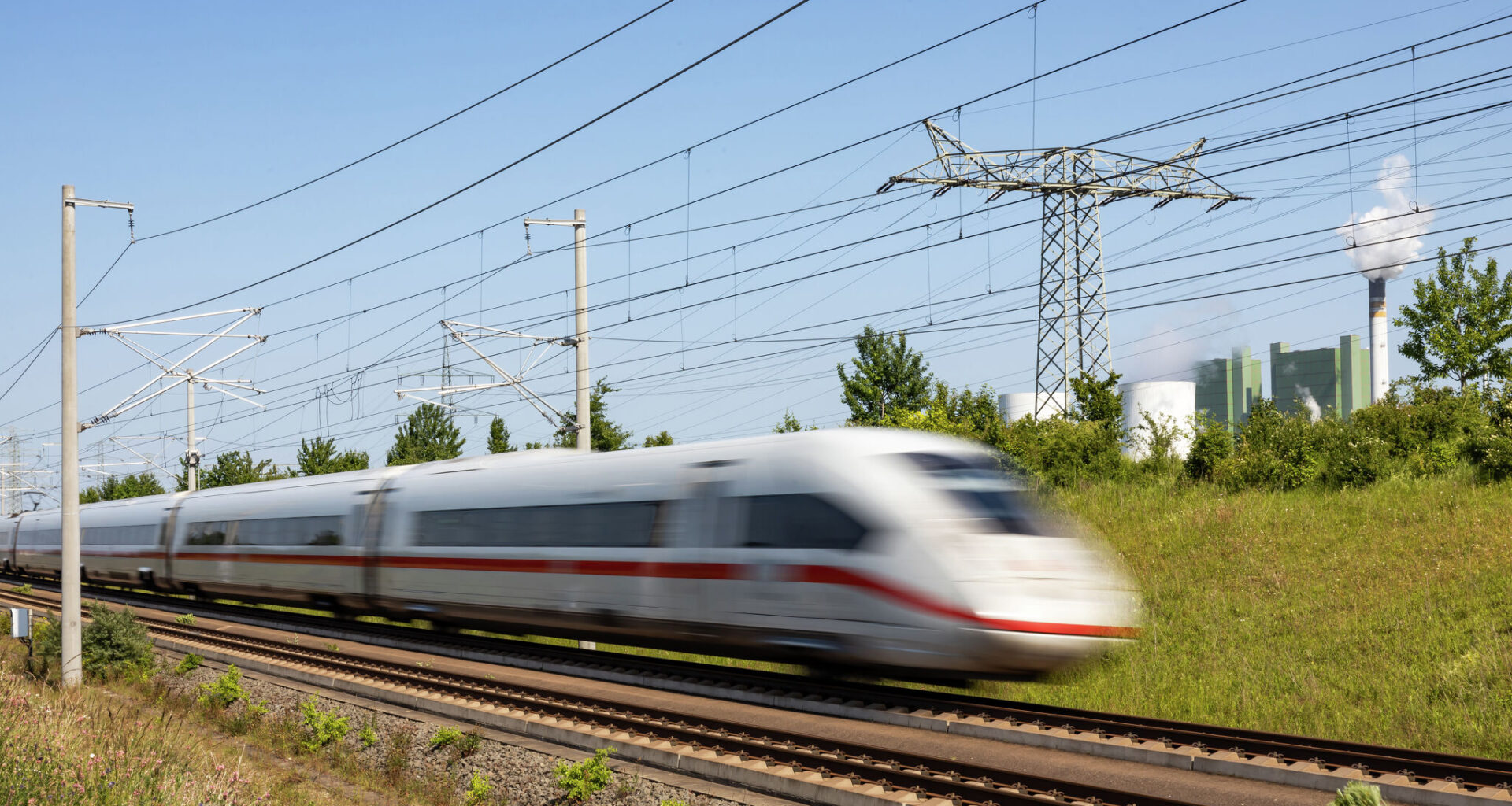
Meanwhile, high-speed rail is a concept that has been executed time and again in countries like Japan, China and various parts of Europe, featuring trains operating around 150 to 220 miles per hour.
In late 2025, Mexico President Claudia Sheinbaum announced the start of construction of a new passenger line rail from Saltillo, southwest of Monterrey, to Nuevo Laredo. That line is expected to reach between 99 and 124 miles per hour when its completed.
Here in Texas, high-speed rail has been touted for years as a prospective investment that could cut down on travel times and diversify Texas transportation modes.
The most prominent example of that is the Texas Central Railway, an approximately 240-mile rail line linking Houston and the Dallas and Fort Worth area. Proposed travel times are estimated at less than 90 minutes per trip, with departures expected every 30 minutes during peak travel periods.
However, in 2025, President Donald Trump’s administration rescinded an almost $64 million federal grant for the project, with Amtrak departing from the project. Now, the project is dependent on private investment and handicapped by a lack of federal support.