
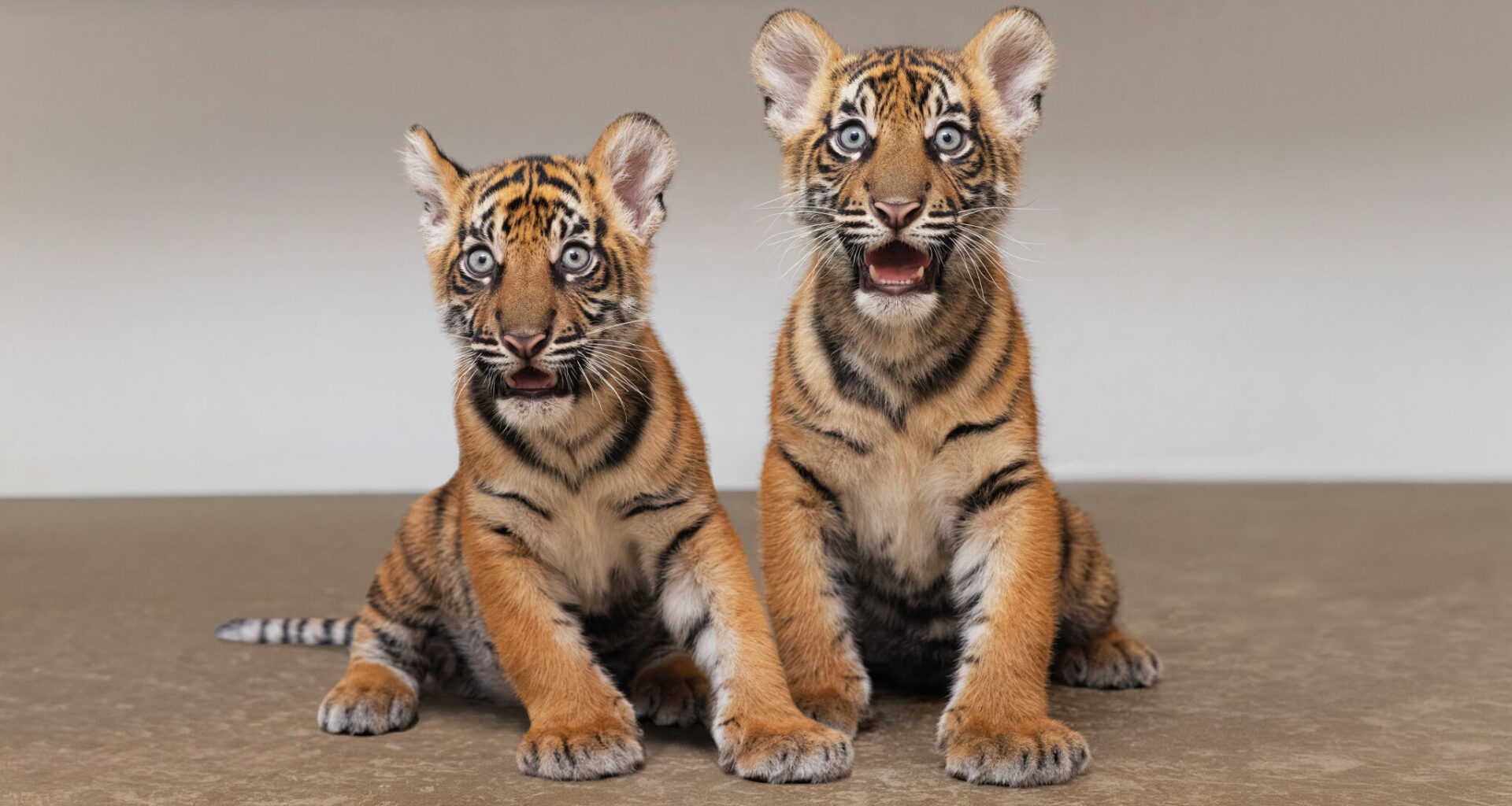
Meet Barani and Malu. The Fort Worth Zoo has welcomed two critically endangered Sumatran tiger cubs — the first ever born at the zoo. Their public debut could come in the next few weeks.
Fort Worth Zoo
Two critically endangered Sumatran tiger cubs have been born at the Fort Worth Zoo, marking the first births of the subspecies in the zoo’s history.
Sumatra is an island in western Indonesia, just south of the Malay Peninsula and west of Java.

The two female cubs, Barani and Malu, were born July 1 to first-time mother Ndari and father Rakan, according to the zoo.
They are also the first tiger cubs born in the zoo’s renovated Predators of Asia & Africa habitat and the first tiger cubs of any subspecies born at the Fort Worth Zoo in nearly two decades.
Article continues below this ad
Related: D-FW zoologists excited by first new penguin species discovery in over a century
The sisters, Barani and Malu, are the first Sumatran tiger cubs born in the Fort Worth Zoo’s history and could make their public debut in the coming weeks.
Fort Worth Zoo
The zoo’s last tiger cubs were Malayan tigers born in 2008.
At about 12 weeks old, the sisters weigh 18 and 20 pounds and measure about 25 to 29 inches long, the zoo said. When they were a week old, they weighed about 3 to 4 pounds and were roughly 10 to 12 inches long.
“It’s always exciting to welcome new babies and watch them grow here at the Zoo,” Ramona Bass, chairman of the Fort Worth Zoo, said in a statement Friday. “But we’re hopeful that these cubs will inspire a new generation to learn about and care for their wild counterparts and the future of this critically endangered species.”
Article continues below this ad
Related: Tiny Bolivian wildcat identified as first new feline species in a century
The cubs have remained behind the scenes with their mother while keepers monitor their growth and development.
In recent weeks, Barani and Malu have learned to jump, run and climb, begun eating small amounts of meat and have been introduced to water, the zoo said. They still nurse frequently and have also begun playing and play-fighting with each other and their mother, according to the zoo.
Keepers said Ndari has displayed strong maternal behaviors as a first-time mother, including nursing, bathing, playing with and carrying the cubs around their den.
The sisters’ names were inspired by their personalities and by languages spoken in Indonesia, home to the Sumatran tiger.
Article continues below this ad
Barani means “brave,” according to the zoo. Keepers describe the smaller cub as a “spitfire” who frequently initiates play-fighting with her sister.
Malu means “shy or reserved.” Keepers said she is more independent and sometimes retreats to a neighboring barn stall to nap by herself.
Why the births matter
Fewer than 650 Sumatran tigers remain in the wild, according to the International Union for Conservation of Nature, with habitat loss and deforestation among the major threats to the population.
The Fort Worth Zoo participates in a cooperative breeding program with other North American zoos designed to maintain a genetically diverse and healthy population of Sumatran tigers in human care.
The zoo expanded its tiger habitat as part of Predators of Asia & Africa, which opened in 2023. The project doubled the size of the zoo’s previous tiger habitat and included an expanded yard and renovated behind-the-scenes barn.
Article continues below this ad
Because Barani and Malu are the first cubs to use the renovated habitat, keepers want to make sure they are large and strong enough to safely navigate the space, including its water features, before allowing them into the public exhibit.
The zoo said the cubs could make their public debut in the coming weeks and plans to announce updates on its website and social media accounts.