
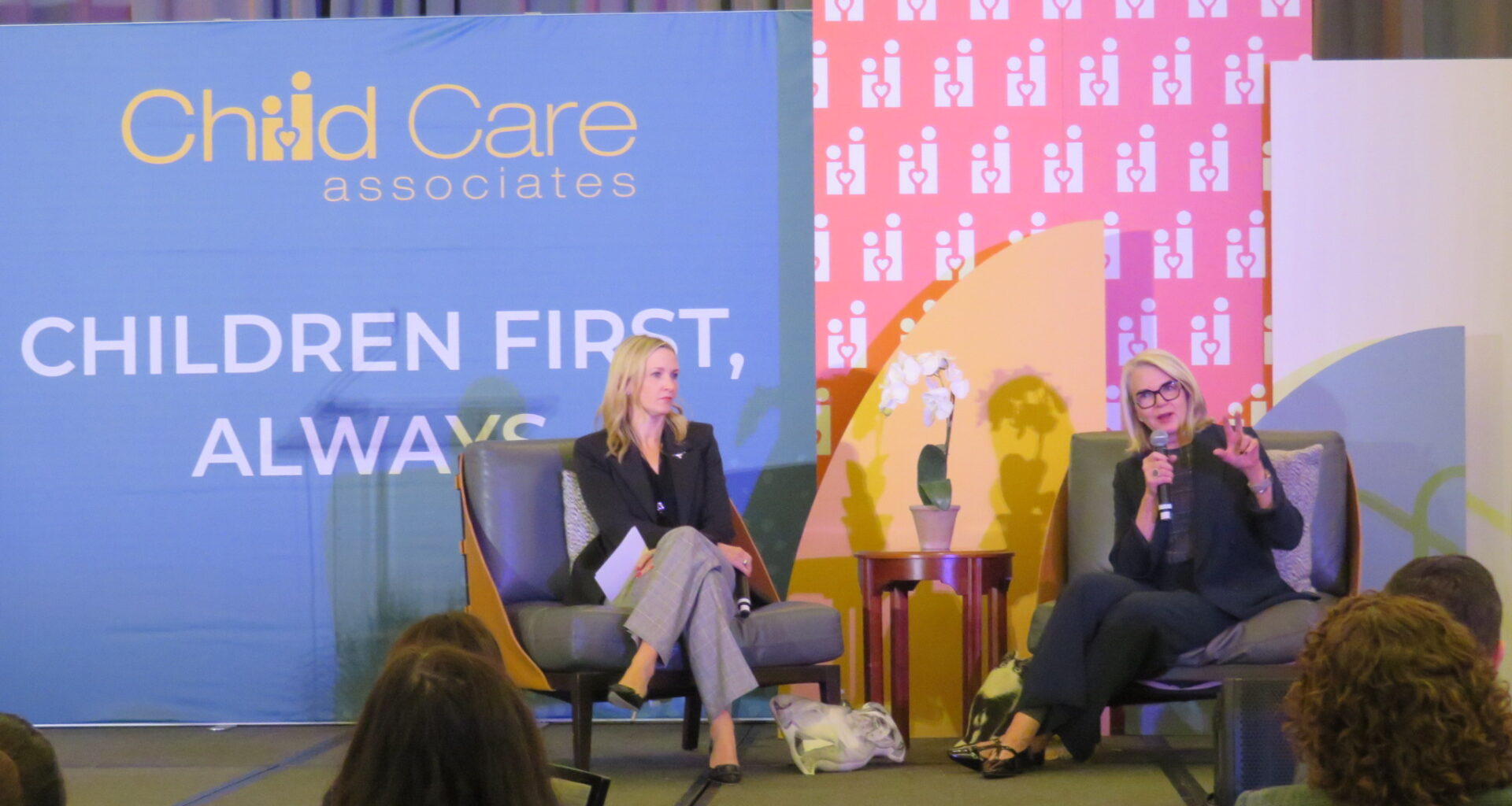
Childcare is increasingly becoming a workforce problem for Fort Worth employers, early education leaders said Sept. 30.
But Fort Worth and Tarrant County’s local system is still reaching only a fraction of the families who qualify for help, Child Care Associates president and CEO Kara Waddell said during the nonprofit’s annual Early Childhood Investors’ Luncheon.
While Child Care Associates helps lower childcare costs for about 16,000 children of working parents across North Texas, assistance reaches only about 12% of eligible families, she said.
The cost can be significant for families that do not receive assistance. Childcare can cost about $1,000 to $1,200 a month, Waddell said, which could be more than a third of a paycheck for a low- or moderate-income family.
Access to childcare can affect whether parents are able to work.
Former U.S. Education Secretary Margaret Spellings told Fort Worth Mayor Mattie Parker that employers have begun to recognize the connection between childcare and their ability to recruit and retain workers. Parker is serving her third term as Fort Worth mayor and has made education and workforce opportunities a top priority.
“A workforce that is underemployed and underdeveloped because of childcare issues — that’s affecting their bottom line,” Spellings said.
Their conversation was the centerpiece of Wednesday’s luncheon that brought together business leaders, elected officials, school district officials, nonprofit leaders and childcare providers.
Child Care Associates wanted them to come away with a simple message: Childcare is not solely about education — it also encompasses regional economic development and workforce issues.
“One investment, three returns,” Waddell said.
Operating 15 early-learning campuses across Fort Worth, Arlington and Tarrant County, Child Care Associates works with community childcare providers and helps with credentials, professional development, curriculum and wage support.
The organization also works with regional workforce boards to subsidize care for working families. Spellings praised Fort Worth’s childcare and early-education ecosystem as a potential national model.
Pressures extend to the people providing that care, though, Waddell said.
She cited wages of about $17 an hour for early childhood educators, despite the fact those workers care for children during what she described as critical years for brain development.
Businesses now see those challenges as less of an issue confined to individual families, but one that affects their entire workforce, Spellings said. Childcare is an economic productivity issue, a workforce issue, an education issue, and even a moral issue, she said.
“It’s the right thing to do, it’s the smart thing to do,” Spellings said of employers who are focused on investing in childcare.
But solving the problem is complicated, she said.
Childcare systems can be spread across multiple state agencies, public schools, federal Head Start programs and employer incentives, leaving families forced to navigate different programs and eligibility rules, Spellings said.
Communities can start by improving information they collect about who needs care and where it is available. Parker asked what Texas leaders should do now.
“Focus on data and results,” Spellings said.
The stakes extend beyond the families walking into Child Care Associates’ classrooms, Waddell said.
“The future workforce does depend on what’s happening in our young classrooms right now,” Waddell said. “Early education, quality childcare is a huge issue. It’s not a sideline one.”
Matthew Sgroi is an education reporter for the Fort Worth Report. Contact him at matthew.sgroi@fortworthreport.org or @matthewsgroi1.
News decisions are made independently of our board members and financial supporters. Read more about our editorial independence policy here.
This <a target=”_blank” href=”https://fortworthreport.org/2026/10/01/childcare-is-a-workforce-problem-for-fort-worth-employers-education-leaders-say/”>article</a> first appeared on <a target=”_blank” href=”https://fortworthreport.org”>Fort Worth Report</a> and is republished here under a <a target=”_blank” href=”https://creativecommons.org/licenses/by-nd/4.0/”>Creative Commons Attribution-NoDerivatives 4.0 International License</a>.<img src=”https://i0.wp.com/fortworthreport.org/wp-content/uploads/2021/04/cropped-favicon.png?resize=150%2C150&ssl=1″ style=”width:1em;height:1em;margin-left:10px;”>
<img id=”republication-tracker-tool-source” src=”https://fortworthreport.org/?republication-pixel=true&post=809592&ga4=2820184429″ style=”width:1px;height:1px;”><script> PARSELY = { autotrack: false, onload: function() { PARSELY.beacon.trackPageView({ url: “https://fortworthreport.org/2026/10/01/childcare-is-a-workforce-problem-for-fort-worth-employers-education-leaders-say/”, urlref: window.location.href }); } } </script> <script id=”parsely-cfg” src=”//cdn.parsely.com/keys/fortworthreport.org/p.js”></script>