
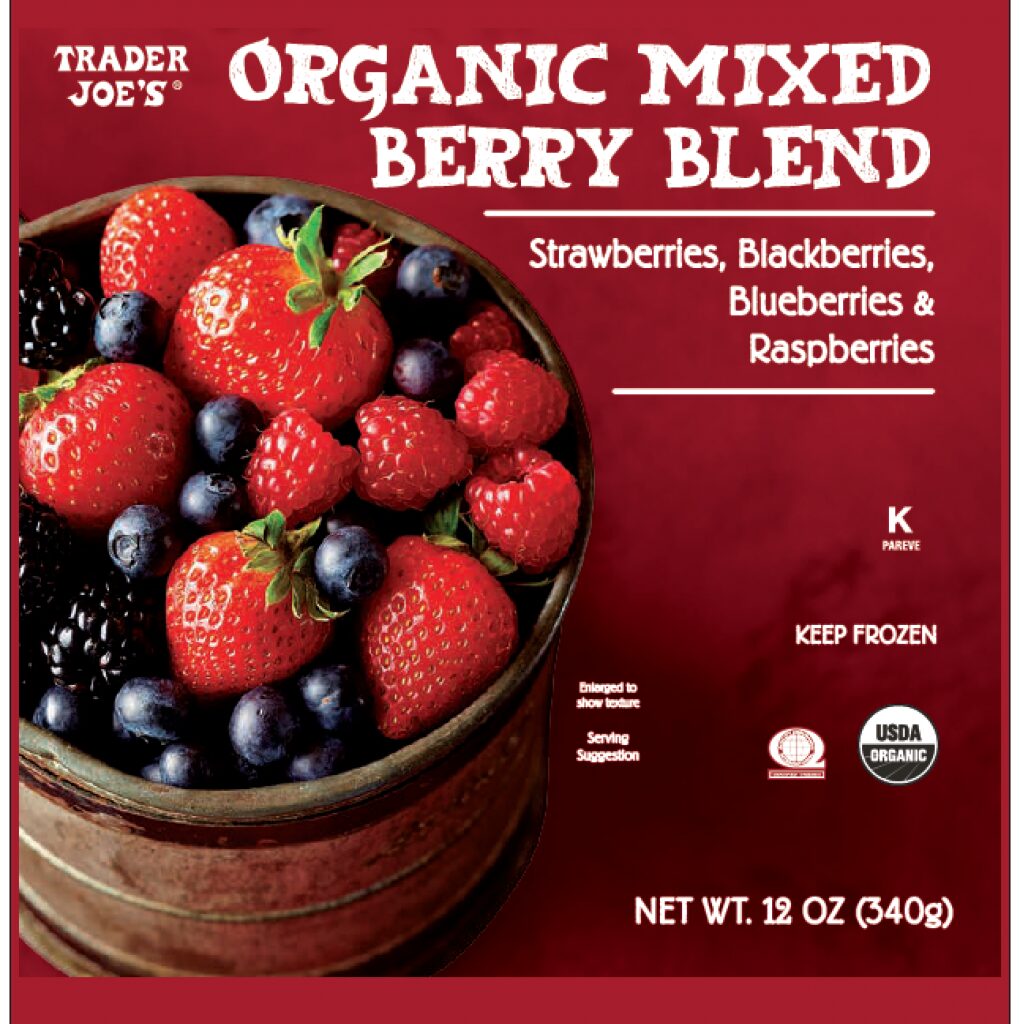
Frozen berries recalled from Walmart in Texas last month due to possible E. coli contamination have also been flagged at Trader Joe’s, according to the U.S. Food and Drug Administration.
The frozen berry recall expanded last week to include one lot of Trader Joe’s frozen organic mixed berry blend and additional lots of Walmart’s Great Value frozen organic blueberries and frozen organic triple berry blend. The product was shipped to Trader Joe’s in 26 states and to Walmart stores in 30, according to the FDA.
E. coli, which might have contaminated the products, can cause severe stomach cramps, diarrhea and vomiting, according to the FDA’s recall announcement.
Frutas y Hortalizas del Sur S.A. of San Carlos, Chile — which initiated and later expanded the recall — did not immediately return a request for comment.
The FDA warns the public to not consume the product, but instead return packages to Walmart or Trader Joe’s for a refund.
Here’s what to know about the newly recalled products:
Trader Joe’s frozen organic mixed berry blend were sold in 12-ounce packages. The recalled products have a UPC code of 00977654 and a lot code of 6 051 01 on the back of the package, according to the FDA. The best before date is Feb. 20, 2028.
The expanded recall of Walmart’s Great Value frozen organic triple berry blend involves 10-ounce packages with a UPC code of 7874211226 and lot codes 6 031 01 or 6 041 01. They have a best-if-used-by date of Jan. 31, 2028 and Feb. 10, 2028.
The Great Value frozen organic blueberries were also sold in 10-ounce packs with a UPC code of 7874211213 and lot codes, 6 019 01, 6 040 01 or 6 163 01. Their best-by dates are Jan, 19, 2028, Feb. 9, 2028 and June 12, 2028.
E. coli health risk
The recalled frozen berries may have been contaminated with E. coli that produces a toxin that can lead to hemolytic uremic syndrome, a health complication that can lead to kidney failure, permanent health problems and death, according to the FDA. Young children, older adults and people with weakened immune systems may be particularly susceptible to the syndrome, agency officials said.