
Most mornings, teacher Daphne Wu carries a cup of coffee on the roughly mile-long walk from her downtown Dallas apartment to Booker T. Washington High School for the Performing and Visual Arts. The walk gives her time to prepare for class, notice the rhythms of the neighborhood and let the stress of the school day fall away on the trip home.

Wu, who teaches honors physics, AP Biology and advanced physics, intentionally looked for a home within walking distance after she transferred to Booker T. about four years ago. Instead of relying on an apartment locator, she used Google Maps to identify nearby complexes and visited them on foot until she found one that felt right.
Her experience offers one view of a growing divide in Dallas-area education: Some teachers live close enough to walk or take public transit to school, while others move farther away because housing near their campuses is beyond what they can afford.
Related: Dallas housing trends show gaps in affordability and supply
Article continues below this ad
A recent report from the nonprofit Commit Partnership found that roughly two in five teachers live within the core of Dallas County, defined as the area within a 10-mile radius of the county’s geographic center. Parts of southern and northwest Dallas have relatively few teachers living nearby, what the report describes as potential “teacher deserts.” Teachers cluster on the edges of Dallas County or in neighboring counties, the report found.
That matters because teachers who live farther away may have less flexibility to stay after school for tutoring, coach extracurricular activities, attend parent meetings or build relationships in the communities they serve. Researchers and educators point to possible solutions including higher teacher pay, teacher housing, down-payment assistance and public-private housing partnerships.
Commit’s report argues that housing and child care are economic filters shaping who can afford to teach, where they can work and how long they can stay. When teachers cannot live in the communities they serve, the report says, the system absorbs the cost in turnover, instability and lost expertise.
The report draws on Texas Education Agency certification data, demographic estimates, U.S. Census Bureau data and Zillow housing data. The analysis describes where teachers live and how far they travel. It does not, by itself, establish that housing costs caused individual teachers to leave their jobs. But the geographic pattern raises questions about how affordability, commuting and teachers’ connections to the communities they serve affect recruitment and retention.
Daphne Wu, a science teacher at Booker T. Washington High School for the Performing and Visual Arts, uses a scooter to go from the bus stop to the school in Dallas on Monday morning, Aug. 10, 2026.
Angela Piazza/The Dallas Morning News
A growing distance between teachers and schools
Commit’s analysis found that teachers who live farther from their campuses face higher transportation costs and weaker ties to the neighborhoods they serve. In 2022, teachers who lived more than 20 miles from their schools were 56% more likely to leave their district, according to the report. Also in 2022, 34% of departing Dallas ISD teachers cited distance or commute time as a contributing factor in their decision to leave.
Article continues below this ad
The findings are consistent with research by Jason Grissom, a Vanderbilt University professor who studies teacher labor markets, and co-author Francisco Santelli. Their 2024 study of Metropolitan Nashville Public Schools found that teachers with longer commutes were more likely to transfer schools within the district, and teachers with commutes of 40 minutes or more each way had higher probabilities of leaving the district. The researchers also found that longer commutes were associated with more absences and somewhat lower observation ratings, which are evaluations of teachers’ instructional performance.
Related: Here’s how much Dallas County workers need to earn before taxes to cover the basics
Grissom said commutes rarely determine a teacher’s decision by themselves. Educators weigh travel time alongside pay, school leadership, student behavior and other working conditions. A long commute can become one of several pressures that make another school or another occupation more attractive.
Dallas ISD said it tracks why teachers leave and that the most common reason listed is “personal.” The district did not provide a breakdown of how often departing teachers cite commuting distance, housing or other cost-of-living factors.
The district also said its Teacher Excellence Initiative and Teacher Incentive Allotment offer “market-leading pay” and have helped it maintain teacher-retention rates above state and regional averages for multiple consecutive years. Dallas ISD also cited wraparound supports, school culture and employee resources as factors in retention.
Article continues below this ad
Daphne Wu, a science teacher at Booker T. Washington High School for the Performing and Visual Arts, uses a scooter to walk from the bus stop to the school in Dallas, Monday morning, Aug. 10, 2026.
Angela Piazza/The Dallas Morning News
Housing costs are outpacing teacher pay
The affordability challenge has intensified over the last decade, with housing prices rising faster than teacher salaries.
According to the Commit analysis, average base salaries for teachers in Dallas County increased 18% between 2012 and 2021. During the same period, median homeowner costs rose 28% and median rental costs climbed 49%. The report estimates that the time required for a teacher to save for a typical down payment has risen to nearly nine years.
The broader housing market has made buying a home more difficult for many younger workers. The typical first-time homebuyer was 35 years old in 2025, according to a Redfin analysis of U.S. Census Bureau data. Redfin said the age was down slightly from 36 in 2024.
Article continues below this ad
The Commit report found that 42% of Dallas County teachers have five years or less of experience, a larger share than the statewide average. Commit wrote that when housing instability pushes experienced educators away, schools face additional hiring challenges and lose institutional knowledge.
That pressure affects workers beyond education, including other middle-income employees who want to live near the communities where they work. For teachers, the location of a home can affect not only the length of a commute but also whether they can stay after school, attend evening events or build relationships outside the classroom.
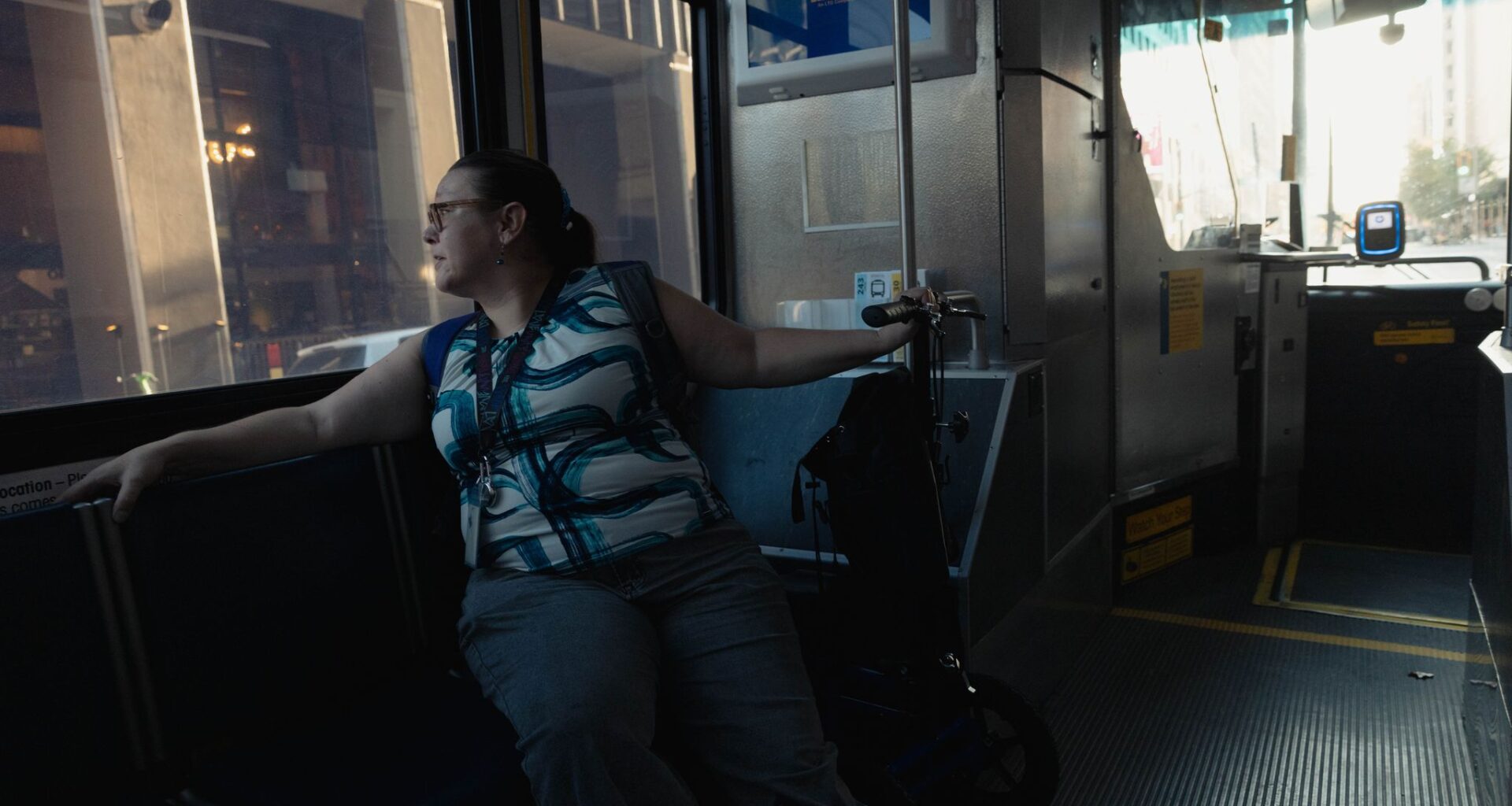
Daphne Wu, a science teacher at Booker T. Washington High School for the Performing and Visual Arts, exits the bus she rides to work in Dallas on Monday morning, Aug. 10, 2026. Wu said she used to walk about a mile from her home to the school but now rides the bus after breaking her foot.
Angela Piazza/The Dallas Morning News
What proximity makes possible
Wu said living nearby has made it easier to stay after school for tutoring because she does not have to worry about missing a narrow window before rush-hour traffic. She sometimes sees students on Dallas Area Rapid Transit trains, at the Dallas Museum of Art or at Klyde Warren Park. Those encounters give her a different view of students than she gets in class.
Article continues below this ad
“I think as a teacher, you need to truly understand the community you serve,” Wu said. “When you live in the community, you’re interacting with those same variables that shape your students.”
Her walk also creates a boundary between work and home. In the morning, she carries coffee and uses the time to mentally prepare for class. On the way back, she said the walk helps her release the day’s stress before she arrives home. “By the time I get home,” she said, “anything that was just a not-so-pleasant experience has just been washed away.”
Wu deliberately chose an apartment about a mile from Booker T. rather than one directly across the street. Being close is valuable, she said, but the walk gives her enough distance to transition from her teacher persona to her life outside school. If housing near the school became much more expensive, she said, she might eventually have to move farther away.
Teachers who live farther away may have less flexibility to coach after-school activities, attend parent meetings or participate in evening events, Grissom said. The Nashville study also cited research suggesting that longer commutes can reduce workers’ time for social connections and weaken their attachment to a workplace and its surrounding community.
Daphne Wu, a science teacher at Booker T. Washington High School for the Performing and Visual Arts, checks the DART bus schedule before activating her ticket at the West End Transfer Station in Dallas, Monday morning, Aug. 10, 2026. Wu, who lives about a mile from the school, used to walk to work but now rides after breaking her foot.
Angela Piazza/The Dallas Morning News
What could help
Grissom said raising teacher pay remains the most straightforward way to give educators more flexibility in choosing where to live. Districts and policymakers have also explored teacher housing developments, down-payment assistance and public-private housing partnerships, though evidence about which approaches work best remains limited.
Article continues below this ad
Commit’s report points to housing initiatives in California, Colorado, New Jersey and Austin, along with efforts to expand affordable housing for educators. It also treats child care as a parallel affordability pressure, particularly for early-career teachers with young children. The report argues that housing and childcare should be considered workforce issues rather than personal lifestyle concerns.
This reporting is part of the Future of North Texas, a community-funded journalism initiative supported by the Commit Partnership, Communities Foundation of Texas, The Dallas Foundation, the Dallas Mavericks, the Dallas Regional Chamber, Deedie Rose, Lisa and Charles Siegel, the McCune-Losinger Family Fund, The Meadows Foundation, the Perot Foundation, the United Way of Metropolitan Dallas and the University of Texas at Dallas. The News retains full editorial control of this coverage.