
Apartments and condominiums on South Lamar Boulevard in Austin on Aug. 26, 2025.
Austin American-Statesman file photo
Last fall, Council Member Ryan Alter made an urgent case for Proposition Q. The former Capitol staffer and Harvard Law graduate argued the city needed the measure’s money to sustain services and help vulnerable residents.

Prop Q would have raised Austin’s property tax rate by more than 20%, adding about $300 a year to the average homeowner’s city tax bill, to generate roughly $110 million for homelessness programs, parks, public health, public safety and other city expenses as Austin faced a historic budget shortfall.
Article continues below this ad
Voters resoundingly rejected the measure, with about two-thirds voting against it. Afterward, Alter said he had fought for Prop Q because it “wasn’t just a policy debate; it was a lifeline for many in our community,” warning that residents could fall behind or into homelessness without resources to help them.
Ryan Alter, Austin City Council Member District 5.
Handout
Nearly a year later, Alter is asking District 5 voters to reelect him to a second term. He faces three challengers: David Weinberg, an environmental and voting-rights advocate who led the Texas League of Conservation Voters for six years; Liz Brink, a union electrician; and former reality TV star Farrah Abraham.
Brian Smith, a political science professor at St. Edward’s University, said Weinberg is Alter’s most serious challenger and that they share similar progressive ideologies. One of their biggest differences appears to be over the best way to approach policies like Prop Q.
Article continues below this ad
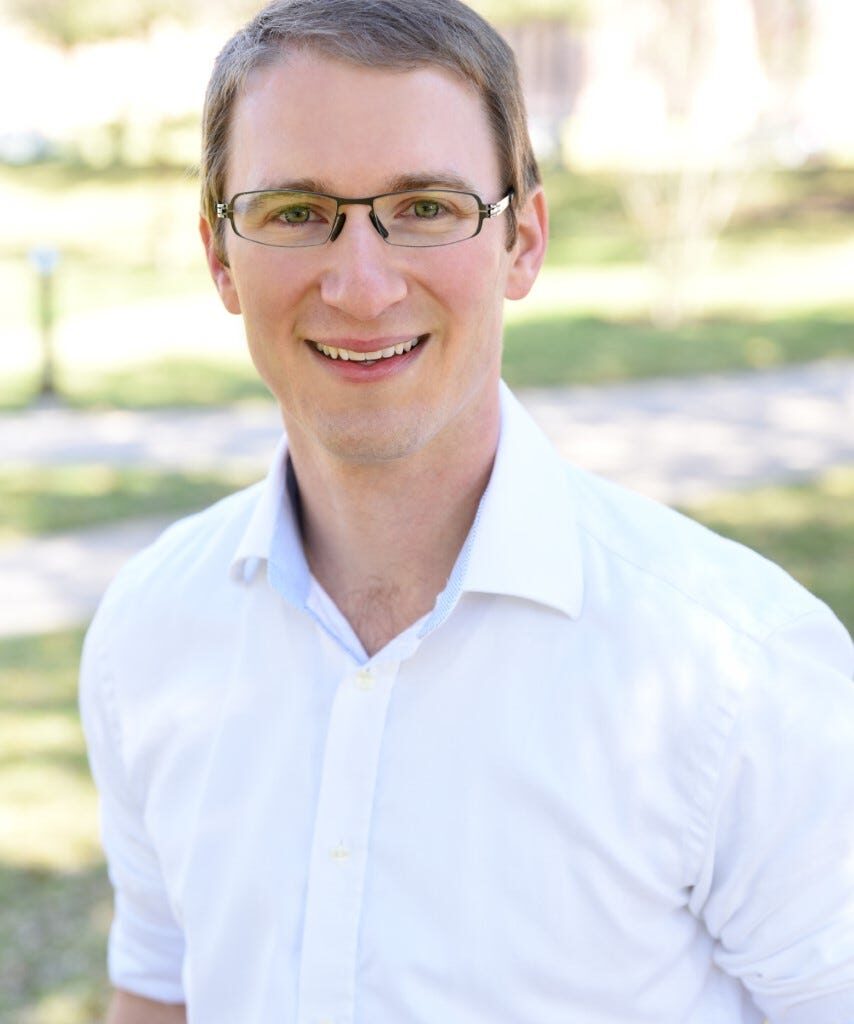
David Weinberg, candidate for Austin City Council District 5.
Courtesy of David Weinberg
Weinberg says polling and regular outreach should guide major decisions, and while Alter acknowledges that he misread residents’ financial strain and says he is not looking to raise taxes again, he also contends that elected officials must sometimes take unpopular steps to make progress.
Brink, a fiscal conservative, said she wouldn’t have supported Prop Q.
“The taxpayers of Austin should not be thought of as ATMs,” she said.
Article continues below this ad
Liz Brink, candidate for Austin City Council District 5.
Courtesy of Liz Brink
The campaign for Prop Q unfolded as Alter’s own use of public money was drawing scrutiny. American-Statesman reporting found he had charged about $1,200 in meals to taxpayers and directed nearly $10,000 from his office budget to schools, nonprofits and advocacy groups. Alter said the expenses were consistent with city policy, but pledged to reimburse the city for some spending and said his choices had harmed public trust.
Smith said Alter’s discretionary spending of taxpayer dollars, particularly on the meals and membership in the Texas Bar Foundation, could hurt him politically. He also pointed to Alter’s outspoken support for Prop Q, which Smith called a “disastrous defeat.”
Farrah Abraham, candidate for Austin City Council District 5.
Courtesy of Farrah Abraham
Still, Smith said Alter also has the advantage of incumbency.
Article continues below this ad
Ryan Alter, current council member and candidate for Austin City Council, District 5.
Courtesy of Ryan Alter
Farrah Abraham, candidate for Austin City Council District 5.
Austin 360
“An incumbent gives you a lot of name recognition because people are going to know who you are, and as long as you don’t violate the trust, it is a real advantage in politics,” Smith said.
The district
District 5 stretches across South Austin, from just south of Lady Bird Lake to the city’s southern limits near Onion Creek. It is 52% white, with a relatively even split between homeowners and renters. The median household income is about $100,500, roughly $10,000 higher than the citywide median.
Article continues below this ad
Do you live in District 5? Look your address up: Race, education, income: Here’s how your Austin City Council district compares to the rest of the city
“You get a mix of wealthy urban voters, working-class voters, and then suburban neighborhoods,” Smith said. “Whomever gets elected has to be able to navigate those three different constituencies and the needs of all of them.”
In interviews with more than 20 District 5 residents, affordability, development, homelessness and growth-related traffic and infrastructure emerged as major concerns.
Garrison Pool off Menchaca Road in south Austin on Monday, Sept. 28, 2026.
Mikala Compton/Austin American-Statesman
Nancy Neuse of the Onion Creek Homeowners Association said drivers cut through her neighborhood between Bradshaw Road and Interstate 35, causing speeding and congestion. Dick Perrone, who also works with the association, said he hopes whoever wins the council race will continue helping the neighborhood with speed mitigation measures.
Article continues below this ad
Heather VanDyke, who works with Friends of Garrison Park to advocate for the park and Garrison Municipal Pool, said her top priority is preserving the pool, which is at the end of its useful life and will be included in the 2026 bond package voters will decide on in November.
Alter voted in favor of the bond, which will eventually cost the typical taxpayer more than $40 annually once the city issues the debt, expected around 2033.
Neuse said she thought Alter did a good job advocating for Onion Creek. VanDyke said Alter was supportive of park events and finding ways to save the pool.
“There was actual support for how we could be as impactful as possible,” VanDyke said.
Article continues below this ad
Development and neighborhood concerns
District 5 has the city’s second-largest share of completed subsidized housing units, with 4,352 units and 75% of planned units completed, according to 2024 HousingWorks Austin data.
Some residents say Alter has supported development without doing enough to address its effects on nearby neighborhoods. Karen Fernandez of the Matthews Lane Neighborhood Association said former Council Member Ann Kitchen added conditional overlays to her neighborhood, while Alter’s team has “upzoned everything, been on the side of the developers, and have not represented this neighborhood.”
A proposed development at 6200 Menchaca Road has also drawn criticism. Residents who support affordable housing in the area said they worry a four- or five-story project would be out of scale with nearby homes and worsen traffic and parking. Several told the Statesman they felt Alter had made up his mind without listening to their concerns.
Article continues below this ad
Alter said he has not made a decision. He said the city is gathering feedback and that he plans to review a consultant’s report and neighborhood input before deciding near the end of the year.
Felicity Maxwell, who serves on the urbanist organization An Austin for Everyone and was appointed by Alter to the Planning Commission, said she has seen him work to understand neighborhood concerns in zoning cases such as the South Lamar project, where Alter worked with the developer to address neighborhood concerns like trash-can placement and building setbacks.
“Critics will say I’m doing whatever the developers want all the time, but I have been right there supporting themes that do curtail some development, so that we can protect our parks,” Alter said.
Weinberg said he would talk with developers and neighborhood residents and prioritize compatibility with surrounding homes. He said he would scale down the Menchaca Road proposal. Brink said she would hold developers responsible for addressing neighborhood concerns. Abraham said she would favor “missing middle” housing, such as townhomes and row houses, over apartment buildings.
Article continues below this ad
Sunrise and homelessness
The Sunrise Homeless Navigation Center in south Austin on Monday, Sept. 28, 2026.
Mikala Compton/Austin American-Statesman
The Sunrise Homeless Navigation Center on Menchaca Road, near Joslin Elementary School, has been a particular point of contention. Neighbors have complained about drug use, crime and sanitation problems. Attorney General Ken Paxton also filed a nuisance lawsuit against the church that operates the center.
Janice Bittner, who has lived in the Western Trails neighborhood since the 1980s, said Sunrise is her main concern because she lives nearby. She wants it moved and said Alter has promised to do so.
Article continues below this ad
Alter said the city cannot shut down the center because the church is protected by the First Amendment. He cited the judge’s ruling in Paxton’s lawsuit, which said the state would need to find another location if it shut Sunrise down.
Alter said he initially asked the city to find a new site in District 5, but city staff in the real estate and homelessness offices determined the East Austin location was better suited.
“This is something that has been going on a lot longer than I’ve been in office, and I’m the first one who’s actually gotten us within reach of an actual solution,” Alter said.
The city is planning to open the new center in the summer or fall of 2027. Staff have officially recommended Sunrise to operate the new center and are awaiting a council vote to move forward with the contract.
Article continues below this ad
Affordability and governing
Santos Briseno, who said he has been homeless for three years, carries hot drinks from the Sunrise Homeless Navigation Center back to his tent at a nearby car wash during extreme cold on Monday, Jan. 26, 2026. Overnight temperatures fell into the teens.
Jay Janner/Austin American-Statesman
Smith, the political scientist, said affordability is the biggest issue in South Austin and the city at large. He said Alter has worked on housing and affordability but also bears responsibility for higher costs because he voted for tax increases.
Alter said inflation drove up the cost of maintaining city services during his first four years in office. He said he opposed cutting health and housing programs after the pandemic because those cuts could leave more people homeless and increase costs for police, fire and emergency medical services.
Article continues below this ad
“I’ve always tried to strike the balance of making smart investments that will pay off and save residents, not raise costs,” Alter said.
He said he hopes the city’s efficiency assessment will identify savings and help avoid another tax increase. He also cited the senior homestead exemption as a way he has lowered taxes for some residents.
Alter supported this year’s budget, which raised the property tax rate by 3.5%. He said staff did not give council realistic spending-cut options and that he has asked them to bring viable options next year.
Brink said she would not raise taxes.
Article continues below this ad
Taxpayers “should be the last source of funding,” she said.
Weinberg said he would use newsletters, listening sessions, town halls and polling to guide his decisions on major initiatives like tax increases. He said more outreach could have shown council members that Prop Q lacked support.
“You didn’t need to do that much work to see the writing on the wall,” Weinberg said. “You just needed to get out and talk to folks.”
Brink said voters would know her positions on standing issues such as development, but she would use public input to guide decisions on new issues.
Article continues below this ad
“If I say, ‘I’m here to represent you, please let me know what you want,’ and you choose not to participate,” she said, “then I can’t represent you because I don’t know.”
Abraham said in a statement that she would create an automated system for residents to submit requests and track city responses and project updates, modeled on Nextdoor.
“This gives every resident a platform to submit concerns, track city response times, and see exact project updates in real time,” she said.
Alter said outreach matters, but elected officials cannot simply follow public opinion.
Article continues below this ad
“You can’t always cater to the loudest voices,” he said. “You can’t always even do the thing that is the most popular. If we only did the things that everyone agreed on, we would never take the big steps forward.”
The race
Weinberg and Alter reported the most campaign money among the four candidates in filings covering Jan. 1 through June 30. Weinberg reported about $240,472 on hand, most of it from his $275,000 personal loan. Alter reported about $169,056 on hand. By June 30, Weinberg had spent about $35,025 and Alter about $7,970.
Brink and Abraham reported no campaign funding as of June 30. Abraham said she had not raised contributions or taken out loans and that her campaign was “entirely self-funded and independent.” (Candidates are required to disclose personal funds used for their campaign.)
Article continues below this ad
Alter has also drawn organized opposition from a recently formed local PAC that is funding an entire campaign to oust him called “Alter Course Austin.” It is unclear how much money the PAC has raised and spent so far because it filed its campaign treasurer appointment in September.
Smith said Brink could appeal to moderate and conservative voters but might struggle to compete without campaign money.
Abraham may also have strong name recognition, as a former reality TV star known for her roles on MTV’s “16 and Pregnant” and its spinoff, “Teen Mom.” She drew attention in January when she appeared on TMZ to announce a run for Austin mayor, then learned on air that the next mayoral election is not until 2028. Smith said even a modest share of the vote for Abraham could trigger a runoff.
Article continues below this ad
Smith said a runoff would likely pit Alter against Weinberg, whom he described as having a financial and political advantage among the challengers. In that matchup, Smith said, the campaigns’ ability to turn out core voters would matter.
“We’re looking more at a toss-up,” Smith said. “If you can get to the runoff, anything can happen.”