
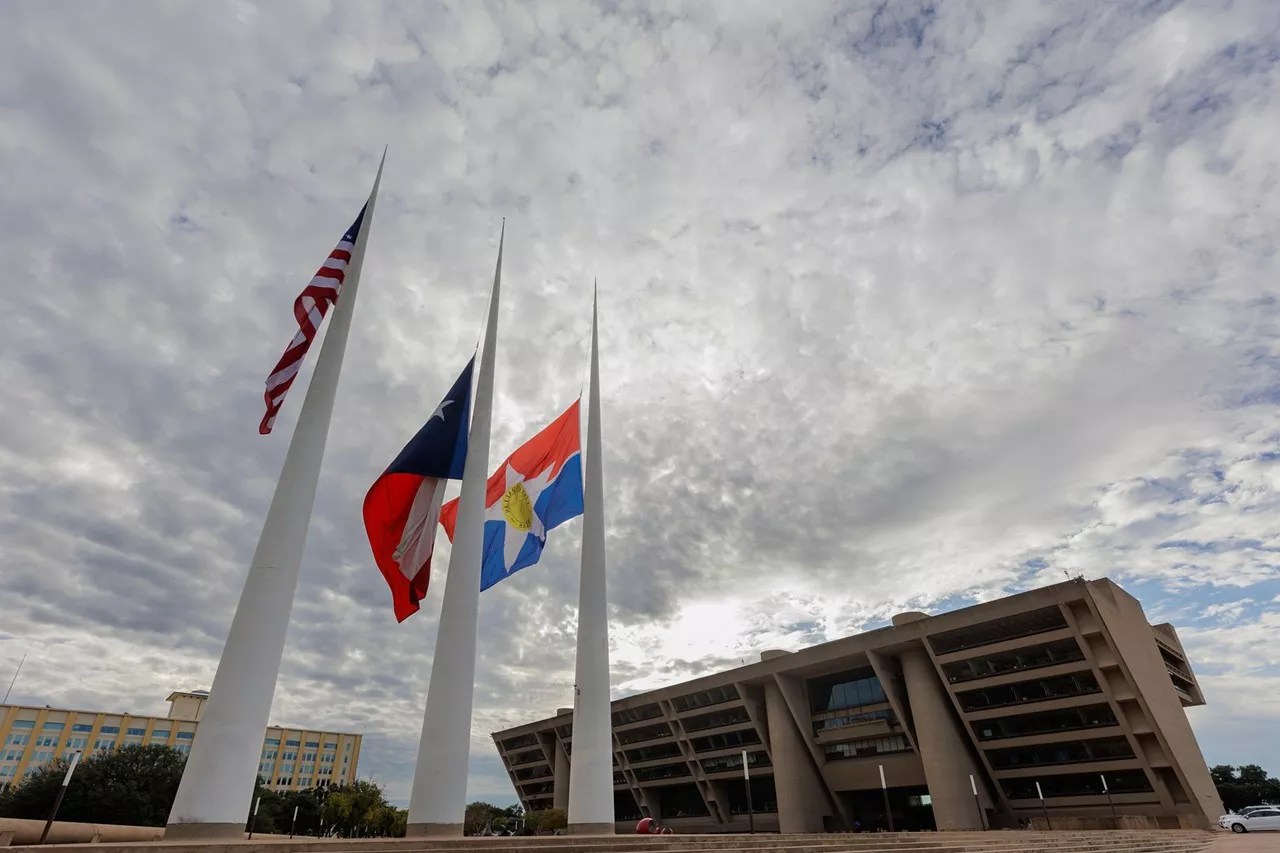
Recalling a sitting Dallas City Council member is a gargantuan task. Past efforts have fallen short, but organizers in Oak Cliff and Preston Hollow say this May will be different.
Dallas residents in two districts recently announced their intent to do something drastic: remove their council members from office before their terms end. The campaigns target District 1 council member Chad West, who represents much of north Oak Cliff, and District 13 council member Gay Donnell Willis, whose district includes parts of Preston Hollow, North Dallas and Vickery Meadow.
West first took his seat on the council in 2019 and has since won reelection in three separate cycles. Willis won elections in 2021, 2023 and 2025 to represent District 13. Both members’ current terms expire in 2027, with West unable to run due to term limits while Willis could potentially seek reelection. Residents in their districts, however, aren’t waiting until the next election for leadership change.
In a text, West said he is “looking forward” to finishing his final term on a standard timeline.
Sign up for the This Week’s Top Stories newsletter to get the latest stories delivered to your inbox
THANK YOU!
You’re all set.
CLOSE
“If a recall was successful, it would only impact the last 5-6 months of my final Council term,” West said. “It’s unfortunate that a small number of neighbors are choosing to put the district through this recall process, given the minimal impact it will have if successful.”
The campaign in District 13 has erupted amid a series of highly controversial fights over potential development, namely a proposed $800 million mixed-use project at Preston-Royal. In Oak Cliff, residents cite a perceived pattern of widespread up-zoning and pandering to business interests as the underlying motivation to fire West. Both campaigns also hinge on issues such as the council members’ stances on relocating from Dallas City Hall, and organizers from both districts say West and Willis have stopped listening to the people who elected them.
“For a while people didn’t want to speak up against Chad and speak up against kind of this developer class that has really taken hold of those districts,” Raymond Cantrell, a District 1 resident and an organizer with the recall campaign, told the Observer. “But it’s a thing where everybody’s been stabbed in the eye once now, so people have just figured, let’s go ahead and let’s do something about it.”
But here’s the issue: from what we could find, no sitting Dallas City Council member has been successfully recalled before. Most campaigns fizzle out before landing on the ballot, and the few that make their way to Election Day are ultimately shot down by voters. In interviews with representatives from both campaigns, organizers acknowledged the hurdles ahead, but said a potential May 2027 election could be the outlier.
Tall order
Getting elected to the horseshoe is no easy feat on its own. Candidates and their supporters pour thousands of dollars into campaigns, but only a small number make it onto the council. Starting the process, however, is pretty straightforward. If they meet residency, age and mental health requirements, all candidates need to do is collect anywhere from 25 to 40 signatures, depending on the number of votes cast in the last council election, from registered voters in their district to officially enter the race.
Placing a recall vote on the ballot is an entirely different battle as set out in the City Charter. To start, five registered voters in a council district must form a committee, draft and sign a proposed explanation of the recall effort, and file an official notice of intent to circulate a petition with the city secretary. And that’s when the clock starts.
After filing notice with the city, organizers have 60 days to collect signatures from at least 15% of registered voters in the district. In 2017, District 13 had 52,791 registered voters, and District 1 had 35,282, according to a council resolution certifying an election that year. That was before council members redrew district boundaries in 2022, but the changes kept most lines in place and both districts only grew in size with the move. The numbers give a sense of what organizers are up against — Oak Cliff campaigners would need to collect roughly 5292 signatures based on 2017 numbers, while Willis’ opponents would have two months to collect just under 7920 signatures. A representative for the District 13 campaign told the Observer that, based on updated numbers, they will be required to gather at least 9600 signatures. In Oak Cliff, organizers will need to collect more than 6900 signatures from registered voters. Oh, and the petitions can’t be signed online — not to mention Dallas voters’ consistent lack of interest in city elections.
“The requirement is fairly steep,” Cal Jillson, a political science professor at SMU, told KERA in July. “You’ve got to get 15% of registered voters, of eligible voters, in a council district to sign a petition, and that’s quite a bit because turnout in council elections is usually not even 15%.”
History also shows that it takes a near-herculean feat for a campaign to succeed. An effort to unseat Dallas Mayor Eric Johnson in 2023 after his controversial party switch failed to gain enough signatures to land on the ballot, as did two separate attempts by Black clergy to recall then-Mayor Laura Miller in 2003 and 2004. In 2005, amid a third try, ministers told the Houston Chronicle that they were calling off the effort. Still, they told the outlet they had collected more than the required 72,800 signatures needed to call an election, although reporters were not allowed to verify that count.
And even though they require far fewer signatures than a mayoral ouster, similar efforts to recall city council members have come up short. An effort by one-term District 7 council member Sandra Crenshaw to recall the area’s then-representative Kevin Felder faltered after she failed to collect even five signatures to give, and while Lake Highlands residents threatened Alan Walne’s seat amid a dispute over a proposed Walgreen’s, the fracas amounted to just that: threats, according to prior reporting by the Lake Highlands Advocate.
From what we could find, only one city council member has actually faced a recall election, and the voters said no. In 1992, South Dallas council member Charlotte Mayes “easily” defeated her predecessor Diane Ragsdale in a special election that cost the city more than $32,000, according to a 1993 D Magazine archival article.
What organizers say is different this time
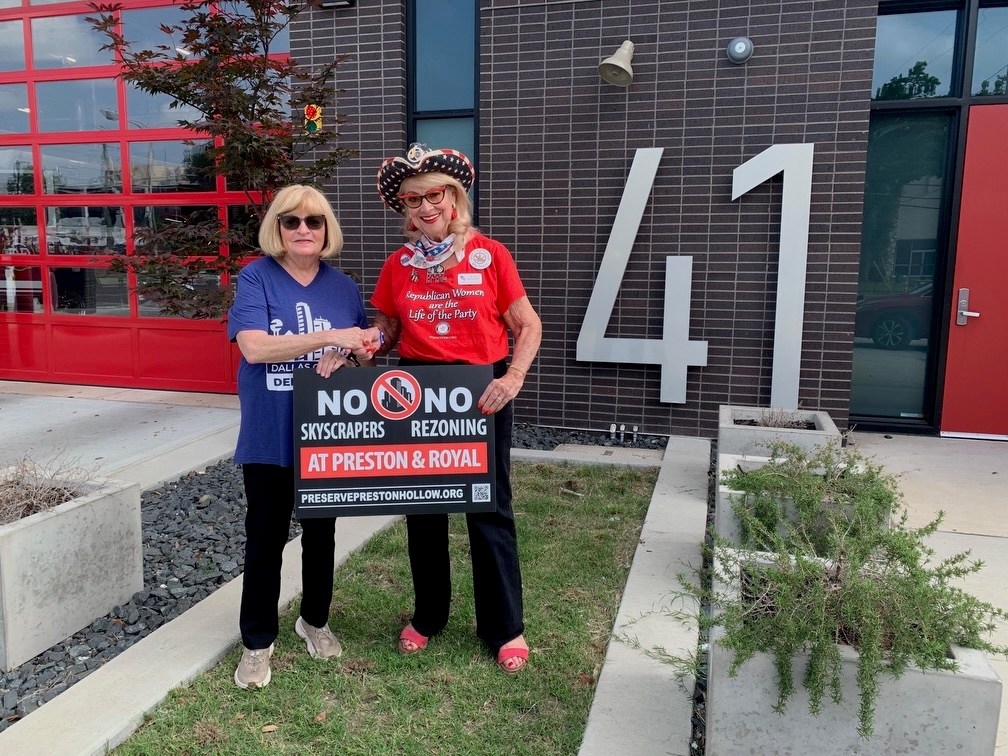 Marsha Gordon (left) and Diane Benjamin (right) serve as precinct chairs for the Democratic and Republican parties, respectively. This is the first time both women have the same sign in their yards.
Photo courtesy Preserve Preston Hollow
By more than a few measures, Dallas is in a period of civic upheaval. Sports teams and businesses like AT&T are leaving the city’s beleaguered downtown, council members are openly campaigning against a $443 million public safety bond, and former mayors like Laura Miller are calling for the city to ditch the council-manager system of government in favor of a “stronger mayor” approach. All of those things, in one way or another, involve the debate over whether or not to leave Dallas City Hall amid estimates that it might take hundreds of millions in repairs to update the aging structure.
Willis has generally supported steps toward relocation, such as voting down a plan to repair City Hall. She’s taken heat from residents backing the Save Dallas City Hall Campaign, as have most council members supporting the process.
Doug Hazelbaker, an organizer with the District 13 recall campaign, said Willis’ support of City Hall relocation has helped fuel the effort to remove her from office, although he acknowledged that recalls “don’t work great” generally. However, pointing to the Save City Hall push and the Oak Cliff recall campaign, he said people in Dallas are looking for a change, and that his District 13 Together Coalition plan to capitalize.
“I think there’s just a lot of people that are disgruntled right now,” Hazelbaker said. “So we’ll take advantage of it.”
He also pointed out that District 13 is typically well represented at the ballot box, so engaging residents could be less of an issue. In 2025, when Willis was last elected, 7,468 votes were cast in the race — more than any other district in the city and 1,200 more than the closest election turnout-wise, according to Dallas County Elections data.
Willis has faced persistent criticism over zoning cases in her district. Three developments — Preston-Royal, Melshire Estates and Walnut Hill — have caused a firestorm in the Preston Hollow area, especially the Preston-Royal development. She has turned down calls from residents to delay approval of the three and recently greenlit two of the projects along with a majority of the council. Despite compromises on building height and density, Hazelbaker said Willis still isn’t listening to residents and has instead “managed, but not engaged” them on issues that also include the city’s plan to move away from alley trash pickup.
In an emailed statement to the Observer, Willis said the only thing the zoning cases have in common is that all are “in District 13 in central North Dallas, but they each involve quite different issues.”
“I’ve spent hundreds of hours meeting with residents, neighborhood groups, stakeholders and city staff, and on each case, we were able to dramatically change the original developer plans based on neighbors’ input,” Willis said. “My focus is and always will be to make decisions based on what’s best for the neighborhood’s future and for the entire city. Dallas, and especially North Dallas, is in a unique situation. We have a housing shortage in an area where new residents desperately want to live, but they can’t afford to buy one of the hundreds of mini-mansions resulting from tear-downs in established neighborhoods. We’ve got to make decisions for housing growth for the young families, seniors who want to size down, or incoming transplants transferred here for Y’all Street. Do we want them to have to head north to the suburbs for housing? I don’t.”
She added that she does not regret her support for City Hall relocation, calling it a “financial decision” in her statement. Willis also said that residents have every right to pursue a recall, and that “I’ll continue doing the work I’ve always done: listening to residents, supporting neighborhood priorities and focusing on practical solutions.”
Hazelbaker said that his group plans to file a notice with the city secretary within the next few weeks and will use professional canvassers to collect signatures. He said he is confident that they will get the required signatures, which he said will send a signal to city officials.
“There is a message being sent out there that you better start listening,” he said. “And whether that happens at this time, it’s certainly going to happen in the next election cycle.”
Joseph Beckham, one of the main organizers with the Recall Chad West Campaign, also acknowledged that the process requires a “heavy lift,” as he put it in an interview. After filing a notice with the city, they plan to use volunteers and events to get residents to sign on. He said the group’s polling inside the district has reflected disillusionment across the district, which is why he’s confident they’ll get the required signatures.
“Once we started this, the biggest surprise has kind of been discovering that people from all ends of the political spectrum feel very strongly about recalling Chad West,” Beckham said. “It’s really rare in this day and age that people at opposite ends of the spectrum agree on anything.”
He said the campaign is targeting West due to failures in controlling rampant upzoning and maintaining connections between Oak Cliff and downtown, perceptions which he added are shared by a large number of residents in District 1, where ‘Recall Chad West’ signs have been sprouting up since April. One of those signs is in the front yard of West’s predecessor on the council, as first reported by The Dallas Morning News, and Beckham said support for the campaign is growing across the district.
“If this effort softens his voting pattern, helps District 1 be better, and gets him out of office sooner so he can’t damage our district or the city, that’s in itself a win,” Beckham said.