
Four years after flooding closed the Center for Creative Connections (C3), the Dallas Museum of Art has brought it back to life. And the energy is flowing through the more than 10,000-square-foot family learning space reopened in September with a refreshed Arturo’s Nest for little kids, an 82-seat theater, improved studios and an all-new Art Lab for hands-on making, plus new exhibitions exploring two fundamental pillars in early childhood development: pattern and rhythm.
Perhaps best of all, access to C3 remains free, as does general admission to the DMA. There’s much new art to see, touch, hear and encounter in these spaces specifically designed to make every kid an artsy kid.
Play in Arturo’s New Nest
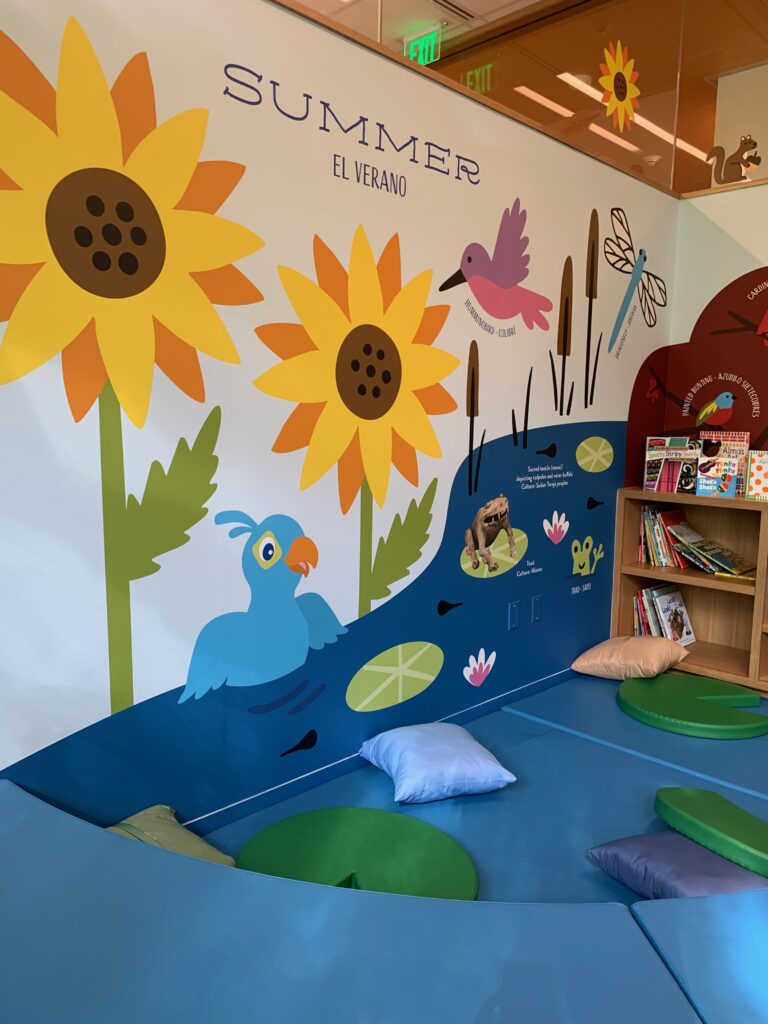
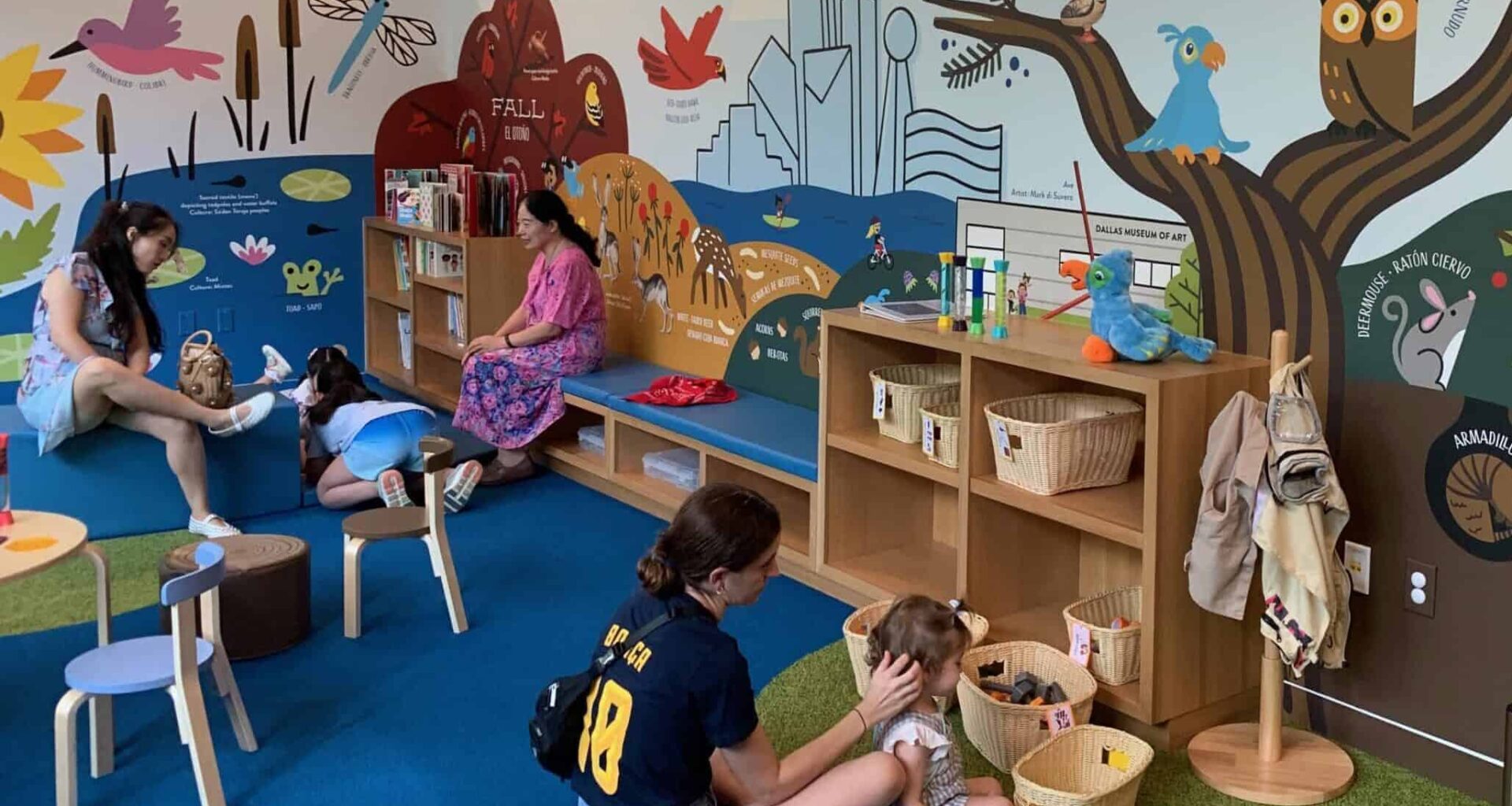
Always open during regular museum hours for drop-in visitors, Arturo’s Nest is a cozy landing for kids under 5. In the same spot as before and with the most natural light pouring in, the combination of atmosphere and education feel right on point.
Animals, insects, flowers and plants depicted throughout the room are labeled in English and Spanish. And it’s stocked with books, sensory activities and activations for play. (I also spotted headphones out and ready for kids with sensory sensitivities.)
There’s plenty to discover at the right height for your babies, toddlers and preschoolers. Kids can settle onto soft benches and wooden stump stools, turn the flower-themed wall activations up and over, or experiment with translucent sensory tiles and geometric shapes on a lighted table.
A large three-dimensional bluebonnet hangs overhead, while baskets hold binoculars, musical instruments, chirping bird plushies and even a stuffie of Arturo himself, the DMA’s blue-and-gold macaw mascot. This redesigned room follows him (I counted eight Arturo sightings in the murals around the room) through the seasons of the year.
When your littles are ready for a potty break, the restrooms with baby changing tables and water fountains too are steps away, right out in the hall.
When you’re ready to explore the wider museum, here’s a way to get the kids excited to leave: The Arturo inspired by 1,000-year-old parrot-shaped ceramic vessel that’s on display in the level four Indigenous American Art galleries.
Make Something in the Art Lab and Studios
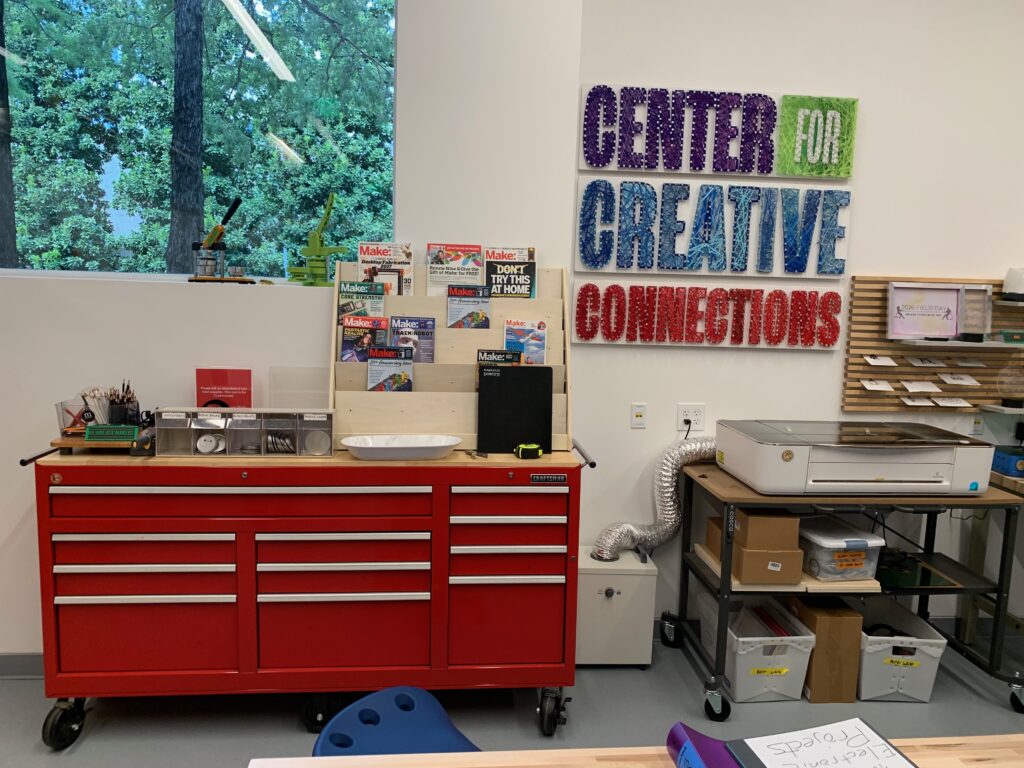
Older kids, teens and adults have a new place to experiment in C3, too. The Art Lab expands the museum’s opportunities for creativity via technology. With 3D printers, a laser cutter, a Cricut and many more tools (the DMA reps say they are still working out which materials and equipment would be safest for younger children to use in the space), this makerspace will be open for scheduled workshops, so stay tuned for what’s to be offered soon.
A few hopscotch circles down and around the hallway are the two Art Studios. Both classrooms with tables, desks and cabinets full of art supplies are to serve as a multi-use space. So for kids 5 and older, the best time to come visit the DMA will be during structured, family programming.
The all-ages Open Studio (on first and third Saturdays and Sundays) will still be held in the level four Tower Gallery, and Wee Wednesdays (offered quarterly) may take kids 5 and under through the galleries or Horchow Auditorium or C3, where there’s much more to see than the classrooms too.
Play with Rhythm & Pattern
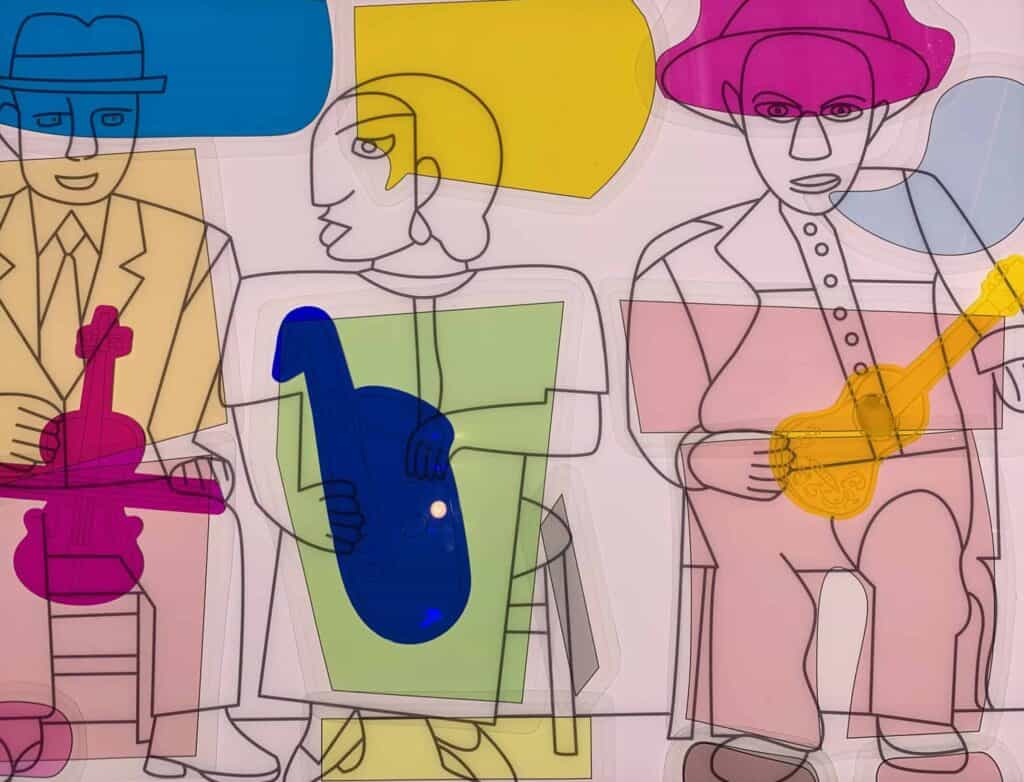
For C3’s featured exhibition Rhythms on Repeat, the DMA gathered more than 50 works from its permanent collection that evoke pattern, repetition and sound. That Picasso straight ahead? That’s The Guitarist oil painting from 1965. And display cases hold ancient instruments—including a Peruvian llama-head whistle circa 750–1500 CE.
But C3 doesn’t only ask visitors to look. Kids—and all ages—can use the art as inspiration to make their own artworks and music. There are actual, if miniature, instruments to touch, too—playing a thumb piano or a wooden frog-shaped instrument called a frog guiro, which makes a ribbit sound when you drag a wooden stick along its ridged back. A corner lounge/play area gives parents a cushy place to take a breather while their kids play with more toy instruments (maracas, tambourines and more thumb pianos).
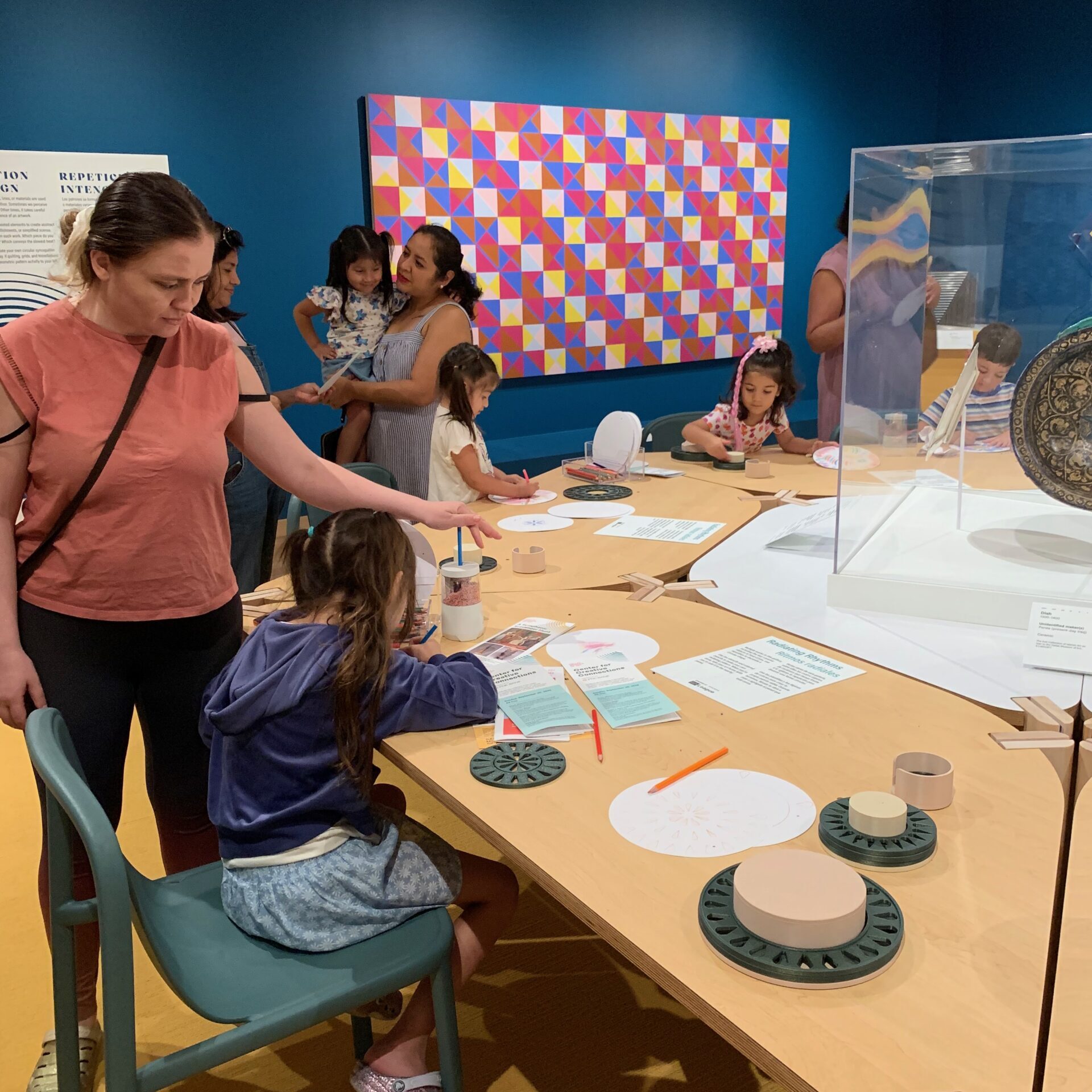
As you move throughout the exhibition, the emphasis shifts from rhythms you hear to patterns you see. In fact, the entire first room inside C3 is focused on pattern. Kids can arrange magnets or use stencils to create radiating designs inspired by ancient ceramics from the DMA’s Islamic Art collection.
Take a Break With Pattern Play
In the sun-filled lounge leading out to the museum’s Fleischner Courtyard is another spot worth making time for. This new installation is by Dallas-based multimedia artist and contemporary sculptor Jessica Bell. The area around Pattern Play allows for space room for the kids to roam and play with colorful forms to make their own compositions inspired by art piece’s bold colors, blinking lights and curved lines.
When you and/or the kids need a break from the indoors, head right out onto the shaded courtyard or farther on to the café when you need a snack. The café’s open through 4pm and has the kid-friendly menu options.
If you’re needing to kill a few hours here, you can keep the kids engaged with some extra materials you can pick up: a Symphony Scavenger Hunt brochure and Pattern Bingo card and go in search for instruments in art throughout the exhibition. Pattern Play and Rhythms on Repeat, will be on view through 2027 and 2029, respectively, so you’ll have plenty of time to come again and rediscover what you might have missed last time—like sending Arturo a letter. Inside the preschooler room, kids mail a letter by dropping it inside his own mailbox. And if you include your return address, Arturo may even write back.
Plan Your Visit to C3
Location: 1717 N. Harwood St. in the Dallas Arts District
Hours: Open Wednesday–Sunday 11am–5pm
Pricing: General admission and C3 are free, with separate admission for select exhibitions; $25 DMA garage parking
Learn more: dma.org
The Bottom Line
Arturo’s Nest is open for drop-in play during regular museum hours and is specifically designed for kids under 5.
Some of C3’s creative spaces are tied to scheduled programming, so families interested in the Art Lab or studios will want to plan accordingly.
C3 and general DMA admission are free; garage parking is $25, and the café is open through 4pm.