
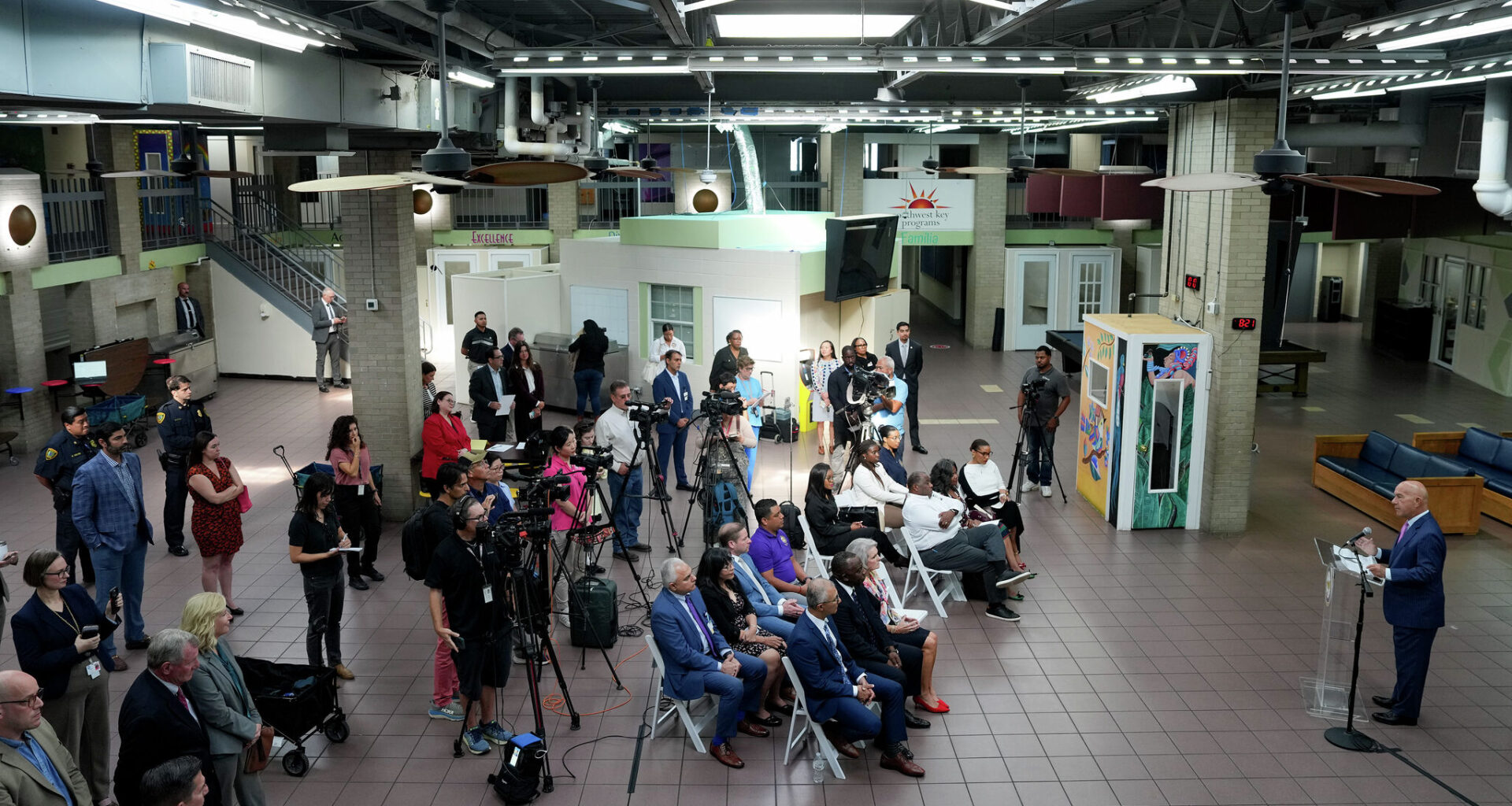
Houston Mayor John Whitmire hosts a press conference at a new facility at 419 Emancipation Ave. intended to address the needs of Houston’s unhoused population in October 2025. The city’s planned respite care center for people experiencing homelessness will operate separately at a different location.
Elizabeth Conley/Houston Chronicle
Houston will receive a $12 million federal grant designed to reorient city homelessness efforts toward treatments for medical ailments and mental health or substance abuse challenges, the U.S. Department of Health and Human Services has announced.
The grant, which will provide Houston’s health department with $3 million annually over the next four years, will largely go toward a new center for respite care, bolstering medical treatments for people experiencing homelessness, said city officials. One goal is to reduce the number of unhoused people cycling in and out of emergency rooms, which cost the city $42 million last year in unpaid ambulance bills, records show.
Health and Human Services Secretary Robert F. Kennedy Jr. announced the award on Friday at Open Door, an addiction treatment center in downtown Houston. The city is one of eight participants in the new program, known as Safety Through Recovery, Engagement, and Evidence-based Treatment and Support (STREETS).
Article continues below this ad
“Under President Trump, we will no longer accept a system that manages human suffering instead of ending it,” Kennedy said in a press release. “We are helping people reclaim their health, rebuild their lives, and achieve the dignity, purpose, and independence that come with recovery.”
The grant is part of the Trump administration’s efforts to move towards “treatment first” programs in combatting homelessness, as opposed to the longstanding “housing first” model that prioritizes subsiding permanent housing.
READ MORE: Houston’s homelessness strategy faces a test. So far, the numbers are holding.
Mayor John Whitmire applauded the award, saying in a statement that it would bolster his administration’s “holistic approach” to homelessness.
Article continues below this ad
Houston is still working on a potential location and partner organizations for the respite center, said Theresa Tran, the city’s health director. It will be separate from the Whitmire administration’s new navigation center at 419 Emancipation, an around-the-clock facility that is available to unhoused people who are not sick.
“Recovery, and readiness for self-sustainability doesn’t happen overnight,” said Tran. “The idea is that they will graduate fully from the services with a much much lower chance of relapse.”
The new space will fill a gap in the city’s homelessness strategy, serving people who are too fragile to recover on their own but not sick enough to qualify for hospital-level care. Open Door and other nonprofits offer some of these services, but the new facility would be the first in Houston fully dedicated to respite care.
Those eligible for treatment would have been discharged from hospitals within the last 30 days but are still experiencing health issues. In some cases, patients could be referred directly to the program from hospitals. The typical stay in respite care lasts 30 to 45 days.
SEARCH OUR MAP: As downtown homelessness declines, these Houston suburbs are seeing the biggest gains
Article continues below this ad
Patients would receive a variety of follow-up medical treatments and have access to other services on-site, such as housing, workforce and behavioral health support, as well as the opportunity to move into longer-term transitional housing. Those services will be provided by a variety of partners, including The Harris Center and Healthcare for the Homeless.
“The fewer handoffs that we have to make, the fewer instances of transportation that somebody has to find … to receive the support that they need and get these acute things off of their table, the more likely they are able to really focus on their own recovery,” Tran said.