
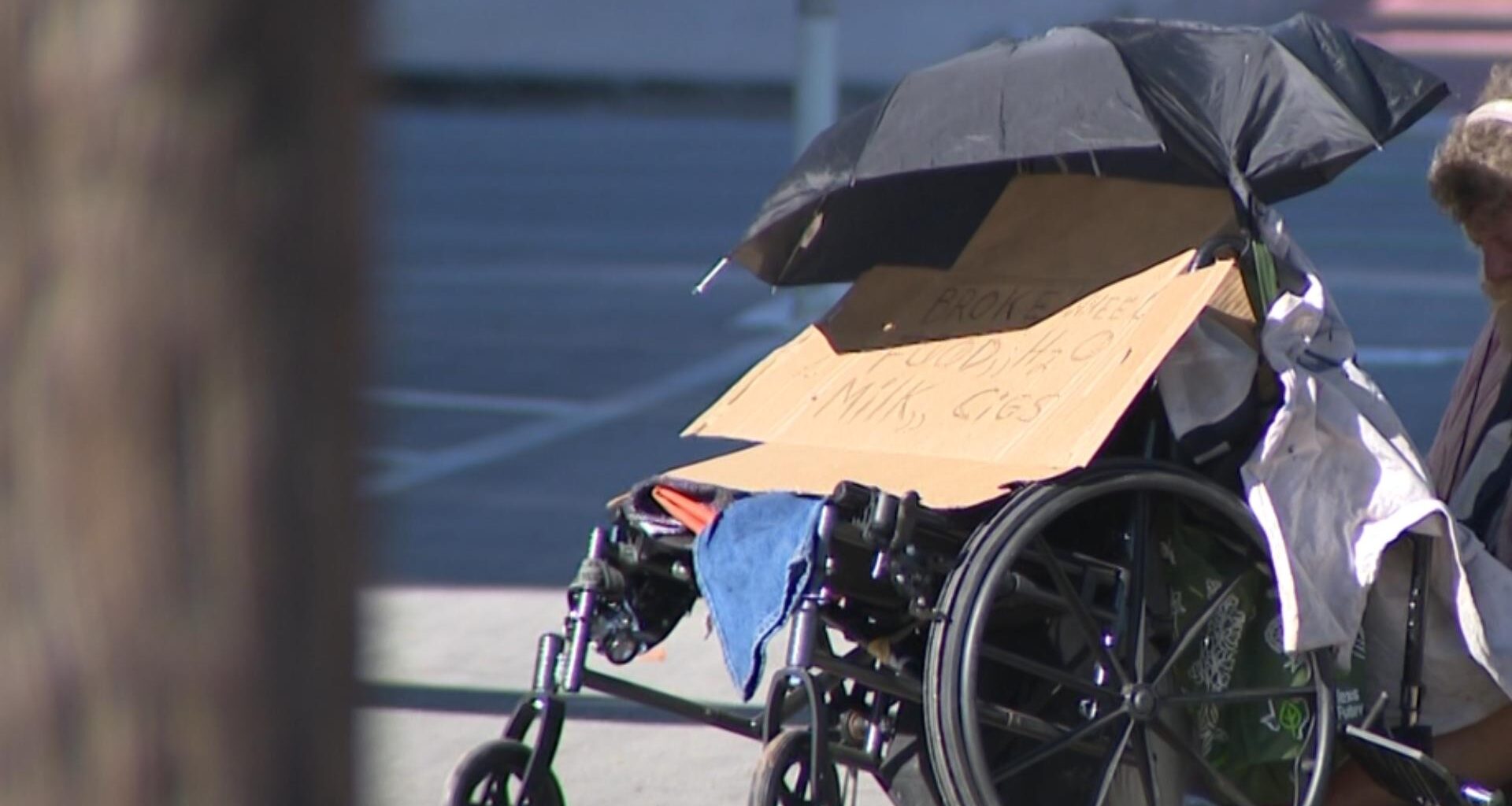
Six months into Austin’s No Wrong Door initiative, early data shows fewer police interactions among some of the city’s highest utilizers.
AUSTIN, Texas — Six months after Austin launched an initiative aimed at helping some of the people most frequently cycling through police encounters, emergency rooms and homelessness, officials say early data shows progress, while acknowledging the work is far from finished.
The city’s “No Wrong Door” initiative brings together public safety agencies, healthcare providers and homelessness resources to coordinate care for people with complex behavioral health and social needs. The goal is to connect people with appropriate services rather than repeatedly responding to the same crises.

This story continues below.
For some Austin first responders, the people at the center of the initiative were already familiar faces.
“You get on the carousel and it’s constantly spinning in a circle and the person never gets off, but instead of a theme park ride, that carousel is the criminal justice system, police officer interactions, ambulance interactions, E.R. visits, psychiatric visits, etc., and that’s just on repeat, continuously nonstop,” said Cody Martin, who works with the Austin Police Department’s Crisis Intervention Team.
Martin said No Wrong Door is intended to interrupt that cycle by getting agencies that may encounter the same person to work together.
“A program like this is designed to have coordinated interventions across multiple agencies to try and get the person off that carousel – so to speak, to prevent the continuous use of resources that honestly appears never ending,” Martin said.
Austin police Cpl. Wut Tantaksinanukij said the initiative is concentrating resources on some of the city’s highest utilizers.
“Now, with the No Wrong Door program, we’re being laser focused on individuals on the highest utilizers, which is about 1% of the population in Austin that we’re concentrating on,” Tantaksinanukij said.
There is no single approach that works for every person, Martin added.
“Every person’s story is different, and the trajectory and the intervention methods, it’s all completely different. I can’t give you a blueprint because we’re all human beings and unpredictable. This thing with this job is just going with flow and using the resources at your disposal to try and help people,” Martin said.
New data presented to the Austin City Council on Tuesday looked at 99 people identified by APD as high utilizers.
From May 20 to Aug. 18, those individuals experienced a behavioral health crisis-related contact with police roughly once every 11 days. Since their involvement with No Wrong Door, that average has shifted to once every 16 days, a 31% decrease. The city estimates that amounts to about 10 fewer contacts per person annually.
The difference was larger among the 28 people considered the highest risk. Their average went from one crisis-related police contact every six days to one every 14 days, a 57% reduction.
Austin-Travis County EMS Chief Robert Luckritz said those numbers do not tell the entire story. In some cases, an increase in EMS responses can mean someone is receiving more appropriate medical care rather than interacting with law enforcement.
“In many cases that we’ve seen or in several cases that we’ve seen, we have seen a decrease in interaction with both law enforcement as well as EMS. In other cases, what we’re seeing is a decrease in interaction with law enforcement, but an increase in EMS response, and we attribute that to us getting the appropriate care to these individuals,” Luckritz said.
No Wrong Door brings together 17 partners, including APD, Austin-Travis County EMS, Integral Care, Austin’s Homeless Strategy Office, Austin Community Court and Central Health.