
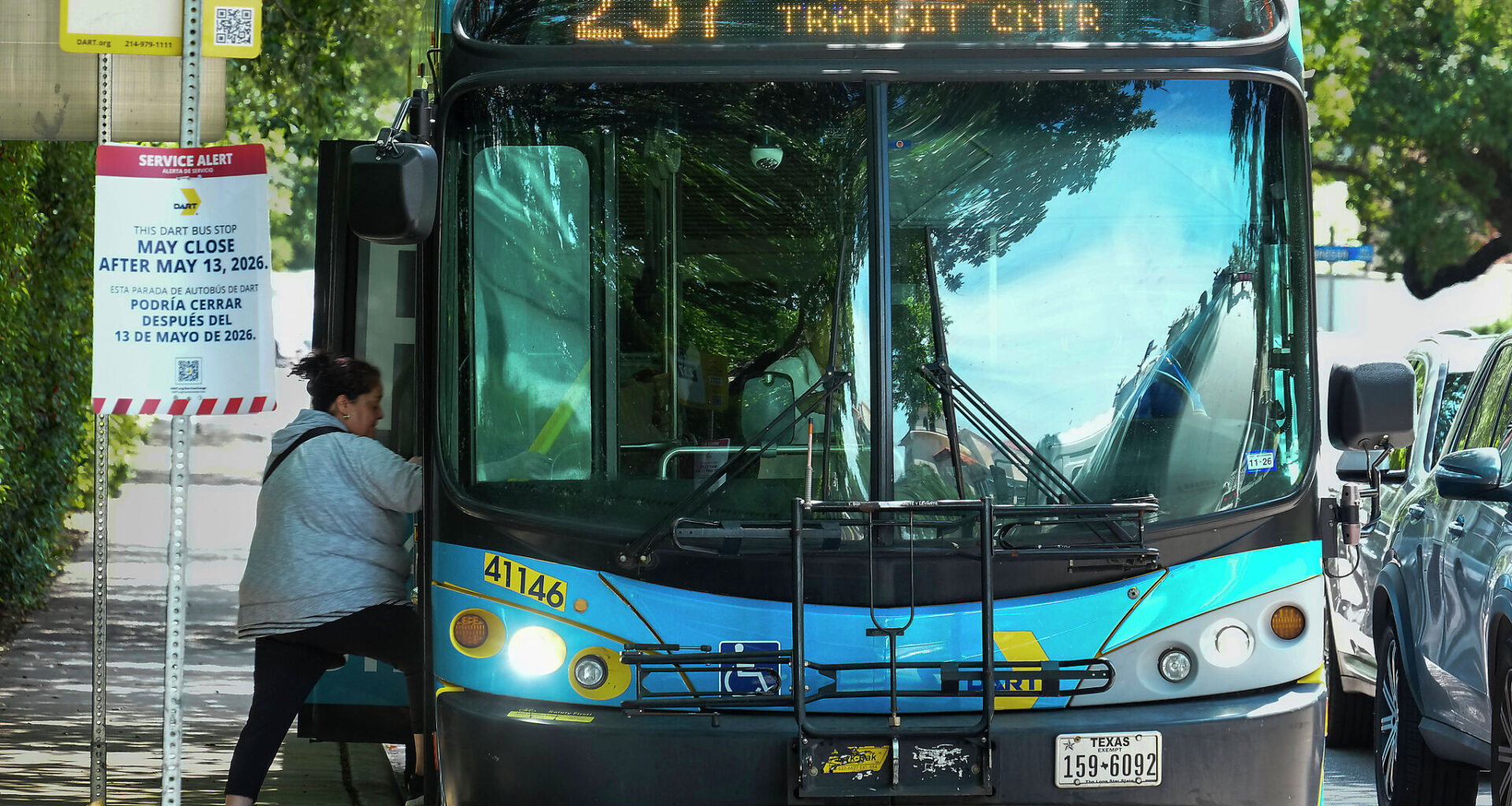
The city of Dallas approved $12.55 million dollars to reconstruct 22 traffic signals along major Dallas Area Rapid Transit bus routes.
Crews will replace outdated hardware and infrastructure while adding technology intended to improve bus travel times, traffic flow and pedestrian safety. According to the city, about one-third of the signals are complete, a second one-third are close to installation and the last one-third are still in the works.
The 22 existing signals were built before 1980 and do not meet current technological, safety or Americans with Disabilities Act standards, according to the city’s Transportation and Public Works department.
The new signals will include features such as Audible Pedestrian Signals, which counts down how much time is left to cross, and vehicle detection to help with traffic flow.
They also allow for DART buses to be recognized sooner for faster travel, improving arrival and departure times.
The partnership between the city of Dallas and DART features funding from the transit authority’s Public Transportation Improvement fund, which was set up after the pandemic using leftover federal relief funds, and construction from the city’s Transportation and Public Works department.
The department said the following intersections will have new signals and be fully operational by mid-2027:
The changes will impact DART bus routes 1, 3, 9, 15, 25, 20, 28, 30, 41, 45, 47, 57, 108, 232 and 237, according to the city.
“There will be limited, if any, impact to riders during the construction, but upon completion, riders and drivers will experience better traffic flow and safer roadways which lead to better on-time performance for our buses,” said Erin Myers, vice president of public relations for DART.
The city has spent $8.4 million on the project so far, and plans to spend about another $3.6 million, leaving over $500,000 uncommitted to be spent on hardware purchases, according to a memo from Dev Rastogi, Dallas assistant city manager.