
WASHINGTON — Houston, we have a pitch: bring the Space Academy to Texas.
The competition to land President Donald Trump’s proposed Space Academy is taking flight. NASA administrator Jared Isaacman said Texas is one of the many states lobbying to be its home. The academy would be modeled after West Point and the Naval Academy to educate and train future leaders of the Space Force.
In a joint statement, Sen. Ted Cruz and Rep. Brian Babin said, in part, “If America is going to build the world’s premier academy for space, Texas has all the right stuff — the talent, institutions, infrastructure, and experience to launch the next generation of American space leaders.”
Texas Democrats agree.
“Texas is home to Houston, Space City, which has operated mission control for every single American human space flight for more than 60 years. We are home to 15 military bases, to universities that push space research, to the largest aerospace engineer in the entire country,” Rep. Christian Menefee, D-Houston, told Spectrum News. “Texas is the best place for the Space Academy to come.”
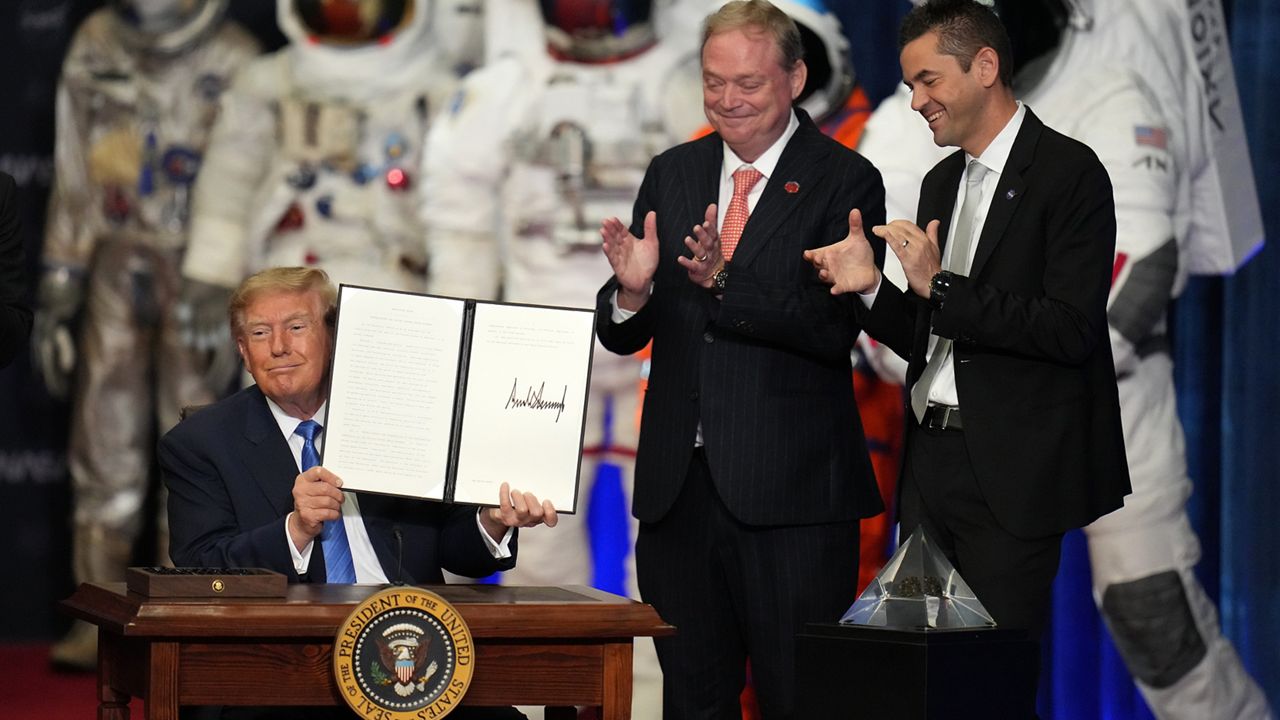
In August, at the Johnson Space Center in Houston, Trump signed an executive order directing the federal government to create the academy for the Space Force.
“Florida, Texas, Ohio, Alaska, California — I mean, there are a number of states that have various space equities, or a NASA center in it, or a major launch complex that have taken special interest in the opportunity of having their academy there,” Isaacman said.
Isaacman believes the Space Academy could eventually become as big as West Point in New York or the Air Force Academy in Colorado, which have an annual class size of around 1,200.
“That said, you have all these states that are showing up with various packages and incentives to help bear some of the costs of what will be a historic institution in their state,” Isaacman said.
Last month, Gov. Greg Abbott called on state Rep. Greg Bonnen to lead a team that will work closely with the Texas Space Commission to prepare its proposal to the federal government. The commission is considering pledging $100 million as part of its bid.
Menefee said he was excited about the bipartisan work bringing the next generation of leadership to the state.
“There is a big need for the engineers, for the scientists, for the astronauts who are going to power the space travel of tomorrow. To continue to have Houston be thought of — to have Texas be thought of — on the forefront of space travel would really, really help the brand and the reputation of our state,” Menefee said.
The NASA administrator told Spectrum News that while the space agency will make a recommendation, the decision is ultimately up to Trump.
The deadline for states to submit their proposals is Oct. 26.