
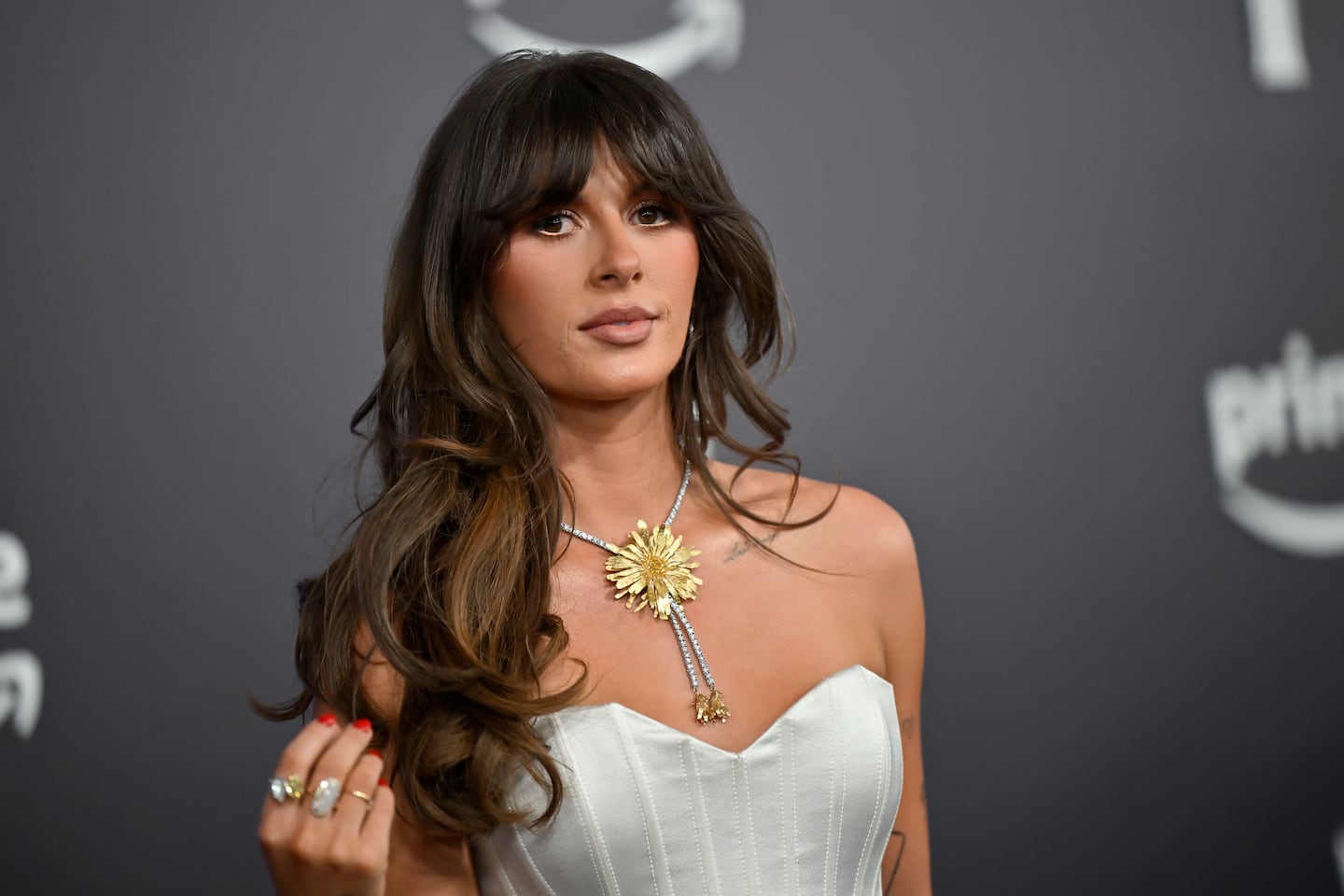
“Choosin’ Texas” is a ballad rife with the kind of tuneful betrayal, broken-hearted pathos, and chin-up redemption that have defined the country genre since the height of Dolly Parton and George Jones. It also manages to be upbeat and pleasant, like a line dance with friends. There’s a timeless feel; it’s easy to imagine it pouring out of speakers following a Ronnie Milsap song in the ’80s, Garth Brooks in the ’90s, or Taylor Swift in the early ’00s.
Get College Town
A weekly newsletter packed with insights about higher ed from Globe journalist Hilary Burns.
Yet Langley’s smash hit stands alone.
“Choosin’ Texas” is now the longest-running No. 1 hit in Billboard Hot 100 history. It has topped the pop charts for 24 weeks. (Swift’s “Patient Zero” knocked it to No. 2 this week, but it will be back.) It has surpassed Mariah Carey’s ubiquitous “All I Want for Christmas Is You” and blown past country crossovers like Shaboozey’s “A Bar Song (Tipsy)” and Lil’ Nas X’s “Old Town Road.” The 27-year-old Alabama native has spent eight more weeks in the pole position than Mariah Carey & Boys II Men’s “One Sweet Day,” Morgan Wallen’s “Last Night,” and Luis Fonsi and Daddy Yankee’s “Despacito,” which featured Justin Bieber. Harry Styles hasn’t come close. Neither has Bad Bunny. Nor the Beatles.
Why this lovely song? Why, in such polarized times, when one thing we can’t agree on is Texas – indeed, even Texas seems unable to choose whether it’s going red or blue this fall – has one song enthralled the entire nation for so long? It’s an extraordinary feat for several reasons.
After all, though Carey’s chart-topper reappears every year on Black Friday or sooner, Langley’s hit has no holiday affiliation, no time peg on which to hang its cowboy hat. It’s collecting easy streams without holiday playlists, endless loops in Old Navy, or radio stations that shovel holiday cheer 24 hours a day through New Year’s.
No, since it was released last October, “Choosin’ Texas” has made a steady climb to the top on merit alone. It hasn’t been sampled by a rapper or producer, and it hasn’t soundtracked a hip film, a buzzed-about streaming show, or an omnipresent commercial. It doesn’t owe anything to an Instagram influencer. Drake released his remix, titled “Solar Eclipse,” on October 2, but his version followed the song’s success. “Choosin’ Texas” became a TikTok hit in the months after its release, but lots of songs go viral. None of them have rested atop the Hot 100 across nearly six months.
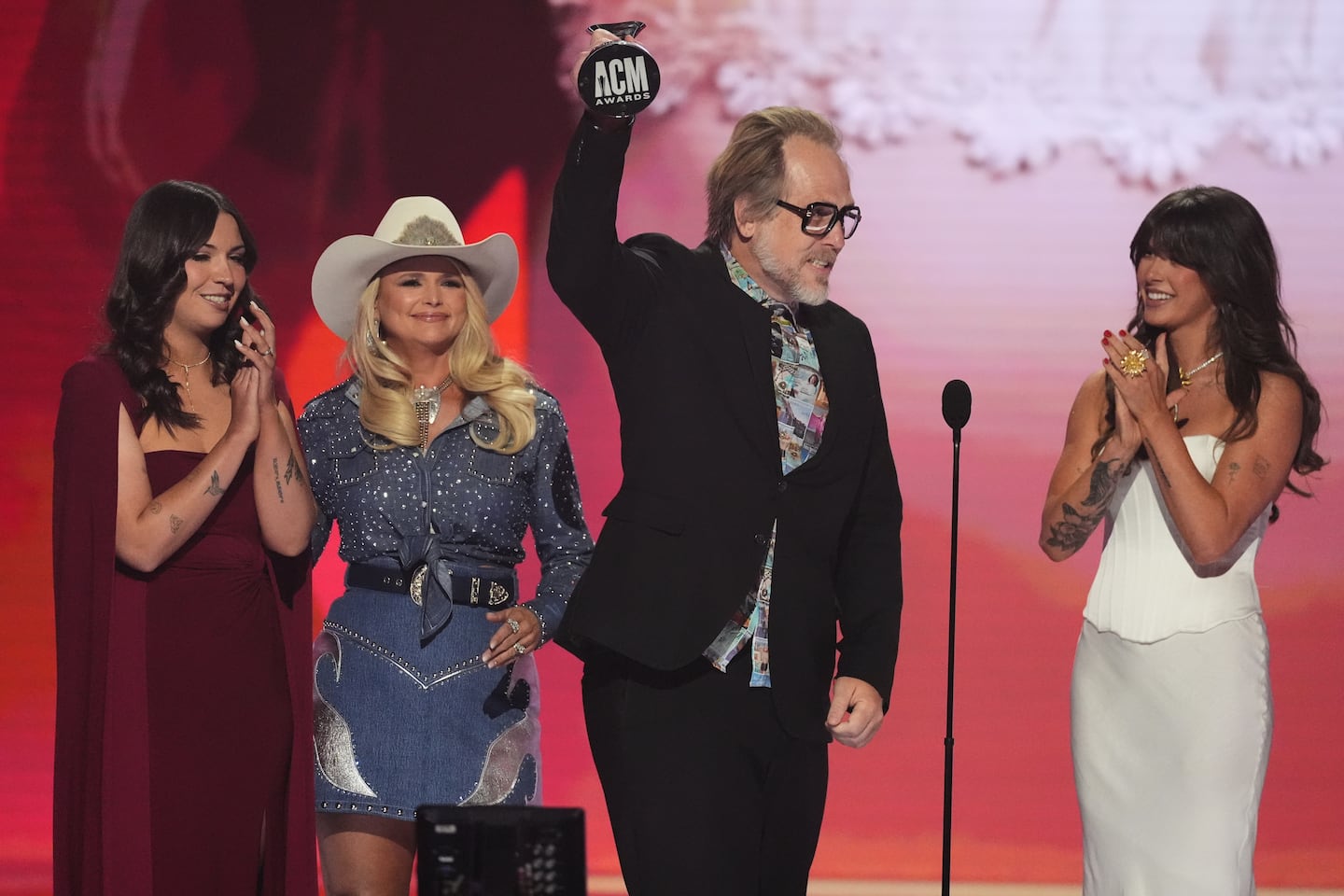 Joybeth Taylor, from left, Miranda Lambert, Luke Dick and Ella Langley accepted the award for song of the year for “Choosin’ Texas” during the 61st annual Academy of Country Music Awards in May at the MGM Grand Garden Arena in Las Vegas.Chris Pizzello/AP Photo/Chris Pizzello
Roger Miller proved country music could be beloved by pop fans in the 1960s with “King of the Road.” Dolly Parton defended the thesis in the 1980s with “9 to 5” and a cherished duet with Kenny Rogers, “Islands in the Stream.” Taylor Swift ascended into pop supremacy in the new millennium. But lately? We’ve been a niche nation. Not even Swift has had this success with one song. Billboard reports that just over 1,500 songs have cracked the top 10 since 2000. Only 63 of them were country songs. And only 1.7 percent have been country songs by women.
The triumph of “Choosin’ Texas” is also remarkable given that the prevailing narrative about women in country music has centered on the systemic discrimination they experienced from Nashville’s Music Row and other industry forces. Country radio stations even had policies against playing two women artists in a row. “Bro country” — tailgates, pickups, girls — dominated the airwaves.
That began to change when visionary artists such as Kacey Musgraves, Margo Price, Kelsea Ballerini, and Lainey Wilson came into their own, and veterans including Miranda Lambert and Carrie Underwood continued to assert their power. That’s not to say that the problem of inequality in country music is solved. Far from it. But Langley’s dominance is far and away the clearest signal that something important has changed.
The blockbuster nature of “Choosin’ Texas” also reflects the fact that country music is the most popular genre of music in America, from Brooklyn to Bakersfield — one that pop stars, rappers and indie-rock darlings like M.J. Lenderman and Waxahatchee have embraced with aplomb.
It’s not unusual for mainstream popular music to absorb the sonics and general timbre of its adjacent genres. At the turn of the 21st century, the Autotune, 808s, and lyrical flow of hip-hop became the prevailing sound of songs that were played on Top 40 radio.
Whether country music will achieve the same level of sonic ubiquity remains to be seen, but its popularity suggests a broader desire for unity among everyday working people, those who’ve been systematically divided by false binaries into red and blue states, and by narrowly tailored Spotify playlists. If we all choose “Choosin’ Texas,” perhaps we’re more alike than we think.
Maybe as the digital fog burns off and millennials have brought about a resurgence of CD sales in order to own their own music and defeat AI-driven narrowcasting, there is a greater awareness that perhaps it is algorithms that help keep us apart. Maybe it’s an extension of the same progressive populist sentiment that prompted the rise of folk music in the 1940s (and the folk music revival in the 1960s), the commercial dominance of heartland rock in the 1980s, and the meteoric rise of rap and hip-hop in the 1990s. “This land was made for you and me.” “No, I won’t back down.” “We’ve got to fight the powers that be.”
Not even online hate has come for “Choosin’ Texas.” The most prominent debate about the song has come after some commenters suggested they hadn’t heard it — and how could any hit hold down the top spot for so long without reaching them? Pretending not to have heard it, suggested Rolling Stone, is the new cultural snobbery. Yet that’s certainly possible these days, given the ways we curate our digital lives (and the way algorithms curate them for us). The cultural homogeneity that was part and parcel of a bygone music culture shaped by radio, MTV, and record stores has certainly dissipated. Songs don’t seem to burrow into our memory the way they once did.
“Choosin’ Texas” reminds us that in life, as in art, many things can be true at the same time. We can be sad and angry and also want to dance. We can be betrayed by our partner — even behold it in real time — and walk away hopeful for the liberation and second chance such a loss affords. We can disagree about politics and clank longnecks at the local watering hole. We also can have no previous interest in country music and listen to “Choosin’ Texas” on repeat for the way that it connects us.