
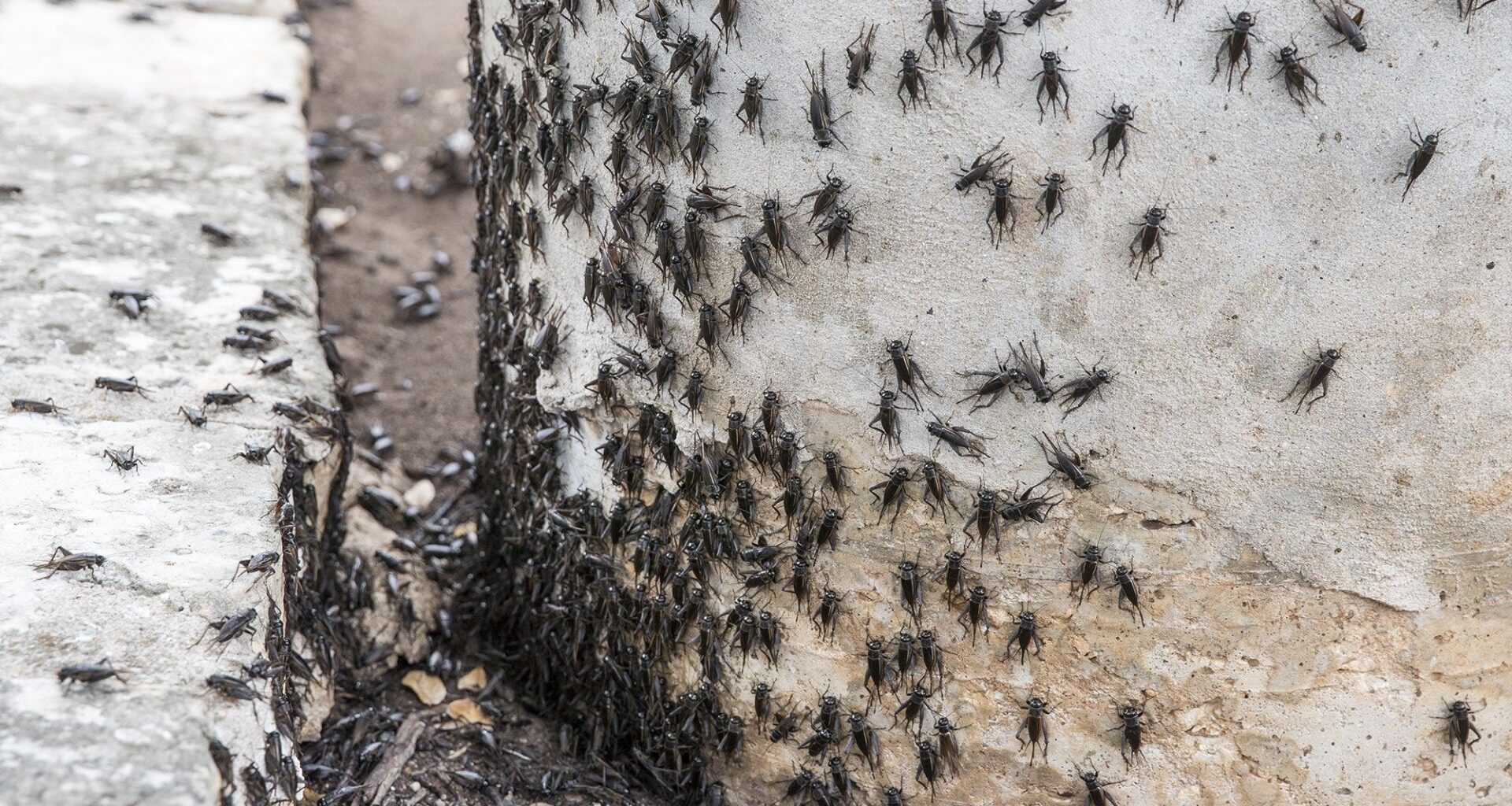
Thousands of crickets fill the parking lot at Walden Park shopping center on Wednesday, October 9, 2019. Some businesses in the area have been temporarily closed due to the infestation of crickets outside their door. Wednesday, RICARDO B. BRAZZIELL / AMERICAN-STATESMAN
Austin American-Statesman
Exactly which field cricket species are responsible for Texas’ annual outbreaks has not been well studied, according to Texas A&M AgriLife Extension Service, which provides research-based education on agriculture, natural resources, health and community issues across Texas. Most belong to a closely related group of Gryllus species commonly called black field crickets.

What entomologists do know helps explain why they seem to appear all at once.
Article continues below this ad
Thousands of crickets fill the parking lot at Walden Park shopping center on Wednesday, October 9, 2019. Some businesses in the area have been temporarily closed due to the infestation of crickets outside their door. Wednesday, RICARDO B. BRAZZIELL / AMERICAN-STATESMAN
Austin American-Statesman
The crickets gathering around a store in September did not necessarily hatch together outside that store. They were spread across the surrounding landscape before becoming mobile adults.
Female field crickets lay their eggs in soil in the fall, according to AgriLife. The eggs remain underground through the winter and hatch the following spring. The young crickets, called nymphs, then spend about three months growing before becoming adults. Their wings are not fully developed during that period.
The clustering people notice comes later as the crickets begin to look for mates and converge on light.
Article continues below this ad
AgriLife says cricket outbreaks occur when large numbers of those nymphs finish developing and the now-winged adults embark on nighttime mating flights. In a multiyear Central Texas field study, researchers found flying field crickets converged on the mating calls of other crickets, with most arrivals occurring during the first several hours of the night.
Field crickets are also strongly attracted to artificial light. Crickets that had been spread across surrounding lawns, fields and roadsides can gather on the same brightly lit gas station, grocery store or apartment complex once they begin flying. AgriLife calls outdoor lighting the most important single cause of severe cricket accumulations around buildings.
That helps explain why one shopping center can look overrun while another area nearby has relatively few.
Weather can also affect how dramatic a cricket season becomes. AgriLife says some of the largest outbreaks appear to occur after dry springs and summers, with numbers appearing to peak in August and September when summer drought is broken by rain and cooler weather. The reason is not fully understood. AgriLife says one possible explanation is that dry conditions mean less fungal disease among cricket eggs and nymphs, allowing more to survive to adulthood.
Article continues below this ad
Austin’s weather this year has not perfectly matched that pattern, but late summer came close. June and July were wetter than normal at Camp Mabry before conditions turned sharply hotter and drier with less rain in August and September and an average high that reached nearly 100 degrees, according to the National Weather Service.
Then, during the first two days of October, Camp Mabry received 1.90 inches of rain as daytime temperatures fell into the upper 70s and low 80s — a late-season shift from hot and dry to wetter and cooler conditions similar to those AgriLife has associated with some of Texas’ larger cricket outbreaks.
How to deal with cricket season
Thousands of crickets fill the parking lot at Walden Park shopping center on Wednesday, October 9, 2019. Some businesses in the area have been temporarily closed due to the infestation of crickets outside their door. Wednesday, RICARDO B. BRAZZIELL / AMERICAN-STATESMAN
Austin American-Statesman
For all the annoyance they cause, field crickets are generally more nuisance than threat. In large numbers they can damage some garden plants, and dead crickets can pile up around buildings and produce a noticeable odor.
Article continues below this ad
But The University of California’s Integrated Pest Management Program says crickets are rarely serious enough to require control in gardens.
And they aren’t simply destructive pests. Field crickets are omnivores, feeding on both plant material and other insects. University of Florida entomologists note that they can damage seedlings but can also consume other insects, including fly pupae.
For homes and businesses trying to keep them away, experts recommend starting with the thing drawing many of them in: light. AgriLife recommends turning off unnecessary exterior lighting, reducing light near entrances and sealing gaps around doors, windows and other possible entry points.
Insecticides can kill crickets gathered around a building, but AgriLife describes them as only a partial solution. As long as a building keeps attracting new crickets with bright lights, more can continue to arrive. Indoor insecticide sprays are also not very effective against field crickets and are not recommended, the agency says.
Article continues below this ad
Fortunately, the worst of it is short-lived. AgriLife says the heaviest mating flights generally last one to two weeks, but crickets can remain active for weeks afterward, until colder weather arrives.
So the easiest response to Austin’s yearly cricket takeover may also be the simplest: keep them out of the house, turn down the lights and wait them out.