
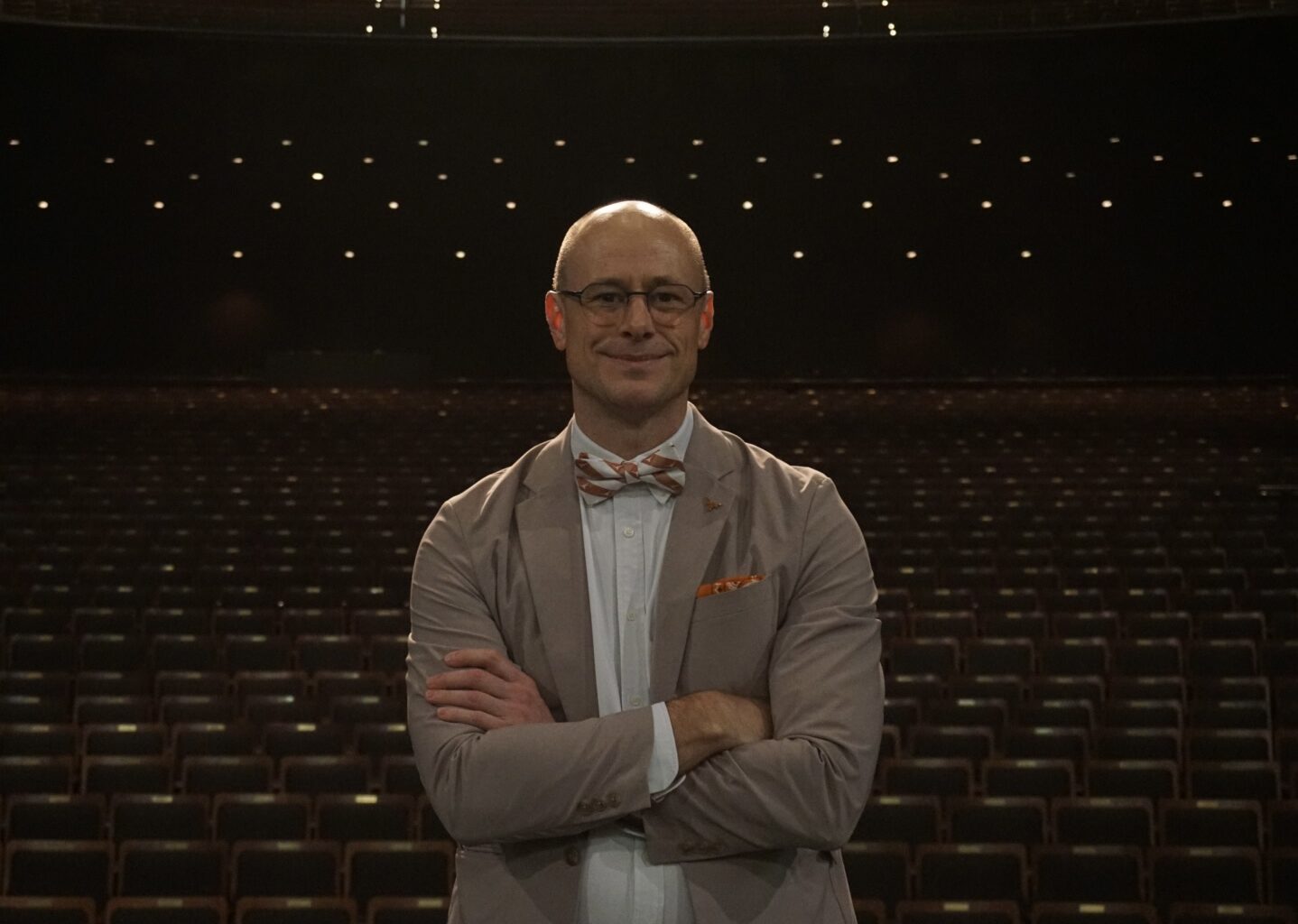
As a teenager in rural Virginia, Bob Bursey did not have much familiarity with the arts until he took a job working backstage at a local college theater.
That experience, he said, led to a lifelong journey in the arts, touring, selling tickets and typing up marketing copy. As the University’s first vice provost for the arts, Bursey said he wants to make artistic experiences more accessible to students across campus, regardless of major.
“It’s a real testament to our president and provost that they want to integrate and elevate the role of the arts on campus by creating this new position to think about how the University’s centers of creative excellence fit together,” Bursey said.
Bursey began serving as vice provost in August while continuing to lead Texas Performing Arts, where he has served as executive and artistic director since 2020. As vice provost, he also oversees the Blanton Museum of Art. Bursey sat down with the Texan on Oct. 8 to talk about his new role.
Bursey said his new position lets him coordinate the University’s arts institutions and connect them with academic departments. He said one of his initial priorities has been participating in discussions about the University’s new core curriculum, which highlights “Arts & Humanities” as a core pillar.
“The arts and culture is a big part of the idea for the new core as part of a focus on arts and the humanities,” Bursey said. “Being able to represent the museums and the Performing Arts Center in those discussions has been really impactful.”
Bursey also said he is exploring the intersection between the arts and other University priorities, including the new Dell Medical Center, applied sciences and artificial intelligence.
Bursey said UT’s founding mission, which includes promoting literature, the arts and the sciences, reflects the arts’ long-standing role at the University.
Arts education is central to that mission, Bursey said. During the 2025-26 season, TPA reached more than 50,000 participants through its educational programs, according to TPA statistics. Bursey said he works to build on those efforts, while ensuring students and faculty across UT know about the resources available to them.
“We work really hard to not only offer people the opportunity to experience beauty or discover something new or be inspired but also to learn about artists and artwork,” Bursey said.
Beyond their educational value, Bursey said the arts have been around since the beginning of civilization and are “essential to human society,” despite changing economic conditions seemingly prioritizing workforce training over arts education.
“I would actually argue that in an age where digital connection is everywhere, and information is abundant, the need for the kind of human connection (and) in-person experiences that happen in a gallery or a theater are going to become even more sought after,” Bursey said.
For Bursey, expanding access to the arts is also personal. He said one of his favorite experiences has been providing students with their first professional arts experiences at the Blanton Museum or at TPA.
“That was not something that was available to me as a young person growing up, so that’s been really central to my understanding of what the power of the arts is,” Bursey said. “It’s something that everybody can participate in, and it’s something that we want young people (to) have access to.”