
$2.9 millionRevenue in 2025
360,000Monthly unique users
115,000Newsletter subscribers; 35% to 46% open rates
35,000+Followers on Instagram and TikTok
At a Glance
FoundedApril 2021
LocationFort Worth, Texas
Organization TypeLocal, independent nonprofit digital news outlet
OwnershipN/A (founded with an AJP grant)
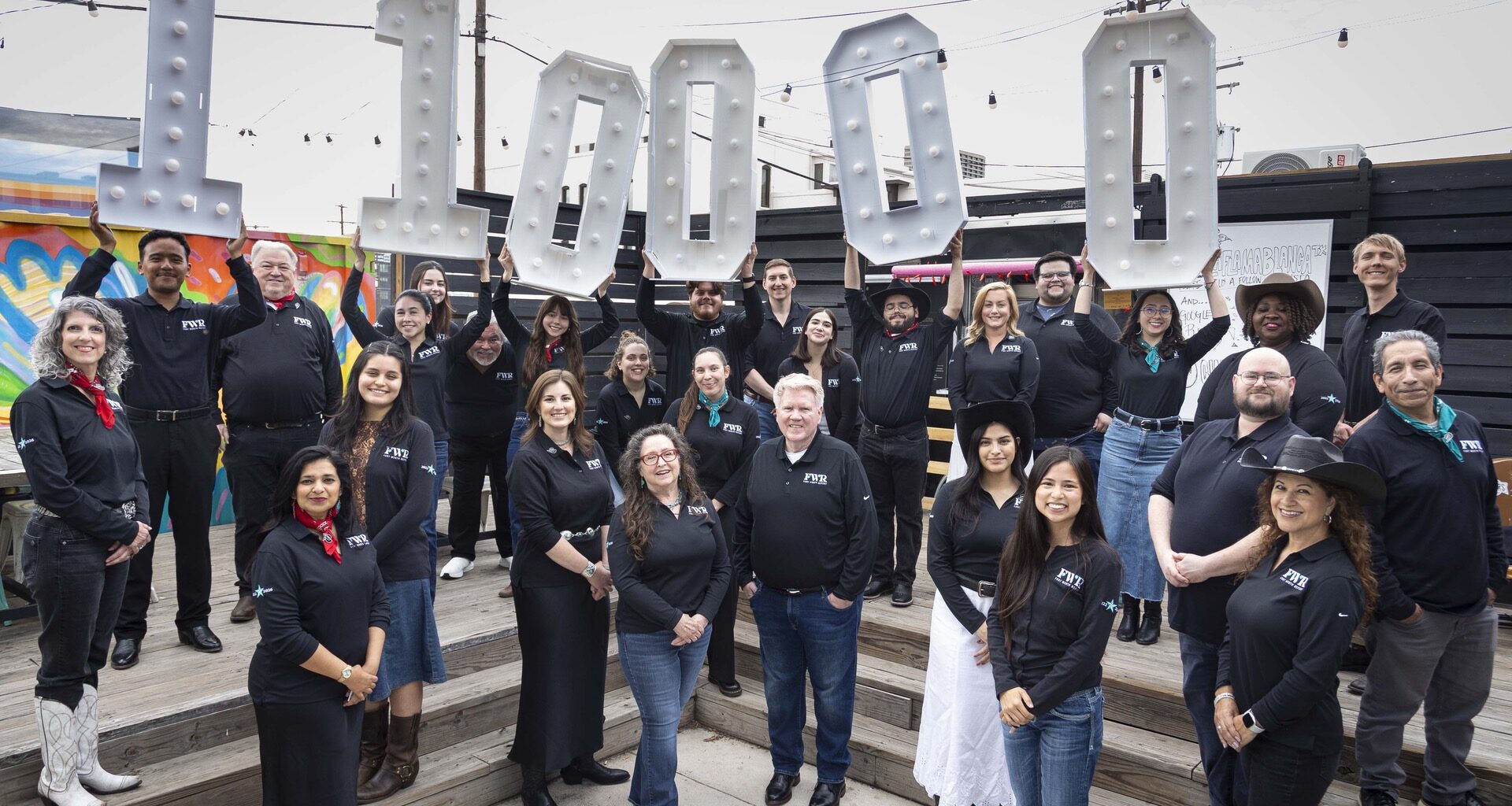
Staff Size32 total; 19 in the newsroom (plus four fellows)
Revenue MixPhilanthropic foundations (47%), advertising, sponsorships and events (24%), membership (15%), major donors (14%)
In many ways, the Dallas-Fort Worth area represents a microcosm of the declining local news coverage that the State of Local News Project has been tracking nationally.
It’s the second fastest-growing metro area in the U.S., with an estimated population of 8.5 million, according to the U.S. Census Bureau, up from 5.2 million in 2000. But even as the area’s population has boomed, its major daily newspapers, The Dallas Morning News and Fort Worth Star-Telegram, have shrunk. Both newspapers cut hundreds of jobs over that period, suffered huge print circulation declines and lost their local, independent ownership, with the Morning News selling to Hearst Corp. in 2025 and the Star-Telegram selling to McClatchy Media in 2006. In 2024, the Star-Telegram cut its printing to three days a week.
Against this background, it’s encouraging to see the Fort Worth Report’s growth. Launched in April 2021 with a $1.25 million grant from the Burnett Foundation, the digital news outlet has grown from six to 32 staffers – and from three to 17 reporters – in the last five years.
Its audience has grown to nearly 360,000 monthly unique users, up from 320,000 a year ago, and its eight newsletters collectively boast 115,000 email subscribers, with open rates ranging from 35% to 46%. Of these newsletter subscribers, 30,000 are loyal readers who check in at least twice a week. It also has 25,000 Instagram followers, up from 12,000 a year ago, and 10,000 TikTok followers after joining the platform earlier this year.
In April, Texas Managing Editors also named the Report the state’s Newsroom of the Year. It received a $1.1 million grant from the American Journalism Project in 2023 and another $1.2 million in 2025. And its sustainability doesn’t depend entirely on grants: Mike Distelhorst, general manager and chief revenue officer, expects earned revenue – advertising, sponsorships, events and licensing, in this case – to account for more than 20% of the Report’s total revenue this year, reaching $835,000, and membership to make up an additional 14%.
The newsroom is also expanding its coverage: In 2024, it launched the Arlington Report in partnership with public radio station KERA News. Over the next five years, it plans to staff up in Arlington and to launch coverage of North, West, Southwest and Northeast Tarrant County. It also has a licensing agreement with the Morning News, which republishes some of its stories in print, Distelhorst said.
Growth, of course, brings challenges. As staffing grows, so do costs, increasing the annual revenue needed to sustain it. The Fort Worth Report’s newsroom unionized in March and is currently negotiating its first contract, which Wes Turner, interim CEO and co-founder, called “challenging.”
The Report is taking a conservative approach to growth, listening to its communities and only hiring and expanding after it has secured three years of funding for each role, Distelhorst said. The Arlington Report, for instance, launched with a weekly newsletter and then expanded to twice weekly, Turner added. “We’ve received incredible support from the greater community,” he said. “It’s been a blast.”
We chatted with Turner and Distelhorst on Zoom to learn more about the Report’s expansion plans, its challenges and lessons learned. This Q&A has been edited for length and clarity.
Jennifer Kho
Tell us more about how you’ve been able to grow where others have pulled out.
Jennifer Kho
Mike Distelhorst
We started off with a CEO, four reporters and a development director, and then systematically grew where the funding was available. We currently have 17 reporters in our newsroom, and over half of those are funded through restricted grants [from] people in the community or foundations that want to fund a specific area or beat.
The success has been largely just in surveying and talking to our audience in terms of what else do they want, and what else will they support and fund? Because we’ll continue to add journalists as we continue to grow funding.
The increase in population [is another one of our opportunities]. When you move to a new area, you want to start to feel connected, and we can become that convener and connector. That’s another one of the great advantages we have [over] any other nonprofit that’s perhaps not in a growing market.
We’re really fortunate to have a growing population. Within that growing population, one of our 13 newsletters could [likely interest] you to become a free subscriber.
Mike Distelhorst
Revenue models & diversification
Jennifer Kho
How are things going with revenue?
Jennifer Kho
Mike Distelhorst
Major donors are a key part of our revenue strategy, and then, of course, foundations. The other layer that we’re continuing to work on and growing is our membership base, which, as you know, is really critical in terms of recurring revenue for sustainability.
We have what I consider to be a very doable $4 million operating budget this year, up substantially from last year. Certainly, the AJP grant is helping us in terms of funding business positions [to grow and maintain sustainability]. But all of those positions are revenue-generating positions through the AJP grant.
Mike Distelhorst
Wes Turner
The foundations have been incredibly supportive of us. The businesses, whether it’s promotion or sponsorships, have been extremely supportive of us. The community loves our events. We’re approaching [$750k in earned revenue], about a quarter of our total revenue.
The one area where we have struggled is membership. We do not do blast emails. You have to sign up and give us your email if you want the newsletters, and that’s almost 115,000. But the number of people that actually write us checks is around 3,000. That’s been our biggest struggle: trying to grow that number. We can grow the top of the funnel organically by 2,000 a month, but we are not growing the membership.
Wes Turner
Mike Distelhorst
That’s an educational process. We need to let our subscribers know that they’re used to a subscription model and we’re a donation model. That donations fund our journalism. Wes and I could have a conversation with someone for 15 minutes, explain who we are, what our model is and likely, by the end of that conversation, someone would be making a donation.
We’ve got a segment of about 30,000 people that are checking in at least twice a week with one of our newsletters, so that’s the group of people that we need to really concentrate on. And I used the word laboratory earlier, because now that we’ve got more staff through the AJP grant, we can start experimenting in terms of how we communicate messages specifically to 1,000 of those 30,000, and we should start seeing higher conversion. But it’s definitely an education process.
Mike Distelhorst
Expansion & news gaps
Jennifer Kho
Where are you looking to expand next?
Jennifer Kho
Mike Distelhorst
We’ve had some requests from people that have said, “We don’t feel like our local paper is providing local sports anymore. Is that something you guys could do?” Yes, it’s possible; we just need to get the funding. What would that look like for an all-digital platform based on community-based news that’s local? We’re certainly working now to secure that funding.
We know that our market is [one of the fastest-growing markets] in America, and now we’re the 10th largest city. But to the east of us is Arlington, Texas, with a population of about 400,000. We recognized that it was the largest news desert in the country. So we started the Arlington Report, a weekly newsletter. We’re now publishing it twice a week. We now have a full-time reporter. We’re looking at adding another reporter.
That was our proof of concept, that we can look around geographically in Tarrant County and grow these weekly newsletters in these underserved segments. We’re looking at North Tarrant County; we’re looking at West, Southwest and then Northeast. We’re looking at adding a newsletter specific to those [corridors], based on the funding that could be provided.
We did some primary research at the beginning of the year that showed us that 75% of the people that lived in the southwest quadrant of our county are ready to support local journalism, which is the green light we need so our development team can start securing those dollars, which will then fund that reporter that will start that newsletter. So that’s the model going forward.
Mike Distelhorst
Philanthropy
Jennifer Kho
It sounds like you’re doing this very intentionally, waiting until the funding is secured before launching something new. But what happens if funding is not renewed? How do you avoid getting ahead of your skis?
Jennifer Kho
Mike Distelhorst
I’m very thankful because we have an incredibly intelligent board of directors that are really conservative in nature, and so one of our ground rules is we will not hire a reporter without securing three years of guaranteed funding.
And at the check-ins with those funders, you’re getting a good barometer. From the time that we started, we’ve had 100% renewal from people that are funding specific reporters in specific beats. There has to be good alignment.
It’s really finding people that understand what we’re doing, are appreciative of the idea that we are preserving local journalism in Fort Worth and Tarrant County, and understand that journalism is under attack on a national level. They understand that newspapers – traditional legacy media – are closing down and creating news deserts.
Mike Distelhorst
Jennifer Kho
What would be your ideal mix of revenue in the future?
Jennifer Kho
Mike Distelhorst
The ideal for us is 25% of our revenue coming from foundations, 25% coming from membership, 25% coming from events and sponsorships, and then 25% from major donors.
That is the [perfect] four-legged stool, in terms of how we would like it. When we were founded five years ago, we were funded 100% from a foundation. We had one revenue source. But today, we’re getting closer [to] that mix. Our advertising and sponsorships have jumped up nicely. Membership is the one that’s in the lag position.
Mike Distelhorst
Audiences
Jennifer Kho
Tell me about the audience overall. What does it look like?
Jennifer Kho
Mike Distelhorst
It’s older; it skews 50-plus. It skews more affluent. It skews very philanthropic, in terms of wanting to support.
We are looking forward [to] getting better data so that we can get to know very specifically: Of the 3,000 members, what are the similarities, and how can we go out and find another 3,000 that look like them? On the wish list for funding is for that data specialist that can really help us dig deeper. Blue Lena will help us with some of that on the segmentation. We’ll start digging a little bit deeper in terms of how we can better find, within those zip codes, others that would likely become members.
Mike Distelhorst
Jennifer Kho
How do your audience and editorial strategies connect? How are you growing your audiences?
Jennifer Kho
Mike Distelhorst
The No. 1 thing that we’re doing a little bit differently is that our audience team is actually part of the newsroom. They’re not part of the business team; they’re integrated in the newsroom. Which makes a big difference. They’re the ones that are doing the intros and the toppers; they’re the ones understanding what stories are resonating, getting clicks [and] engagement.
That is shared every morning in the morning news meeting. So there’s a lot of education and coaching going on by the editors on a daily basis, in terms of how we performed yesterday, but then also how are we going to take that knowledge and apply that [to] what we’re doing tomorrow?
Our new audience director, who has been with us about a year, has a really good understanding of other platforms. One of the first things he did was – with the help [of our] fellows – a really good job of building our Instagram from 10,000 to 25,000 followers in a very short time. We introduced TikTok and we’re [on] Reddit.
Many publishers right now are seeing [audience] declines as a result of Google and AI. We’ve actually been able to hold and grow as a result of not being so reliant [on] only Google.
Mike Distelhorst
Coverage & editorial strategy
Jennifer Kho
What have you learned about what your readers really care about and want from the Fort Worth Report?
Jennifer Kho
Mike Distelhorst
Government reporting. Business reporting. The things that the legacy media used to provide.
I also think people are wanting to make sure that we are fair. Every time someone donates to us, we give them a question [about] reasons for giving, and probably about one out of every three will mention the idea that we’re unbiased and we’re nonpartisan.
We’re unique in the fact that every story that we publish has been edited at least three times. I really feel that it’s that trust, that relationship that we have with readers, that’s really resonated. Our reporters understand that.
Mike Distelhorst
Wes Turner
One other thing that we have added that has really stitched the community together is obits. We wrote a software program to scrape the websites of funeral homes, and we have almost 100% participation from the funeral homes that allow us to do that. So every day you get a list of new obituaries in the app, as well as a separate newsletter you can subscribe to for obituaries. So we are the most complete source in our community for those that pass.
Wes Turner
Mike Distelhorst
We’re approaching 50,000 subscribers to an obituary newsletter that is the most robust because it’s scraping the 42 local funeral homes in Tarrant County. The other interesting thing is the number of people that will reach out to us and say, “Hey, I have a relative that no longer lives here but grew up in Fort Worth. Can you publish their obit?” And they will send it, and of course we’ll verify. [This] really shows that we’re serving the community.
Mike Distelhorst
Community engagement
Jennifer Kho
How else are you engaging with your communities?
Jennifer Kho
Mike Distelhorst
We have a business advisory committee. We do listening sessions twice a year. We typically do a couple surveys asking our readers how we’re doing, what they’re looking for.
We have a series called Candid Conversations for community engagement with relevant topics in the area that can range anywhere from government to education to AI, technology…. We were really surprised that we had almost 600 respondents to a survey. We asked them what topics would they like us to look at for next year and people really went in-depth.
Every Thursday, we’ve been hosting up to 20 members in our small conference room. They would just basically do an hour of talking about the Fort Worth Report, and they offer story ideas [and] feedback.
Mike Distelhorst
Events
Major donors
Jennifer Kho
How are you responding to the rapidly changing news and information landscape to future-proof the Report?
Jennifer Kho
Mike Distelhorst
I think that nonprofit news is news to philanthropy. As I look to foundations and groups here, we have to explain what our role is and why our role has emerged as a result of the gap that was created from legacy media.
If you look at major donors, once they understand what the need is – and many of them have already realized that – then [it’s about] understanding that we rely on community funding. But I think that we’ve done very well there.
By going into those expansion zones, that opens up another group of people.
Mike Distelhorst
Wes Turner
We were fortunate that we had support from the leaders of the three largest foundations in the community and two former mayors. That certainly helped.
The average person has no idea that legacy media was an 80% advertising supported industry and subscription revenue was worth about 20% of your revenue. It’s been flipped on its head. The monopoly that existed with the daily newspaper and the incredible pricing power that we had is gone.
Advertising is a commodity and you’re lucky if you can sell enough to cover the cost of the sales [representative]. A lot of major legacy organizations have abandoned local sales completely and gone all programmatic. That’s not coming back. Somebody new’s not gonna come in and buy the Star Telegram and be the white knight.
My wife said, “Wes, you need to write a book called ‘Hot Type, Cold Type, No Type.’” Because I worked in all three phases. In 20 years, 25 years, we’ve seen the complete destruction of one of the most powerful industries in America. And one of the most profitable. It’s gone.
Wes Turner
This interview is part of the State of Local News Report’s Bright Spots section, which highlights innovative local news outlets around the United States. These outlets offer lessons for others aiming to fill news gaps, grow audiences and community impact, and achieve financial sustainability. As local news deserts continue to spread, our hope is that others will be inspired by these stories so we can all make progress together. Find the complete list of 2026 Bright Spots here.