
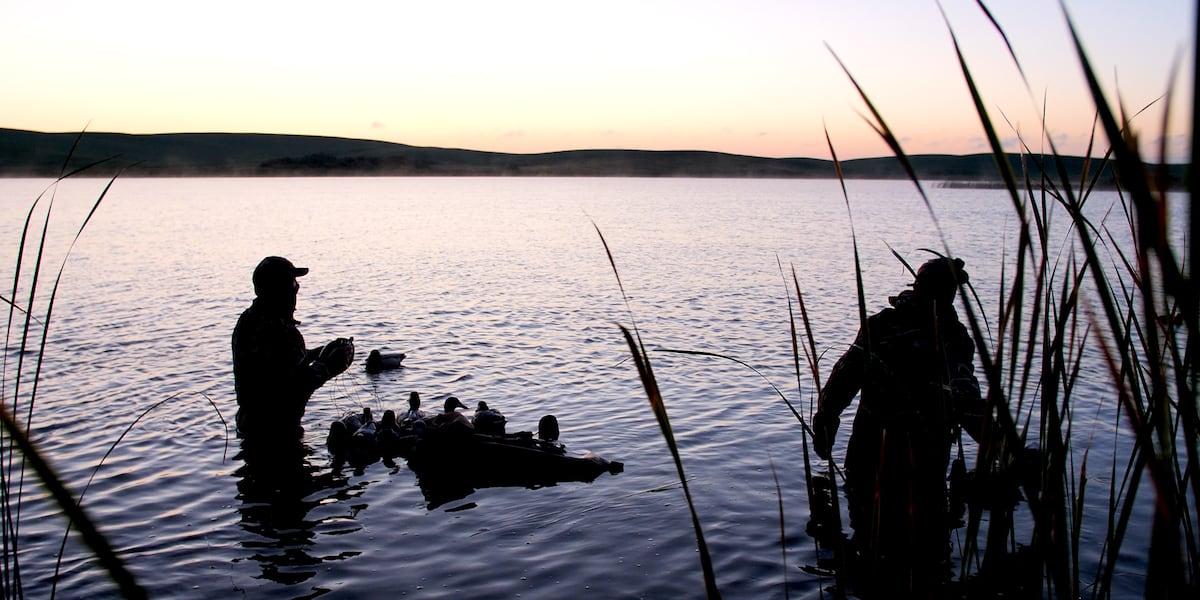
TEXAS (KAUZ) – Biologists with the Texas Parks and Wildlife Department (TPWD) report that as the 2026-2027 waterfowl hunting season approaches, lower bird numbers will require hunters to take advantage of habitats as they evolve throughout the year.
Populations, like ducks, continue to show a long-term decline across nearly all prairie-nesting species as the result of more than a decade of challenging drought conditions, according to TPWD biologists.
Texas Parks and Wildlife said that on the bright side, improved habitat in multiple breeding areas this year should result in strong juvenile production, and hunters could see more young birds despite lower overall population numbers.
“While production gains help, hunters should approach the season with measured expectations, as the possibility of a reduced migration push and long‑term population trends remain a concern.
That said, improved breeding habitat and strong juvenile production offer positive signs, especially where fall rainfall continues to enhance local wetland conditions. The overarching message is cautious optimism.”
As the emergence of El Niño and recent wet weather has rapidly improved habitat conditions in many regions, and since Texas lacks substantial agricultural waste grain, rainfall is a large determining factor in the numbers of ducks that come to Texas.
TPWD shared that ducks must meet their foraging needs in flooded natural habitats rich in seeds, invertebrates and aquatic vegetation, so more rainfall means more flooded habitat, more food resources and typically more ducks, even in years when northern states stay ice‑free due to warm winters.
TPWD biologists provided a breakdown of regional habitat conditions below:
Regional Habitat Conditions:
High PlainsLate‑September rainfall significantly recharged playa wetlands. Many dry playas most of the summer are now holding water, creating vastly improved early‑season habitat.East Texas Low reservoir levels this summer exposed large expanses of shoreline that produced dense, seed‑bearing moist‑soil vegetation. As fall rains refill reservoirs, these high‑quality food resources will be prime attractants for dabbling ducks.Gulf CoastThe Gulf Coast remains the region most in need of sustained rainfall for waterfowl. Late summer heat and dryness sharply limited freshwater availability. Much of the freshwater present was from pumping or irrigation canals. A wet cycle is critical for improving habitat conditions and hunter success across the entire coast.
The Texas Parks and Wildlife Department also stated that hunters should purchase their new 2026-27 Texas hunting license prior to hitting the field. In addition, waterfowl hunters will also need a Migratory Game Bird Endorsement, Federal Duck Stamp and HIP Certification. It’s also required by law that hunters have proof of their completion of a hunter education course.
Copyright 2026 KAUZ. All rights reserved.