
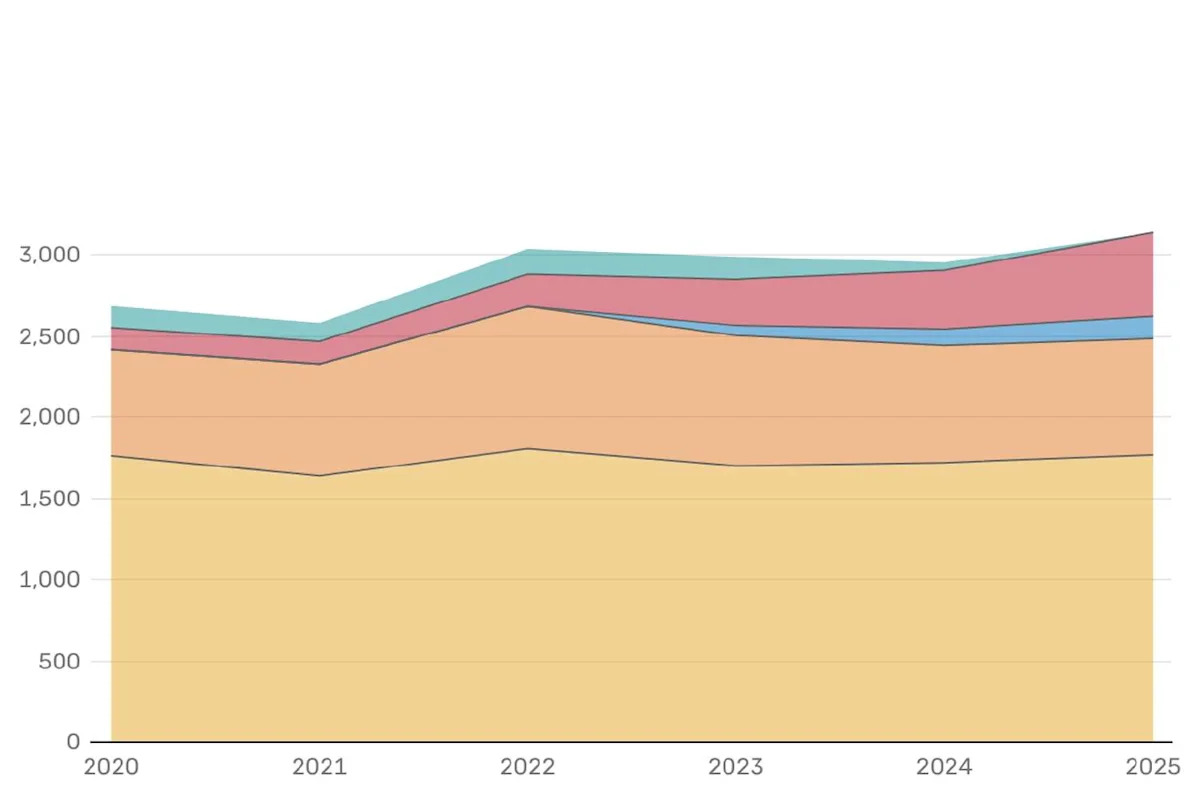
Cases of dog bites are increasing in San Antonio, with a growing share of incidents classified as severe.
Dog bites have long been recognized by officials as a public health concern. An Express-News analysis of San Antonio Animal Care Services data shows that, in the last five years, reports of the most serious bites have risen much faster than bite reports overall.
Animal Care Services recorded 2,696 bites in 2020, including 134 classified as severe. By 2025, the agency recorded 3,149 bites, 511 of which were classified as severe. That represents an increase of roughly 281% in severe recorded bites, compared with a 17% increase in recorded bites overall.

The overall severity mix also shifted. Mild bites made up about 65% of records in 2020 but 56% in 2025. Moderate bites declined from 24% to about 23%, while severe bites increased from about 5% to more than 16%.
A bite is considered severe when it results in a deep, wide or disfiguring wound; exposes fatty tissue; breaks bones; requires multiple staples, stitches or cosmetic surgery; or results in death. A bite involving a child younger than 10 also may be classified as severe when the child suffers a moderate wound to the head.
Bite classification standards and examples were formally adopted by the city in December 2024 as part of an effort to ensure standardization of its records. But the change in standards does not entirely explain the increase in the number of severe cases, which began well before the end of 2024.
Every year, stories of aggressive or dangerous dogs make the news. The February 2023 mauling death of 81-year-old Ramon Najera resulted in criminal charges against the owner of the dogs that attacked him and prompted city officials to step up enforcement.
Since then, Animal Care Services has issued criminal citations to dog owners whose unrestrained pets leave their property and bite someone. Attacking dogs are quarantined for 10 days and monitored for rabies.
Of the 1,620 severe bite records from 2020 through 2025, 77% listed quarantine or isolation as the dog’s outcome. The records also listed 106 cases in which a stray was not found, seven in which the dog could not be captured, and 86 in which the dog was killed and its remains sent for rabies testing. Animal Care Services, San Antonio’s local rabies-control authority, said it sends the animal’s head to a laboratory, where brain tissue is tested.
Jonathan Gary, director of San Antonio Animal Care Services, said Mr. Najera’s death raised awareness about the importance of reporting bites to the city. He said historically bites by family pets often go unreported because owners fear what could happen to their dogs.
The December 2024 update to bite-classification standards likely also contributed to the rise in records classified as severe, Gary added.
He said he asked staff to examine bite records more closely to identify ways to prevent bites. Additionally, Gary said the city’s Pet Care Connect program, which provides free spay and neuter services for pets, is focused on neighborhoods with high numbers of calls about free-roaming dogs.
“We’re trying to prevent bites before they happen,” Gary said.
Isliana Norwood, president of Alamo City Pit Bull Rescue, said she sees the increase in severe bites as a trickle-down result of an increase in adoptions during the COVID-19 pandemic.
“We saw a huge rise in people adding companion animals to their home during this time in a bubble, where everybody was spending more time at home,” Norwood said. She said this led to owners raising dogs that aren’t used to the presence of other people, only to have that change suddenly once the pandemic isolation ceased and things opened up again.
Norwood said preventing bites also depends on owners understanding their dogs’ limits and setting boundaries.
“It is our responsibility as a dog owner to keep our dog safe, but to also keep the public safe,” Norwood said. “The best way that people can do that is by truly knowing their dog and not putting it into situations where they don’t know the outcome without also putting boundaries or management in place.”
Subscribe
There’s more to San Antonio with the Express-News. Subscribe today for just 25¢.
This article originally published at Severe dog bites are rising faster than overall attacks in San Antonio.