
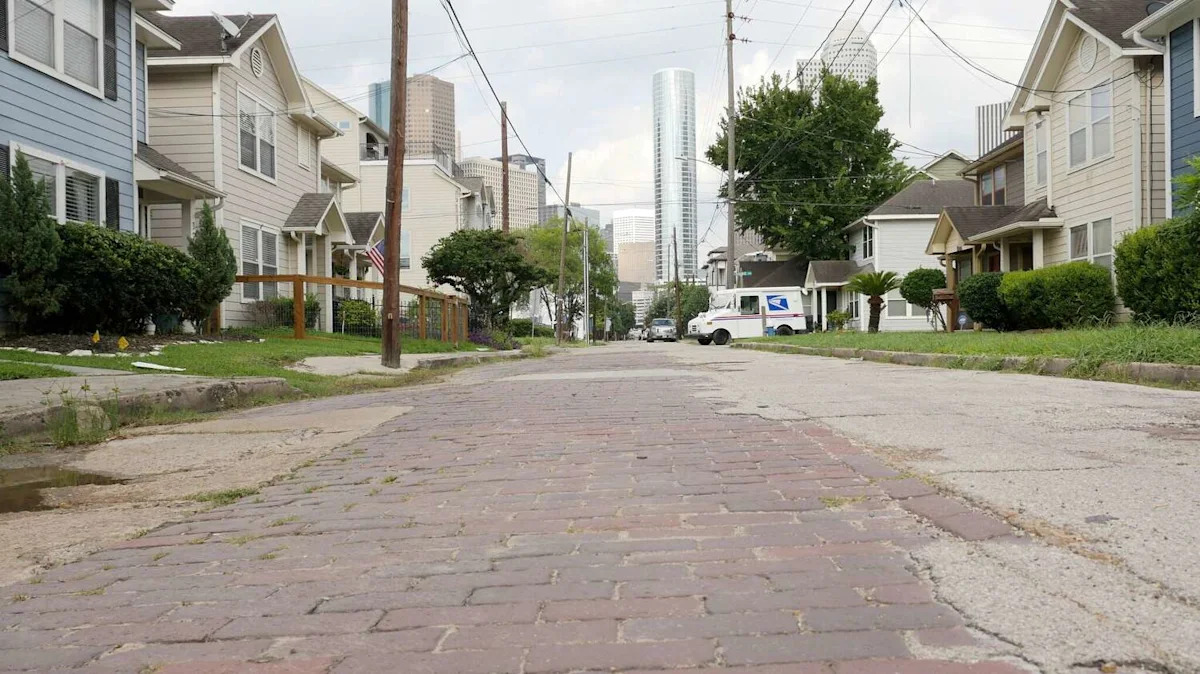
Community leaders and residents have preserved and protected historical bricks for years. Now, 20,000 of the remnants of Freedmen’s Town’s history are finally being returned.
On Monday, the Houston Freedmen’s Town Conservancy and Contemporary Arts Museum Houston hosted a brick return ceremony at the Freedmen’s Town Visitor Center in collaboration with the city and nonprofit Archaeology in the Community. The City of Houston agreed to reinstall the pieces of history over nearly 2 miles of Freedmen’s Town and turn over preservation and storage of the bricks to the community.
The bricks were laid by formerly enslaved Texans who settled in Fourth Ward after being denied access to most parts of Houston.
Starting in February 2025, volunteers conserved and cataloged about 20,000 antique bricks as part of the Rebirth in Action Initiative, which aims to preserve Freedmen’s Town as living history that Houstonians can experience.
Gentrification has caused the loss of a large percentage of the area’s historic buildings and landmarks, according to the Houston Freedmen’s Town Conservancy. The return of the historic bricks is part of a larger initiative to preserve and share Freedmen’s Town’s heritage and history. Earlier this year, the second phase of Rebirth in Action began with construction on three historic homes and a pavilion at Mount Horeb Missionary Baptist Church. The historic residences and pavilion will open in summer 2027.
“The bricks, to me, speak to the spiritual aspect, the heart, the mind, the resilience, the fortitude this community had in order to have existed as long as it existed,” Historic Antioch Baptist Church Pastor Lou McElroy said on Monday.
Freedmen Towns bricks are a historical reminder
More than 20,000 bricks were returned to Houston’s Freedmen’s Town in Fourth Ward. (Houston Chronicle/Hearst Newspap/Houston Chronicle via Getty Imag)
The bricks that existed in what we now call Fourth Ward or Midtown are a rare remnant of formerly enslaved Texans who were not allowed to settle in most parts of Houston after emancipation. When city officials refused to pave the streets in the early 1900s, the locals took care of it themselves, making the bricks with their bare hands and laying them to fix their streets. In the 1980s, most of the bricks were removed and replaced with concrete as our city’s infrastructure developed, though some remained across the neighborhood.
In 2015, residents protested and filed a lawsuit when city workers started removing the remaining bricks from a citywide drainage project. A court order prevented the City of Houston from removing the bricks after attorneys representing the Freedmen’s Town Conservancy successfully argued that the city’s drainage plan would destroy the community’s historical significance. The bricks were then removed and placed in a storage facility by the city.
In June 2026, construction crews damaged many of the bricks at the corner of Andrews and Wilson streets in the Fourth Ward. The incident, which was credited to a construction oversight, saw crews unknowingly unearth the historic bricks, damaging many of them. Community members and leaders acted swiftly to halt the construction and safely remove the bricks to be preserved and reintegrated later.
More Culture
TV | New reality series adds ‘Below Deck’ drama to Tilman Fertitta casino
Changes | Longstanding Tomball H-E-B set for massive $20 million renovation
Beavers | Buc-ee’s sets sights on Oklahoma for new location
Weird | Texas man sues Ohio Predator catchers after pumpkin assault
For the latest and best from Chron, sign up for our daily newsletter here.
This article originally published at More than 20,000 historic bricks return to Houston Freedmen’s Town.