
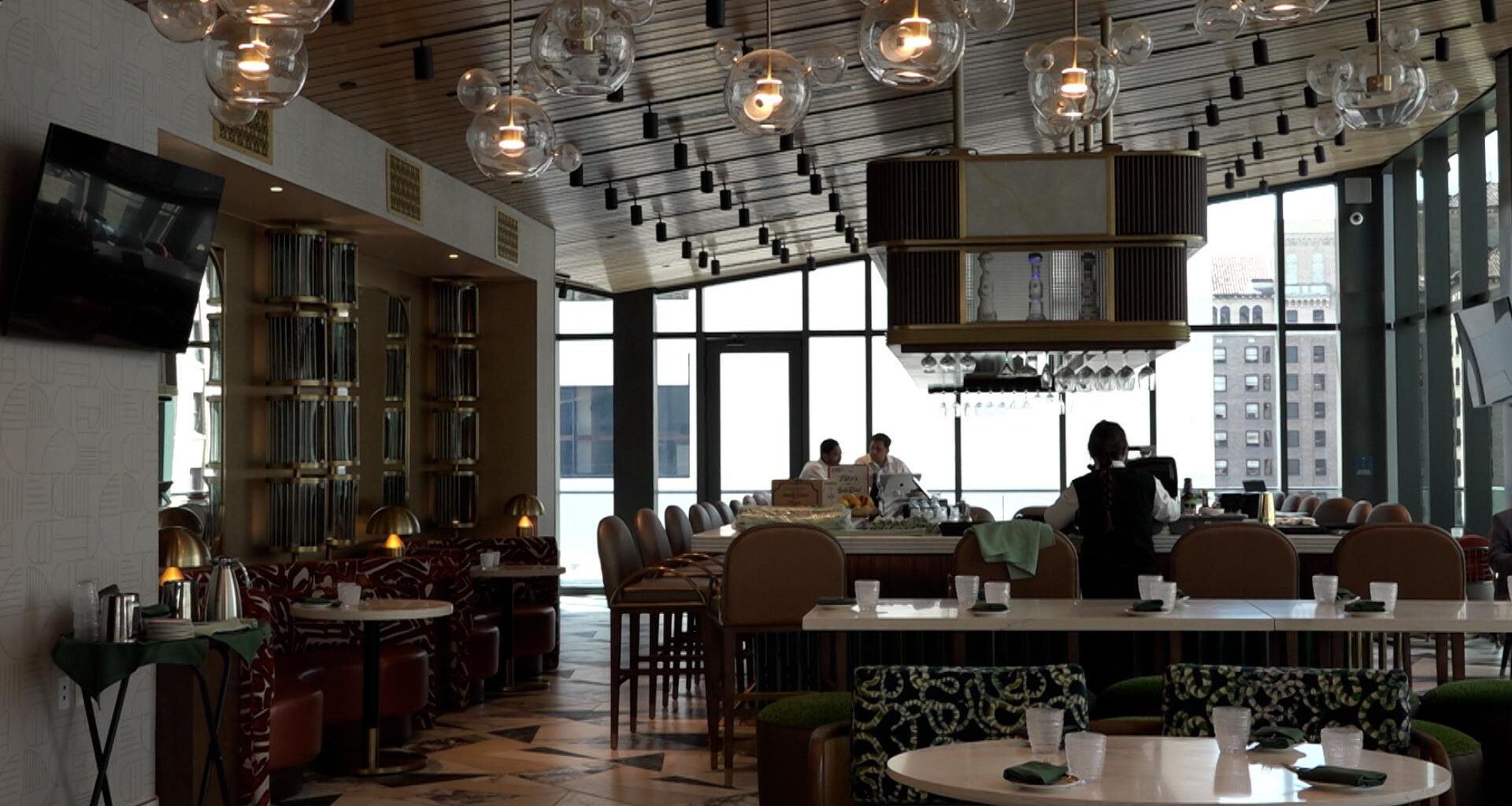
Visit San Antonio says 17 hotels have opened, started construction or undergone renovations since the pandemic as the local hotel industry checks into a new era.
SAN ANTONIO — For 100 years, the Aztec Theatre has brought movie, music and live entertainment fans under one roof at the corner of North St. Mary’s and East Commerce, forging a legacy in downtown San Antonio.
For about half that time, several floors above the theater have largely gone unused, aside from housing some offices. That ends Saturday, when the red ribbon will be snipped at a grand opening for the Aztec Hotel — a new, 76-room boutique option that looks to add to the building’s legacy.

This story continues below.
“I think there’s nothing quite like this in downtown San Antonio,” said General Manager Kerry Martin. “This is the first time since the mid-’70s that this entire building is now active.”
The advent of the Aztec, which touts, unique Latin-Asian fusion cuisine and a 360-degree rooftop bar, is just the latest evidence that San Antonio’s downtown hotel scene is checking into a new era.
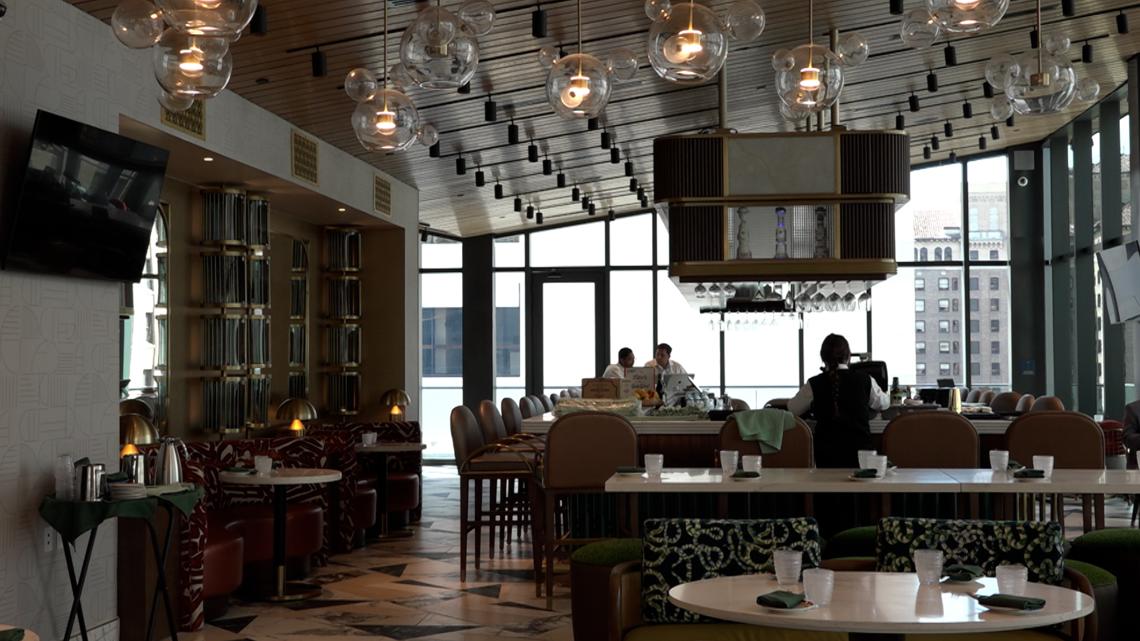
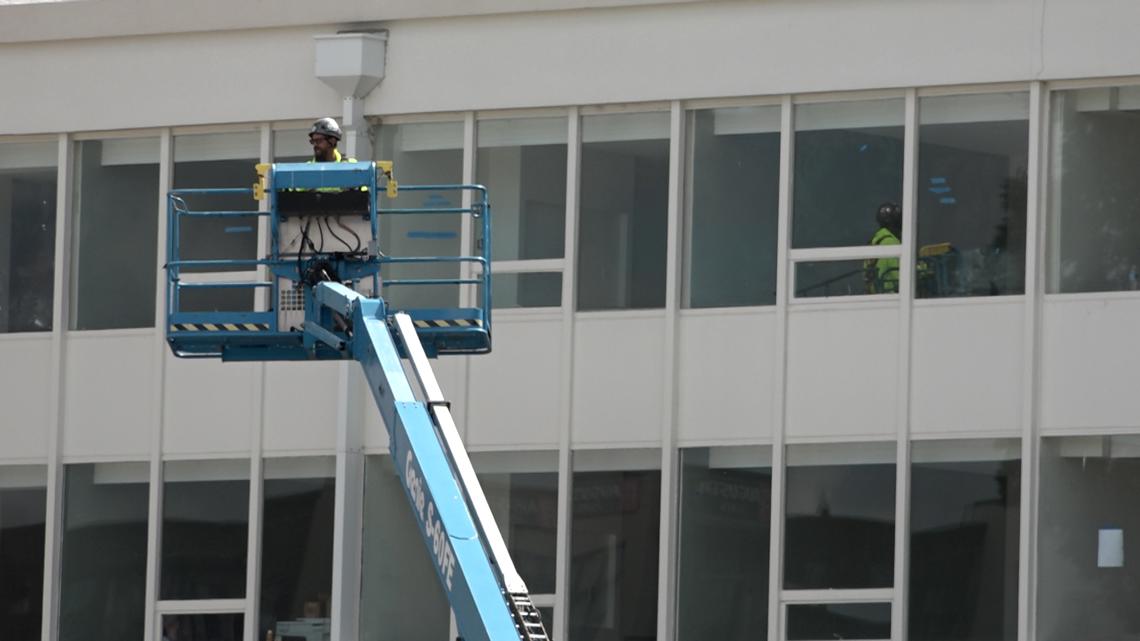
Recent years have seen the debuts of the Monarch and Kimpton, two luxury options close to where the new Spurs arena will rise. Closer to the heart of the city, the 167-year-old Menger Hotel continues to keep pace with the ongoing makeover of the Alamo next door through recent outdoor renovations. And along Lexington Avenue, El Tropicano, a 1962 landmark with tropical flair that’s been closed since 2020, is preparing to reintroduce itself.
Visit San Antonio says 17 downtown hotel properties have opened, undergone renovations or have started construction since the pandemic. That trend has increased the number of hotel rooms by 10% while the city’s tourism industry grew from 23 million COVID-era visitors to 37 million in 2024.
Martin, who began his hospitality career down the street from the Aztec Hotel, says the trend is evidence that San Antonio is only continuing to shape its identity as a tourist destination.
“Diversity is the strength of this city, in every aspect,” he said. “You’re just seeing the city gear up for the inevitable global expansion that we’re starting to see already.”
‘There’s a soul in this hotel’
Just down the street, the historic Gunter Hotel — which originally opened in 1909 — is also embracing a new chapter. A $57 million renovation completed in September 2025 updated the hotel’s lobby, guest rooms and other spaces, while incorporating new connections to its musical history.
“There’s a soul in this hotel,” said Austin VandeVate, the Gunter’s general manager. “It’s there every day.”
The hotel now sports a full working recording studio and an adjacent lounge that welcomes guests for live music every Wednesday. In the lobby is a new space with 1,500 vinyl albums where a “vinyl ambassador” can be seen sorting through the music, curating melodies piped into different spaces of the Gunter.
It all gives guests an immersive way to experience the property’s character and heritage, rooted in the days when blues musician Robert Johnson recorded several foundational tracks at the hotel in the 1930s. Eric Clapton, Keith Richards and Bob Dylan later named him as a major influence.
“It’s our responsibility to have a hotel for this generation to create their own memories,” VandeVate said.

The expansion comes as San Antonio prepares for additional development and tourism activity anchored by Project Marvel, the downtown sports and entertainment district centered on a new, $1.3 billion Spurs arena. While tourism has historically driven downtown business, VandeVate notes the industry of business itself — including groups coming to the area for conventions and gatherings — is a driving factor.
“San Antonio has always been known as a leisure travel city, but business has brought San Antonio to the next level,” he said.
The growing hotel market also has implications for the city’s finances — so long as rooms are filling up. Hotel occupancy fluctuated between 62% and 68% in eight of the 10 years from 2014 to 2023.
San Antonio collects a 7% municipal hotel occupancy tax — or HOT tax — on hotel room rentals. That revenue stream helps pay for facility operations at the Convention Center and Alamodome, with remaining funds going to arts and tourism departments.
The city is expected to see its largest chunk of hotel tax revenue in at least a decade this year, with officials estimating $111 million. That’s up from $81 million in 2026.
“San Antonio has so much to offer as a destination, from our history and culture to our culinary scene and local experiences,” Michelle Madson, president and CEO of the San Antonio Hotel & Lodging Association, told KENS 5 in a statement. “These hotel openings and renovations complement those strengths,
Beyond overnight stays, hotels are increasingly becoming attractions in their own right, according to VandeVate — even beyond their proximity to the River Walk, lounge spaces or dining options.
“Downtown San Antonio now is a full day’s excursion, well beyond what it was 10 years ago,” he said. “You can actually walk and go into hotels to look at architecture, art and listen to the music. Kinda reminds me of being in Las Vegas.”