
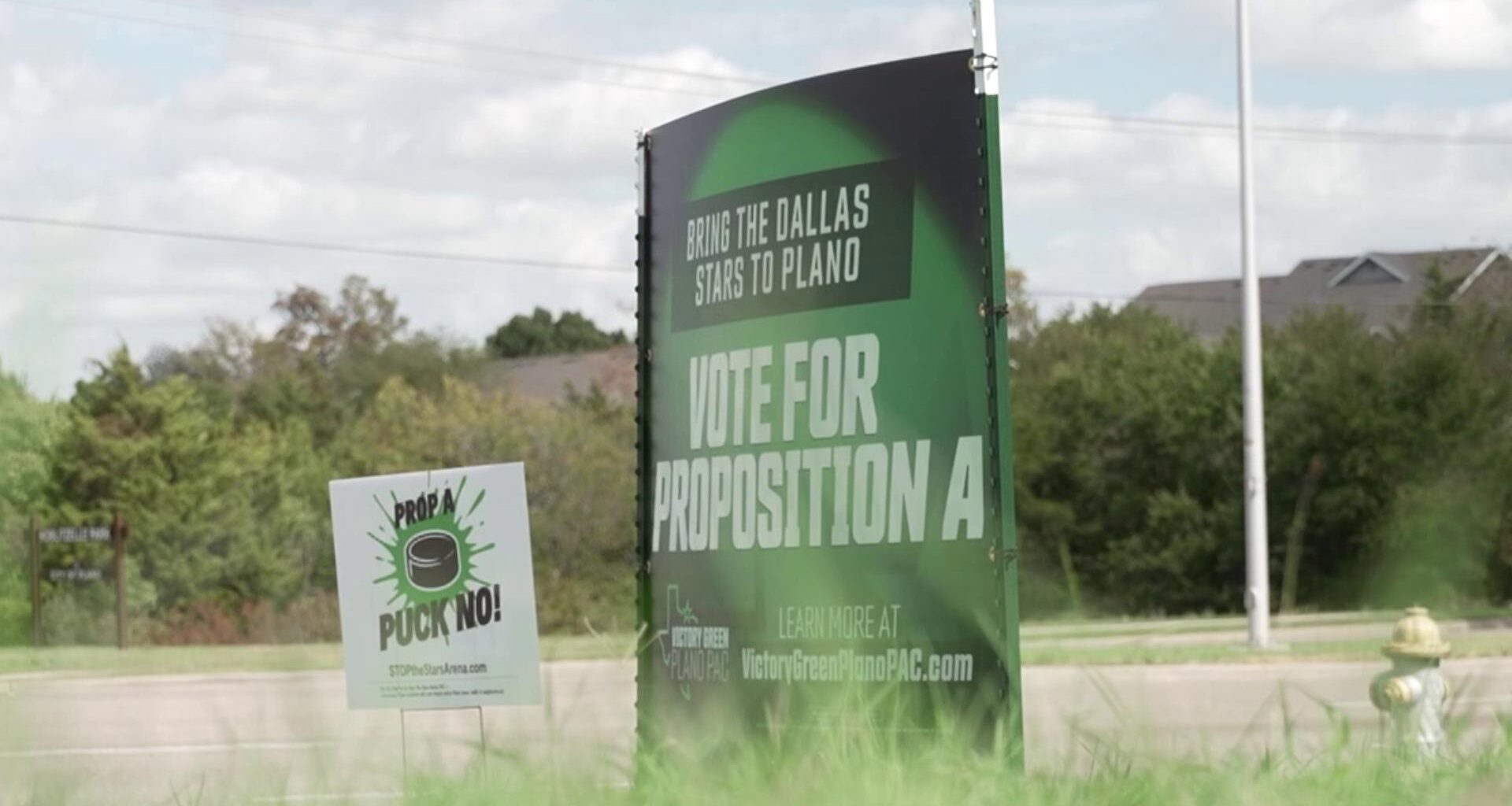
Plano released new info Monday on the proposed arena, including preliminary market studies and financing and public safety updates.
PLANO, Texas — Plano residents who attended a meeting about the proposed Dallas Stars arena redevelopment say they left with questions still unanswered as consultants continue studying the project’s potential impact on the city.
The meeting offered a preliminary look at the work underway by the redevelopment committee and its consultants, including transportation, public safety and financing.

This story continues below.
But for some residents, the biggest concern is how the arena could affect surrounding neighborhoods.
Gary Cary, who lives in the Willow Bend area, said traffic from games and other events could spill into nearby neighborhoods as visitors look for alternative routes and parking.
“The spillover effect… I know what I do when I go to games — I’ll find an easier way to go. I’ll park somewhere that’s convenient,” Cary said. “So we’ve got surrounding neighborhoods that are going to be affected, and then the continued growth will continue to exacerbate the situation there.”
According to the city the arena would cost roughly $1 billion, and they would contribute $700 million to build and own the arena. Matthews questions what taxpayers would receive in return.
Jeremy Matthews, with the Stop The Stars Arena PAC, has been distributing “Puck No” signs and says the city’s financial commitment is a key concern.
For Matthews, the central concern of his for the arena is its cost. The city would
“We’re putting up 70% of the arena cost. You would think a developer or anybody putting up that much stake would get something in return other than a big hulking arena,” said Matthews.
Proposition A would allow the city to raise taxes on certain venue-related items, including hotels, parking and ticketing.
Economist Bernard Weinstein said the proposal follows a common financing model for sports venues.
“There are very few privately financed sports arenas around the United States. 90% to 95% are private-public partnerships. What Plano is proposing is not unusual,” Weinstein said.
Opponents worry that inaccurate revenue projections could leave residents responsible for costs and that increased traffic could change the character of nearby neighborhoods.
“If you’re coming home from work and you live in that neighborhood, how are you going to get to your house?” Matthews asked.
The pro-arena Victory Green Plano PAC argues visitors, rather than residents, will pay for the project. Dallas Stars CEO Brad Alberts has described the potential move as a “once-in-a-lifetime opportunity” and said “we will be invested in our new home.”
Weinstein pointed to the redevelopment potential of the site.
“What you have right now is a 107-acre ghost mall that is ripe for redevelopment,” he said. “I think you have to look at the big picture and what this is going to mean for the entire city of Plano.”
After the meeting Plano Mayor John Muns said the proposed approach would place the cost on people attending events at the venue.
“Those that will go to the venue, go to the concerts, go to the games, will be the ones that pay for these fees,” Muns said.
Muns added that he believes the project would enhance Willow Bend and the city of Plano after nearly two years of work with the Dallas Stars.
Another meeting is scheduled for Tuesday, giving residents another opportunity to review the latest findings and ask questions about the proposed redevelopment.