
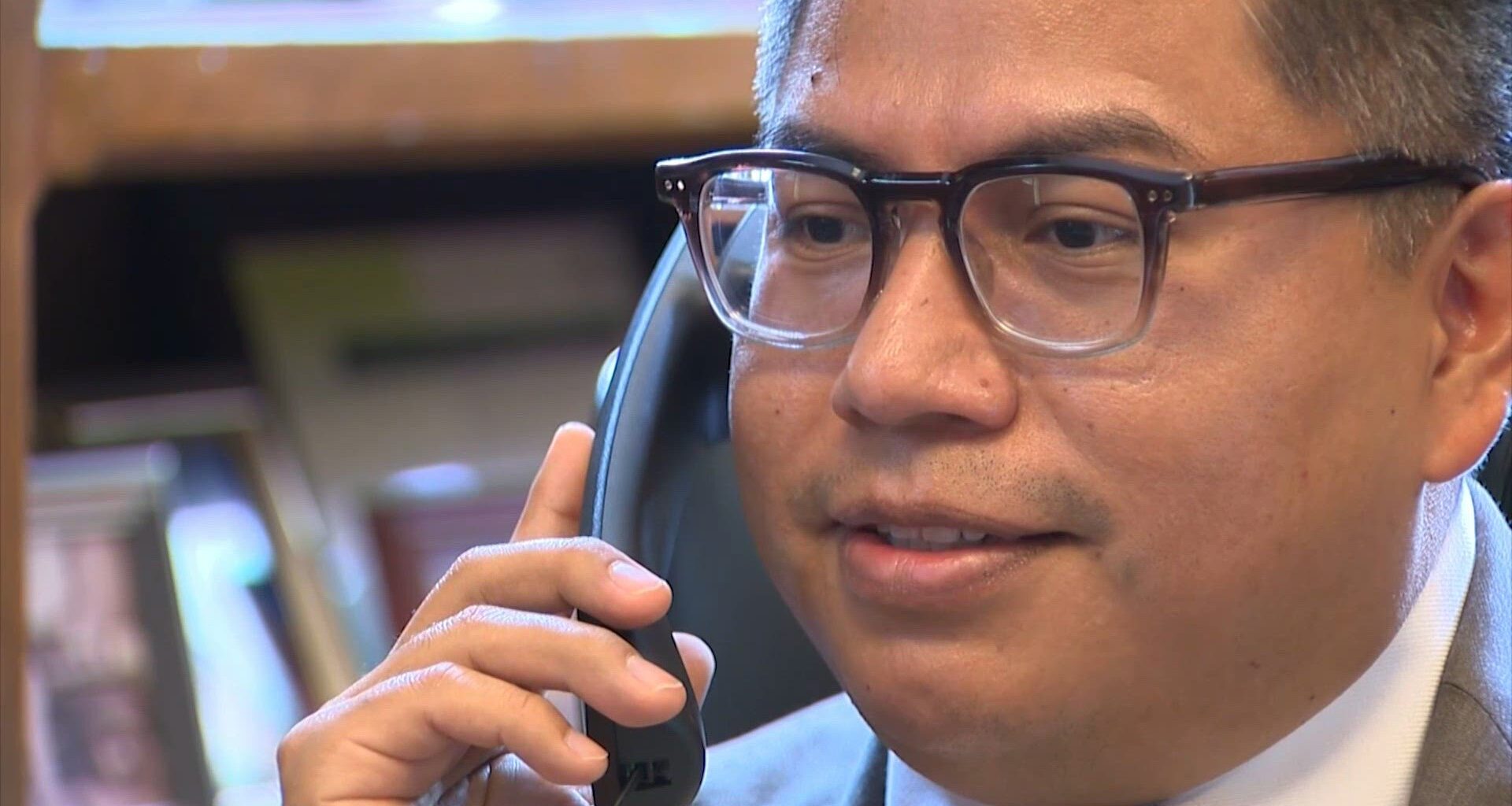
Born in Mexico and brought to the U.S. as a child, Austin resident Pedro Villalobos is Texas’s first DACA-recipient attorney.
AUSTIN, Texas — Pedro Villalobos spent years working toward a future he once did not know would be possible.
Born in Cuernavaca, Mexico, Villalobos was brought to Houston by his parents when he was 3 years old. He grew up in Texas, excelled in school and dreamed of attending college. But it wasn’t until he began applying to universities that he fully understood how his immigration status could limit his opportunities.

This story continues below.
“I didn’t realize that I was undocumented until I started applying for colleges, and they started asking for things like Social Security numbers so you can apply for financial aid, and I realized that I couldn’t,” Villalobos said.
The realization marked the beginning of a challenge that would follow him through college, law school and the process of becoming a licensed attorney.
Villalobos persevered, graduating from the University of Texas at Austin and the University of Texas School of Law in 2016. He went on to become the first recipient of Deferred Action for Childhood Arrivals, or DACA, to be licensed by the State Bar of Texas.
His career has taken him from prosecuting misdemeanor and felony cases in Travis County to private practice as a partner at Austin criminal defense firm Cofer & Connelly.
Now a lawful permanent resident, Villalobos has achieved milestones that once seemed out of reach. But his professional accomplishments have not entirely erased the uncertainty he associates with his immigration history.
“Given the environment that we’re in, I sometimes become concerned about what can happen to me if I’m either driving or walking down the street,” Villalobos said. “And I say that as someone who is an attorney who’s licensed by the state of Texas and who can speak fluent English, so if I feel that way, I can’t imagine how other people feel.”
Villalobos said his experience continues to shape how he approaches his work and the people who come to him for help.
“As someone who speaks Spanish, as someone who was formerly undocumented, and as someone who looks like the people that we see every day in the courtroom, I think that gives me a unique advantage in representing my clients,” he said.
When clients speak Spanish, Villalobos can converse with them in their language. When they worry about how a criminal case could affect their future in the U.S., he understands the stakes can extend beyond the immediate legal proceedings. That shared experience can help clients feel more comfortable discussing their circumstances, he said.
“The good thing is that when they’re talking to me, they’re talking to someone that looks like them, talks like them and understands the situation that they’re in,” Villalobos said.
For Villalobos, that understanding is part of the responsibility that comes with the opportunities he has earned. His journey has also made him conscious of those who will follow him, particularly young Latinos and DACA recipients navigating the same uncertainties he once faced.
He sees his achievements not as the end of that journey, but as a way to make the path easier for others.
“I am no longer the person that needs to carry the baton forward,” he said. “You have to be the one that carries it forward, so I’m passing it on to you. You need to carry it. You need to make sure that you move it way down the line so that way the path becomes even easier for the person that’s gonna come after you.”
His advice to young people confronting obstacles is straightforward: Don’t let those circumstances determine what you believe you can accomplish.
“It doesn’t define you. It doesn’t dictate where you’re gonna end up, and as long as you keep persevering, you can achieve your goals,” he said.