
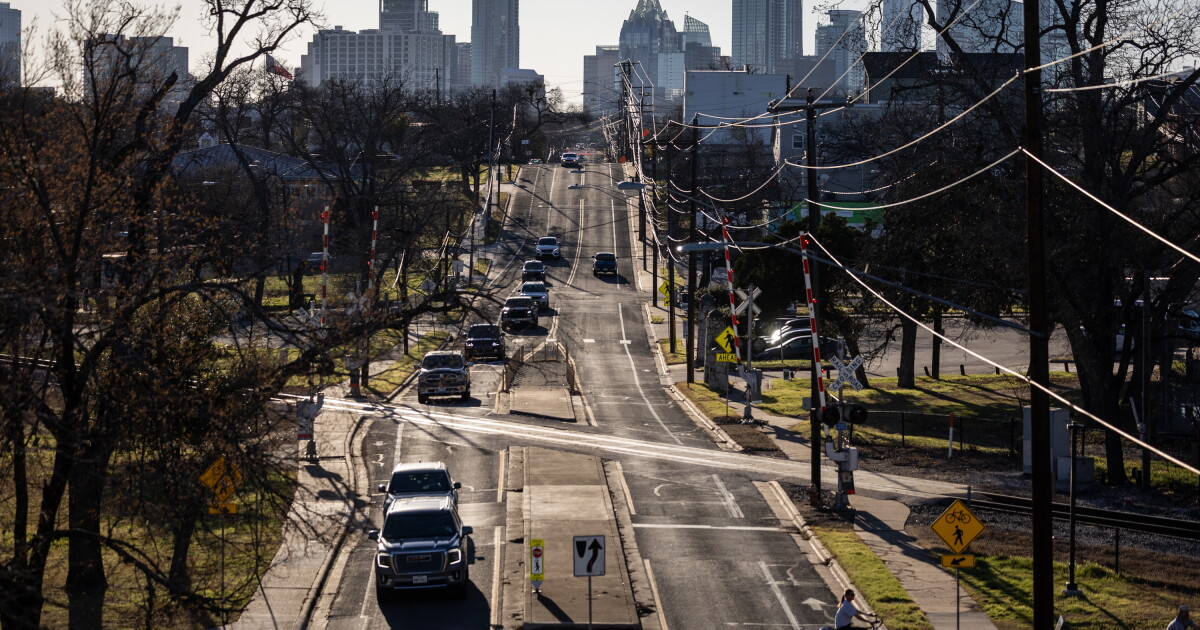
Covering neighborhoods east of I-35 between Seventh and Dean Keeton streets, Austin’s City Council District 1 cuts north and widens as it stretches all the way past Lake Walter E. Long to the city’s eastern border.
In that swath of land the district is home to historic and quickly gentrifying neighborhoods, busy commercial and entertainment blocks, and cultural and academic centers like the George Washington Carver Museum and Huston-Tillotson University.
During the era of segregation, city policy pushed African Americans into the parts of East Austin now covered by District 1.
Those zoning policies, codified under the city’s 1928 master plan, reinforced disenfranchisement, as city government withheld services while concentrating polluting and nuisance industries on the east side.
Still, vibrant communities grew.
These days, more Black Austinites still live in District 1 than any other council district, though it has seen demographic shifts in the last 20 years, as rising property values and cost of living pushed out longtime residents.
While drawn as an African American “opportunity district” to help give Black Austinites a voting bloc on City Council, District 1 is not a majority Black district. Its population is currently about 40% Hispanic and Latino, 30% white, 20% Black and 7% Asian.
Big issues confronting District 1 are similar to those in other parts of gentrifying East Austin.
They include the displacement of longtime residents as costlier development raises taxes and property values. Council candidates also named Austin’s growing cost of living, public safety, public transportation and environmental concerns as key issues.
Since 2019, District 1 has been represented at City Council by Natasha Harper-Madison. Now that she has run up against term limits, six new candidates hope to represent the district.
KUT asked each candidate the same six questions. You can find their answers below. If you’re unsure which Austin City Council district you’re in, you can find out on the city’s website.
Note: Candidates often provided longer answers than what is presented here. Each response has been edited for brevity and clarity.
If you’d like to learn more about where the District 1 candidates stand, check out the District 1 candidate forum hosted by KUT, KLRU and the Austin Current.
Alexandria Anderson
Before opening her own personal training business in 2018, Anderson was a professional track athlete who ran for Nike for eight years.

For the last nine years has also served as either vice-chair or chair of the Martin Luther King Neighborhood Association and as co-chair of the East MLK Contact Team.
Her campaign site also points to her service on the city’s Commission for Women, African American Resource Advisory Commission, and Joint Inclusion Commission.
She tells KUT that one issue she would like to highlight with her campaign is the need for infrastructure improvements in District 1.
“I know it’s not the most sexy,” she said. “But it is foundational. It’s our sidewalks, it’s our drainage, it is our sewage. It’s how, as we’re building, what’s gonna happen as we increase our impervious cover.”
What distinguishes you from other candidates?
What distinguishes me from the other candidates is my years of community leadership and city leadership. It’s being able to connect and have relationships with nonprofits, small business owners, neighborhood associations.
I tell people, as a neighborhood association chair, you deal with all issues. You deal with affordable housing. You deal with public safety. You deal with infrastructure. You deal with the environment. You have to touch on so many different issues. And that’s a strength of mine.
What is one major thing the city could do to improve affordability?
I think one thing that the city could do is look and review the current neighborhood plans, what they initially were set for; have those neighborhood plans met those needs?
Because in District 1 […] we have surpassed our goal of affordable units being built. Yet, we’ve seen the largest mass exit, gentrification of Black and brown people and low/middle-income people between I-35 and Airport Boulevard.
So we can be rebuilding, but it’s not meeting the mark on the people that actually need it.
Do you support the Project Connect transit expansion?
Yes, because it’s a step. No, because my neighbors in the community and the individuals that live out […] farther east, if they want to get to the airport, they can just go out 183. [Transit expansion] is not even touching the area.
We have to plan for the future, but […] is it gonna help us in the long run? Is it more expensive than what we initially thought it was gonna be? Are we getting a fourth of the entire project?
But I think we have to continue to build on our transit.
Do you support Proposition I?
I have told people I support Prop I with guardrails. And I know the City Council in February had rolled out like what their plan was looking for the audit and three years versus the five years. […]
But people have a sense of distrust about how their money is spending. And now more than ever, when I block walk, people want to know where their money is going.
Do you support smaller minimum lot sizes to increase housing supply?
Historically, East Austin already has smaller lot sizes. So, in my neighborhood there were duplexes next to me already.
I look to support what the community needs. If a case or a rezoning comes to the area, it comes across the desk, [I would be] listening to the neighbors.
But Austin needs to, as a city, share and have a vision of having affordability in every district. And East Austin is carrying that right now.
Should the city be doing more to stop the Immigration and Customs Enforcement surge?
Definitely we could be more vocal. I have friends who are immigrant lawyers and we talk about this, and I’m constantly asking them questions: What does this look like from a legal standpoint? What’s happening at the federal level? What are you hearing?
And it makes a difference, too, from a state level. People, get out and vote! You need to get out and vote.
Steven Brown
First-time candidate Steven Brown is a native East Austinite. He has worked since 2007 in healthcare, most recently as a clinical consultant with the company ClearPoint Neuro, according to his LinkedIn profile.
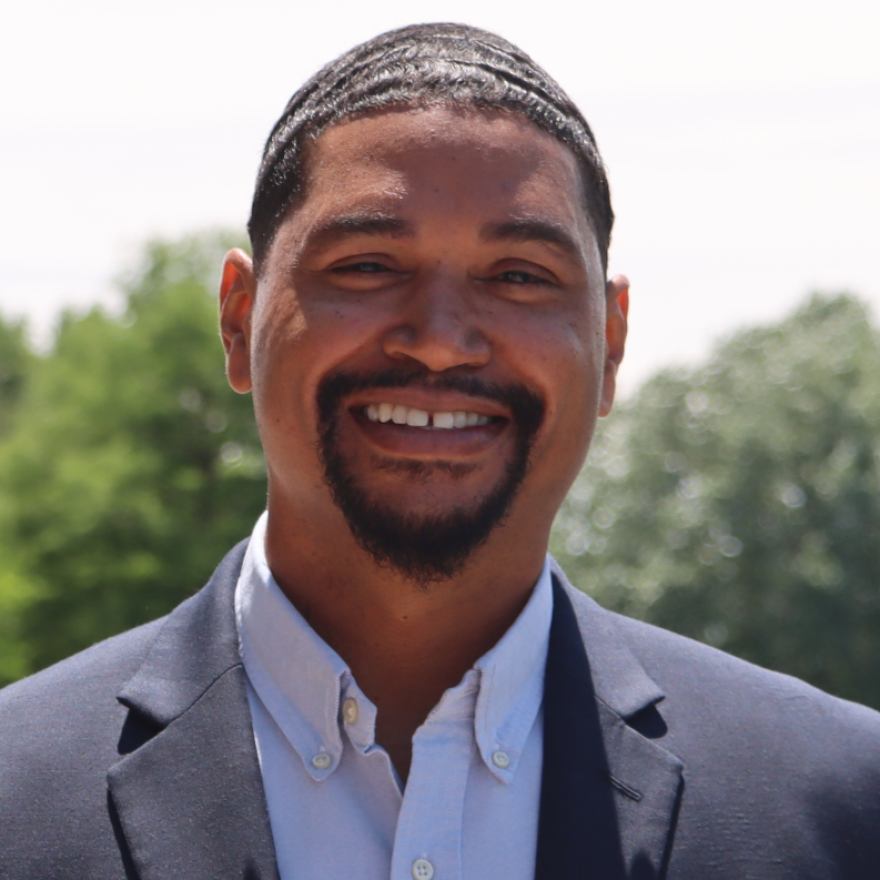
Brown’s campaign website points to city service helping to establish the Givens Park Advisory Board, the Austin Public Health neighborhood COVID-19 testing site at the park, and his advocacy for reopening the Givens Recreation Center and its community kitchen.
He has campaigned as a watchdog on public spending, and points to his opposition to the Prop Q bond proposal of 2025 and the HOME development code amendments.
He says he is motivated to run “to make sure that East Austin is moving into the future with respect and dignity and the resources necessary to thrive.”
What distinguishes you from other candidates?
I’m a fourth-generation East Austinite. I’m born and raised here. I grew up on Ninth Street, lived all over East Austin. I graduated from all AISD schools and graduated from Austin Community College, Huston-Tillotson. I’ve got my master’s degree from Texas State. I think I’m the only candidate that has raised kids in East Austin.
So, you know, I have a lot of continuity of what’s going on from lived experience and also from an academic perspective.
What is one major thing the city could do to improve affordability?
I say it starts with representation. Representation is critical because that’s how we have real conversations to address affordability. That’s how we have real policies where community members are at the table helping to shape resolutions that will impact their quality of life.
So when you talk about taxation, when you’re talking about making decisions, when it comes to zoning that matches compatibility, when you talk about actually implementing the policy, it does really start with the representative.
Do you support the Project Connect transit expansion?
I actually think the voters should have another say at what’s going on with Project Connect.
[…] We’re getting a shadow of what the voters approved. But the taxes haven’t gone down from it. So I think there’s a lot of concern.
I think if everyone’s going to pay for something, they should all reap the benefit of it. District 1 doesn’t reap any significant benefits of it.
Do you support Proposition I?
I do support it. I think it should be a part of the charter. In most businesses, standard practices is to have an outside audit. And so I support that.
Do you support smaller minimum lot sizes to increase housing supply?
No, I don’t. I don’t think that that’s the whole answer. For some folks that might be, but it can’t be development driven.
I’ll give you an example […] I was block walking and I noticed one house that I remembered being there. The house sold for $500,000.
There’s three townhomes on it now. The first one sold for 620 [thousand]. The second one’s on the market for 725 [thousand]. And the third one’s on the market for 920 [thousand]. So that’s just an example of how it didn’t help anyone in the community. And those that are hanging on now have to deal with a higher appraisal because those houses sold for much higher.
Should the city be doing more to stop the Immigration and Customs Enforcement surge?
I don’t like what’s going on with ICE. And I’ve talked to a lot of APD officers and commanders who aren’t really supportive of ICE tactics.
It’s a federal agency, and so it’s hard to know exactly what can be done to stop them. But my position is very clear. I want APD officers focused on community policing and solving crimes in our community and keeping folks safe, not being immigration enforcement or even working with them.
Now, they have to work with [ICE] where they’re required to by state and federal law, but in regards to me personally, I don’t want them here.
Amber Goodwin
Amber Goodwin was a Travis County assistant district attorney from 2022 to 2026.

Before that she worked for nonprofits, political campaigns and in government. Those jobs included time as a field organizer for Obama for America and a political director for the Wendy Davis for Governor campaign.
Goodwin is also a co-founder of the Community Violence Legal Network, and she worked for Giffords, an organization founded by former U.S. Rep. Gabby Giffords to promote gun laws and prevent gun violence. She has chaired the city’s Task Force on Gun Violence.
She said her work in gun violence prevention helped motivate her to run.
Goodwin says she is inspired by cities “where you’ve seen these dramatic reductions in violence, but you’ve also seen less arrests. You’ve seen less people in prison. You see more people feeling safer in their homes. You see more homes being built. You see more people thriving. You see money in people’s pockets. And that’s what I think District 1 needs and deserves as well.”
What distinguishes you from other candidates?
I am looking at this race from an all-of-government approach, to make sure that when we’re tackling a lot of the different issues, including public safety, the unhoused population, every […] department at the city government should be tackling it.
But also I have the experience on all levels of government, including having worked at the county, the state and the federal level.
What is one major thing the city could do to improve affordability?
Many people who are in East Austin don’t have the same financial incentives to stay in their home or be able purchase new homes if they want to.
People being able to have homestead exemptions, have community land trust, have community input in what the actual development has been in District 1 is extremely important. That will help with the affordability crisis.
Do you support the Project Connect transit expansion?
Yes.
Do you support Proposition I?
No.
Do you support smaller minimum lot sizes for residential buildings?
It depends on where in the district and what the community assessment is.
Should the city be doing more to stop the Immigration and Customs Enforcement surge?
I said this in the very beginning that ICE should be abolished but also prosecuted. I’m currently pro bono representing some folks that are having [immigration] removal issues.
We should also have resources, free legal resources, for community members who are at risk of being impacted by ICE.
If the intent [of city government] is to placate the state government, then we have to push back on that. We cannot comply in advance because of being scared of what could happen when it’s not even on the table yet.
So I think for the City Council, it needs to be able to be a firewall against not only what’s happening at the federal government, but what’s happened at the state government.
Michael Nahas
Michael Nahas is a computer scientist and economist. After leaving Austin for work, he made a lot of money as a software programer for a financial company. That has allowed him to return home to devote his time to public policy, according to his website.
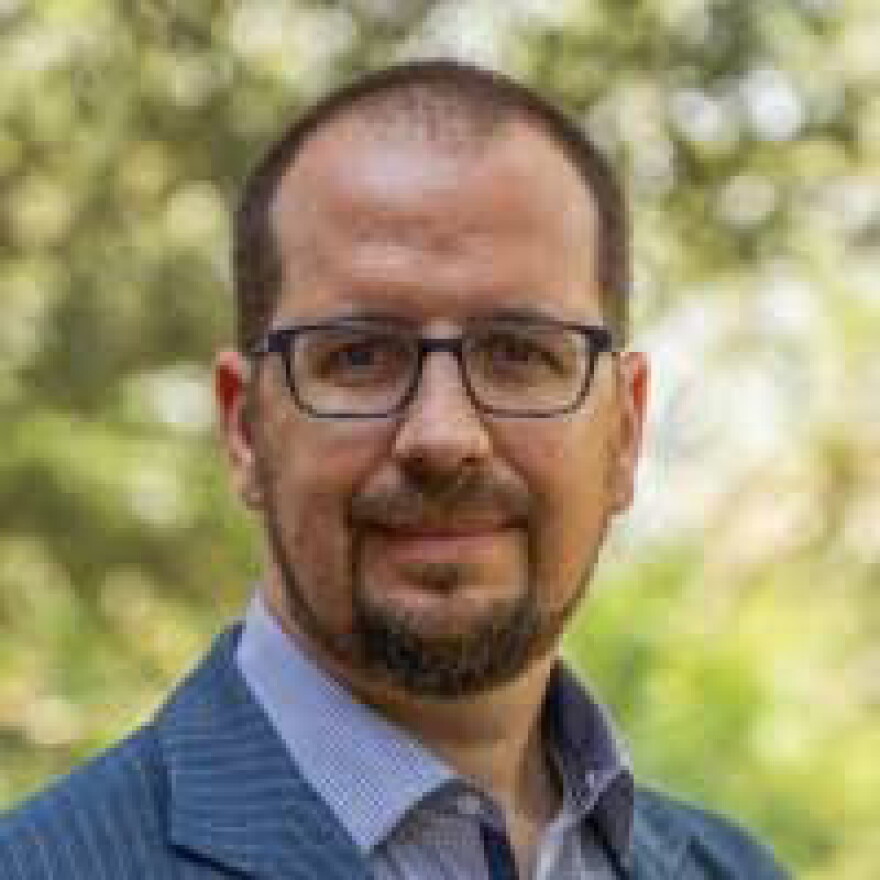
Nahas has served as chair of Austin’s Economic Prosperity Commission and on the board of the urbanist group AURA.
One thing that motivated him to run for City Council is what he sees as the city’s mismanagement of its pension fund.
Nahas says the current pension is underfunded by about $3.1 billion. The city’s solution has been to pay off interest on pensions from the city’s general fund.
“The current borrowing and the current interest is $219 million a year, which is about $450, $500 per family per year in Austin,” he said. “And the city’s plan is to borrow more.”
What distinguishes you from other candidates?
I think my background in finance and economics and working on affordability is what distinguishes me.
The City Council needs an expert in finance and economics. You know, you want an expert in law, you want a expert in the employees and the work being done. You want an expert on the finance side of things. And we do not have that.
What is one major thing the city could do to improve affordability?
The biggest thing in everybody’s budget is housing. Every economist will tell you people spend about a third of their income on housing. To lower the rent, just allow more housing and more locations. It’s a supply and demand issue. So this means allowing taller buildings, allowing smaller lot sizes.
Do you support the Project Connect transit expansion?
I did at the time. But the board of ATP [Austin Transit Partnership] did not lock in the low interest rate.
I know that because when interest rates shot up, the plans changed dramatically.
Now the cost per passenger mile, I believe, is too high. So if it was proposed brand-new today, I would reject it.
Do you support Prop I?
I do support it. But there is the clause in there that says in order to do a tax rate election, to do a tax increase, an efficiency audit has to be done in the last year.
I’m worried that if inflation pops up like it did under COVID, [and] we want to raise taxes with inflation. […] That’ll mean delaying a year to fix the city’s income to match inflation.
Do you support smaller minimum lot sizes for residential building?
I don’t understand why that [the minimum lot size] law even exists. It’s been used for racism in many places. I have not heard a reason for a minimum lot size that makes sense to me.
Should the city be doing more to stop the Immigration and Customs Enforcement surge?
The question I have is what could we do? […] State law prevents us from interfering with officers who want to work with ICE.
We can do a legal defense fund — that’s one thing I’m a big fan of is legal defense funds — and make that available to people, so that we can make sure that the federal government is following the law.
Misael Ramos
This is Misael Ramos’ second run for District 1’s City Council seat. He challenged then-incumbent Natasha Harper-Madison in 2022, receiving about 25% of the vote in a four-person race.

He works as a business analyst, most recently for the Texas General Land Office and Indeed.com.
In East Austin he has served as board president of the Blackland Community Development Corporation working on afforable housing, and on the board of Rethink35, a group opposed to the I-35 expansion.
Recently, the Texas Department of Public Safety charged Ramos with “participating in a riot,” a Class B misdemeanor, after he attended a protest against the shooting of a Venezuelan man by a U.S. Immigration and Customs Enforcement officer in Austin.
Ramos says his campaign takes inspiration from the presidential campaigns of Bernie Sanders and New York City Mayor Zohran Mamdani.
“We have taken a pledge to not take corporate or real estate interests, so that’s why you won’t find developer money on our books, corporate interest on our books, or any other special interest, either,” he said. “We are fundamentally people-powered campaign.”
What distinguishes you from other candidates?
I think one of the big things that distinguishes me besides being the nationally DSA [Democratic Socialists of America] endorsed candidate is the fact that we are building a real grassroots movement.
You’re seeing some of the highest contributions with lower-dollar donations just all across Austin, and it’s really centering the working people in the things that we’re talking about.
What is one major thing the city could do to improve affordability?
There are two things … Be intentional about building deeply affordable housing, and make it cheaper for affordable housing developers to develop in our city.
Being on the board for the Blackland Community Development Corporation for seven years and then leading that board for a couple of years, we were able to develop affordable housing.
We were also able to develop other programs and have more multiple sources of resources that our tenants could plug into. So we’re talking about food access, we’re talking about workforce development.
Do you support the Project Connect transit expansion?
Yeah, I support Project Connect. The thing that I’m struggling with is the fact that, in District 1, we’re pretty much cut out of a lot of the revamp. Especially the new transit lines or rail lines that are coming through.
So, I think that we need to be a part of the planning around getting more rapid transit here in the district.
Do you support smaller minimum lot sizes to increase housing supply?
Not across the board. But I think people can get creative.
We had one of the first MUDs [municipal utility district] in Texas history at Blackland Community Development Corporation.
It’s called Robert Shaw Village. And Robert Shaw Village is a bunch of small cottages that we put our elderly in housing there. And you know, it’s pretty solid. But of course it comes with the fact that we were intentional about building affordable housing, right? Like we got deeply affordable rates.
We’ve done a lot of these things before. We’ve built on our own land before as the city of Austin. We’ve had affordable housing, rental and home ownership programs as the city of Austin, We partnered with nonprofits to develop housing across various parts of Austin. We just got away from it.
Should the city be doing more to stop the Immigration and Customs Enforcement surge?
Yeah, we should be doing more. I truly believe that as public officials, whether you’re a candidate or you’re a sitting official public official, we need to be stepping up more. We need to be out there saying that we aren’t okay with this.
So, first and foremost […] we needed to report more on APD and ICE collaboration. […] We also need to increase pro bono support for folks that are impacted, are detained, and facing deportation.
And we can actually challenge the state. They’re out of sync with a lot of our constitutional rights, and we need to step up and challenge them.
We can also look at things like the Safe to Call Resolution that was recently passed. This is basically a protection for immigrant families that anonymize folks who call in so that they can get resources.
Portia Riggins
Portia Riggins is a third-generation Austinite born and raised in East Austin who is pursuing associate degrees in general studies and business administration.
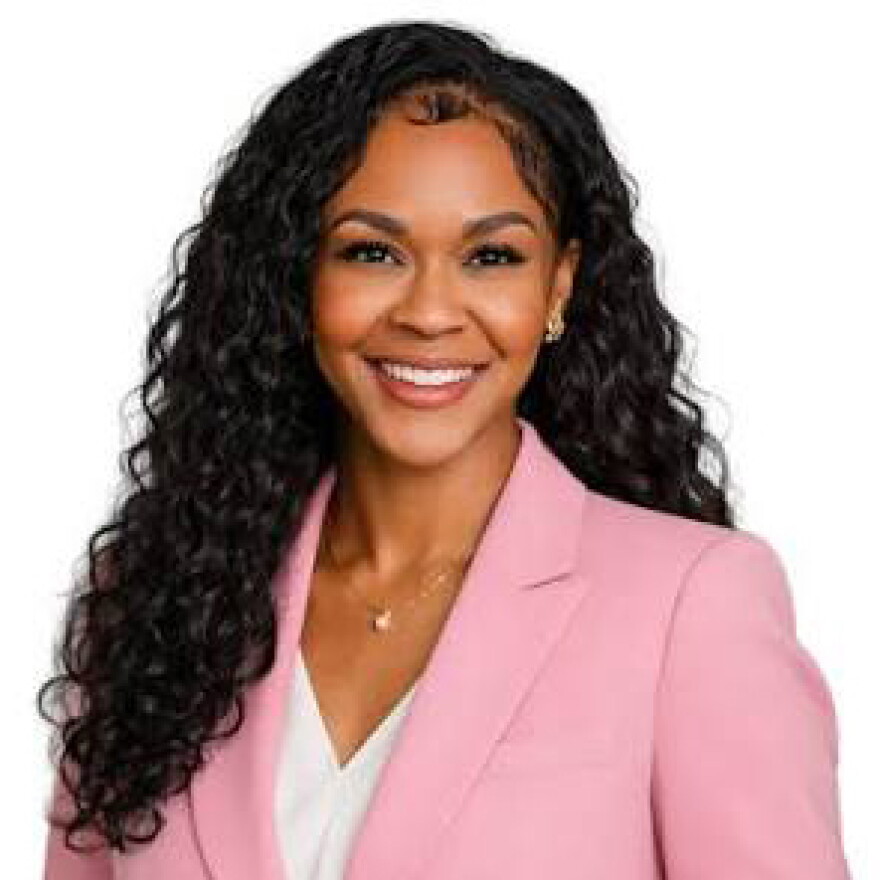
She has worked in accounting for Texas REALTORS, at the Travis Central Appraisal District and at Austin 311.
She says that competing in the Miss Texas USA pageant as Miss Capital of Texas 2018 helped prepare her for her first foray into politics.
“I see my friends be displaced. And I’ve seen myself have to fight to make sure that I don’t get displaced or my family doesn’t get displaced,” she said. “Now I’m ready to do it for the city at large, because that representation matters.”
What distinguishes you from other candidates?
I’m a candidate who was born and raised in East Austin, and I’ve never left the district. So I am very aware of the lay of the land […] I am a product of Austin. I literally am Austin. I don’t consider myself a politician. I consider myself a neighbor.
What is one major thing city could do to improve affordability?
Starting at the top where we talk about the city’s budget and making sure that it’s being allocated properly.
That includes affordability with housing, and that includes many departments, from animal service, mental health services, social services at large. So being able to understand where they’re being allocated properly too to make sure it is being effective.
Do you support the Project Connect transit expansion?
I just recently had gotten a news interview and that question came up and I was a little taken aback […] One of the interviewers gave me a lot of data that I wasn’t aware of as just as someone from the public. And so that just gives me honestly, like a little gray area of concern just slightly.
Are we making real measurable results in real time? Are we doing effectiveness? […] So it did start to raise questions for me personally, but I can’t say that I necessarily wouldn’t go for it.
Do you support Proposition I?
For me, I am for Prop I. If I’m speaking about the city budget, I’m talking about measurable results, that is a proper way to be able to see that effectiveness.
Do you support smaller minimum lot sizes as a way to increase housing supply?
I wouldn’t be opposed to that. But I’m someone who really likes to look at the data and seeing what is the most effective for our land development, as well as for the neighbors and, you know, their everyday quality of life.
So that would be a huge importance for me.
Should the city be doing more to stop the Immigration and Customs Enforcement surge?
I really want it to be specific, right? Because then we’re just talking in a broad term. […] Who are you really distinguishing that needs to stop them? And if we want to really stop them, who are we specifically saying is needing to stop them?
So you’re saying that you want the city involved. And now that you’re saying that you want this city involved, what exactly do you want this to do? Because this will be a delicate situation.
And then I feel that yes, the stop can potentially happen as well as they’re still gonna do their job as far as immigration. I just think that there should not be prejudice.