
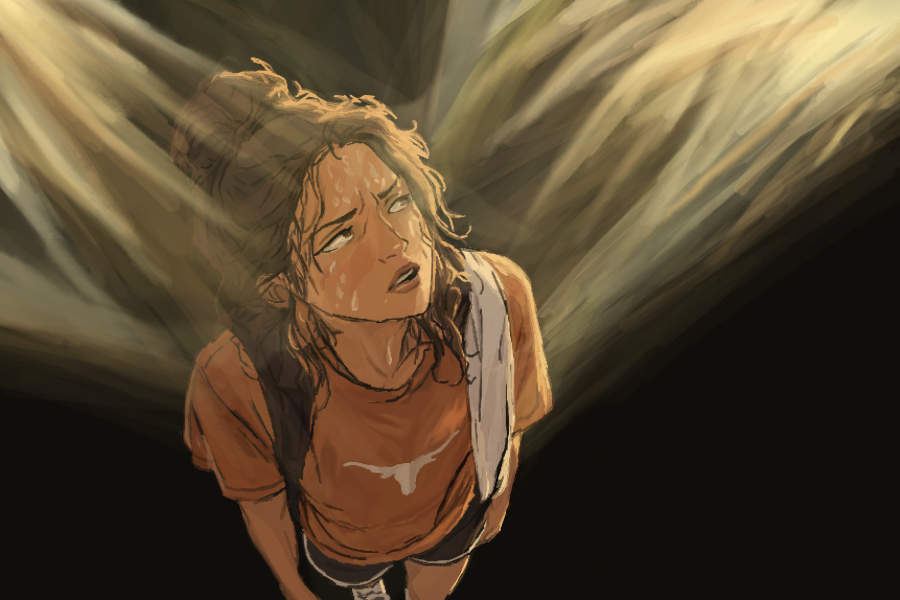
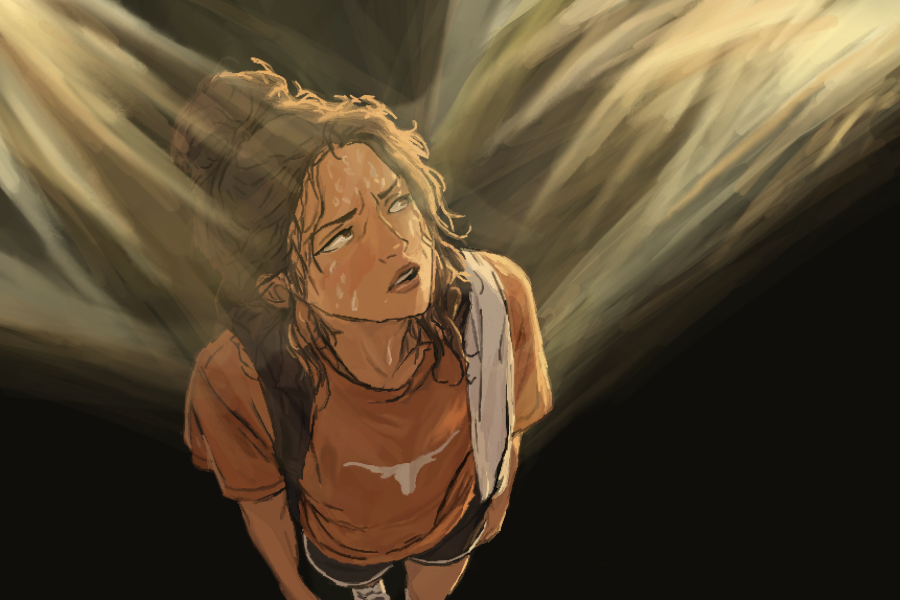
UT football games are some of the most anticipated events of the fall semester. Every season, hundreds of students line up for hours before kickoff to get good seats, spending significant time underneath the Texas sun before even entering the stadium. However, the Sept. 5 game against Texas State demonstrated how dangerous that tradition can become.
This weekend, Texas will host Florida at 11 a.m., an even earlier kickoff than the Texas State game. While cooler weather conditions may be favorable this Saturday, Texas won’t always be so lucky with early kickoffs, making the Texas State game an important reminder of the precautions UT Athletics should have in place when dangerous heat returns.
On Sept. 5, the game kicked off at 2:30 p.m., and temperatures reached approximately 102 degrees Fahrenheit with a heat index of 105. Austin-Travis County EMS transported 13 people to local hospitals, with more attendees experiencing heat-related health problems.
English sophomore Amia De Leon experienced the heat’s effects firsthand.
“I pretty much felt sick, and I had to excuse myself, and I went to the bathroom and threw up,” De Leon said. “I was feeling super dehydrated.”
After returning to the stands and trying to drink water, De Leon said she became sick again and decided to leave the game after the first quarter.
“I could barely walk, I could barely move,” De Leon said. “Then I felt my hands start going numb from the tops of my fingers, and then my arms started going numb. … It (was) a scary experience for me overall.”
Mathematics junior Will Sams also endured the temperature firsthand.
“There was a girl beside me, she left, and I remember going back and grabbing water, and she was lying down (on) the stairwell,” Sams said. “A lot of people were passing out, so I made sure to leave before anything bad could happen.”
Fortunately, there have been efforts to address the heat at subsequent games. At the Ohio State game on Sept. 12, Sams said staff distributed water for those waiting outside, a measure he found helpful in dealing with the heat.
While that response is encouraging, measures like these should not require medical emergencies to prompt them. Water distribution and other heat precautions should be standard practice when weather conditions make prolonged exposure dangerous.
Texas is already moving in this direction at the high school level. Beginning this school year, the University Interscholastic League (UIL) requires schools to monitor Wet Bulb Globe Temperature during outdoor practices. UIL’s heat protocols also require or recommend measures such as unrestricted access to water, rapid cooling zones and modifications to outdoor activities depending on conditions.
Research shows that low-tech solutions such as misting fans are very effective for reducing the effects of extreme heat. De Leon mentioned UT Athletics should establish designated cooling areas with misting fans throughout the stadium.
UT Athletics has previously demonstrated its willingness to invest heavily in its football program. Protecting the thousands of students and fans who make that program possible should be considered part of that investment.
Saturday’s cooler forecast means an 11 a.m. kickoff may not pose the same heat risk students faced in September, but one favorable forecast should not make UT complacent. Early-season football games in Texas will continue to bring the possibility of dangerous heat, and UT Athletics should make preventative measures standard practice whenever conditions put students at risk, rather than waiting until students get sick.
Puente is a psychology and Plan II senior from Edinburg, Texas.